Look at the openings
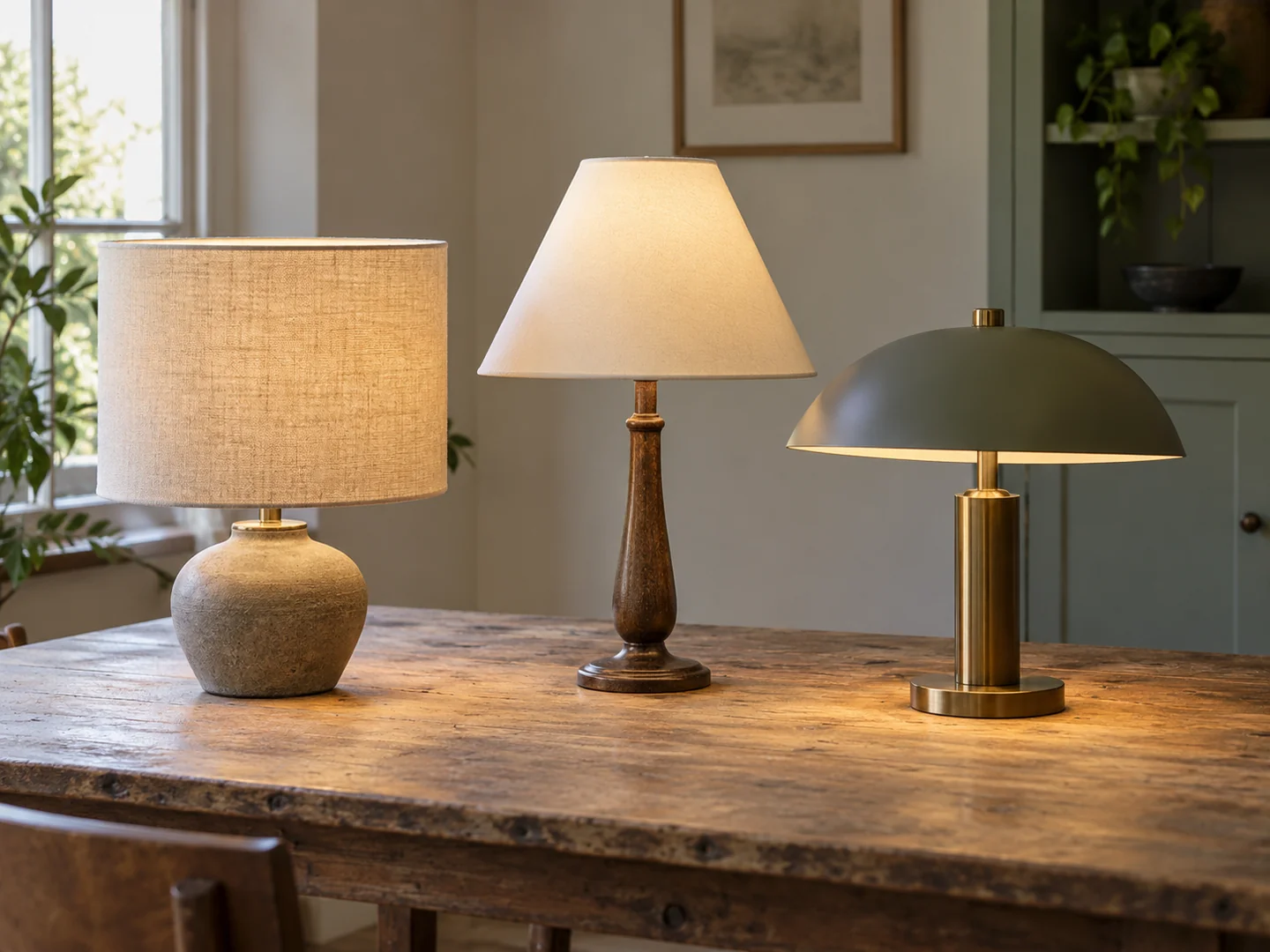
A drum shade has fairly straight sides and similarly sized openings at the top and bottom. A tapered shade has a smaller opening above and a wider one below. A shallow dome can act more like a cover over a directed pool of light. These outlines are useful clues, but the material and lining may have just as much influence on the result.
Hold an unlit shade at roughly the height it would sit on the intended lamp. From your normal chair, can you see through the bottom opening towards the bulb? Does the top edge crowd a picture above it? A shape that looks balanced on a tall sideboard may behave quite differently on a low bedside table.
Opaque metal sends light through its openings rather than through its sides. A pale translucent fabric allows some light through the body of the shade. A fabric with a dark or opaque lining can behave differently from its exterior colour. Look inside before making a decision from the colour swatch alone.
Think about the surface below
A broad lower opening can illuminate a tabletop while the shade itself remains relatively subdued. This may suit a console where the lamp also helps you find keys. A glowing fabric drum may spread a gentler presence around a seating group, although it will not necessarily aim enough light at a book.
Consider what else occupies the table. A wide shade might hang over a small lamp base and leave the impression that there is plenty of space below, yet make it awkward to lift a tall vase or reach a switch. Check the widest part at its actual height, not just the base diameter.
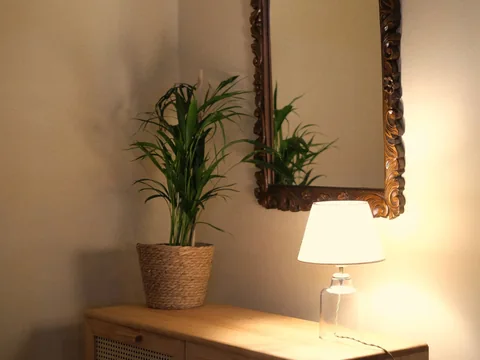
The shadow above a shade is part of the effect. On a blank wall, an abrupt cone of light may be noticeable. Behind a busy shelf it may disappear. Move a working lamp a little closer to and farther from the wall to see how the outline changes before deciding the shade is wrong.
Compare two shapes on the same base
A tapered shade can leave more visual space around its upper half, which may help beside a low shelf or a busy picture arrangement. A drum can make a simple base read as a more substantial object. Neither effect guarantees the better fit; the surrounding furniture decides whether that extra visual weight is welcome.
A square or rectangular shade introduces another issue: alignment. Its edges may look composed when parallel with a console, then feel awkward on a small round table. Turn it only within the fitting's intended movement and check that its corners remain clear. The outline you admire from the doorway should also work from the side.
Check the fitting before falling for the silhouette
Table-lamp shades and pendant shades are not necessarily interchangeable. The position and type of the fitting determine how a shade sits. Pooky's buying guide, for example, distinguishes its base-fitted lamp shades from pendant versions. Confirm the exact fitting required for your own lamp rather than assuming an adaptor will solve every mismatch.
Follow the lamp and shade makers' bulb and clearance requirements. Do not improvise supports or add decorative material around a bulb to alter the light. If two suitable shades are available, compare them with the same compatible bulb in the same position. That keeps the trial focused on the shade instead of mixing several changes together.