Use the doorway as the sample frame
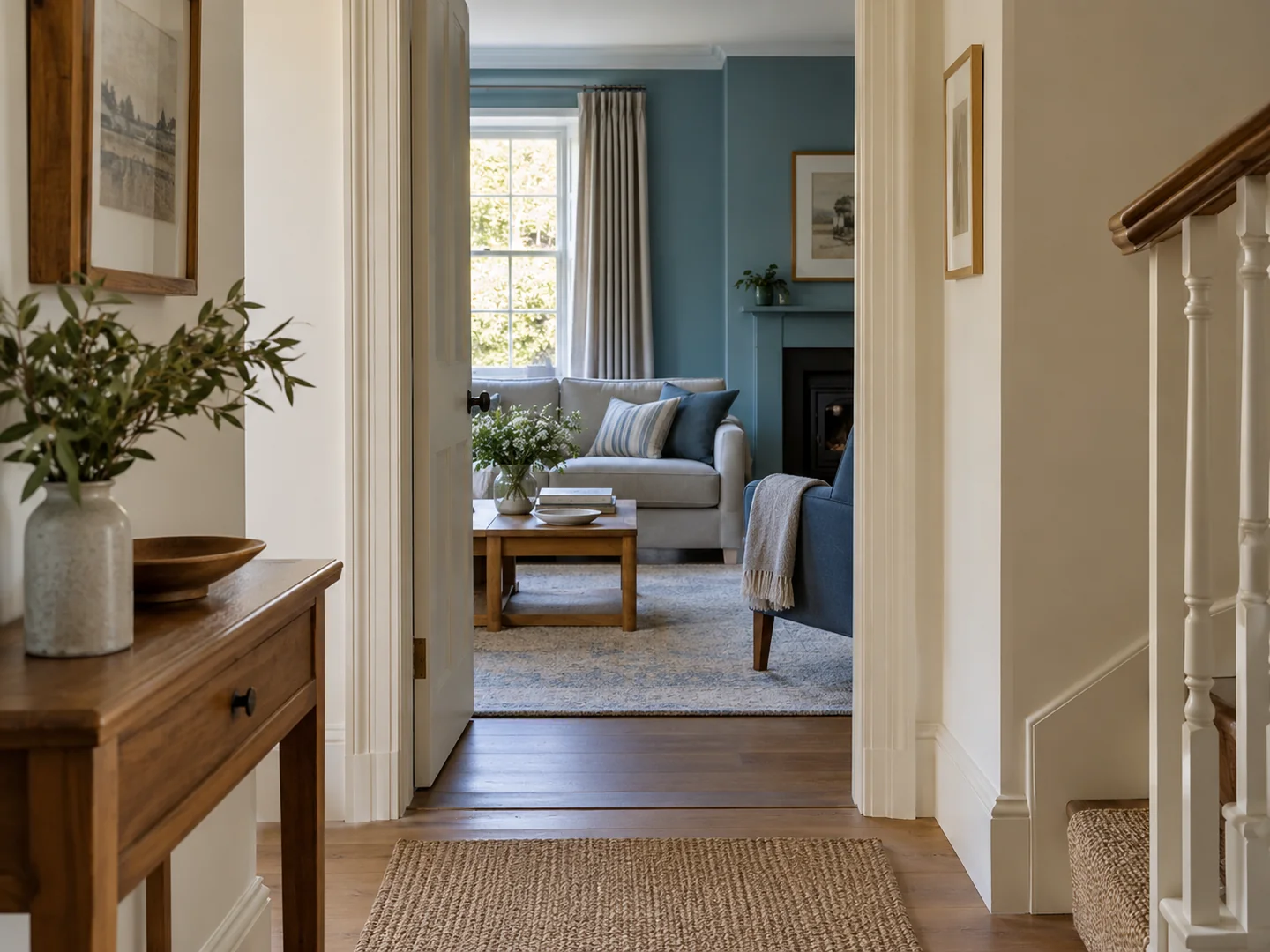
A hallway and sitting room may feel separate on a floor plan but appear together every time the door is open. Stand at the normal approach to the room and note which parts are visible: perhaps a strip of blue wall, the ceiling and one curtain. Those are the surfaces that need to be compared with the hall.
Place a sample in the next room where it can be seen through the doorway. Keep the hall's existing colour around it. This gives a more useful impression than laying two cards next to each other on a desk, because distance and area affect the balance.
You do not need a matching scheme throughout the house. A warm white hall can lead into a deeper green or blue room quite comfortably. The question is whether the transition feels deliberate to you from the viewpoints used every day.
Repeat one element, if it helps
Consistent door frames can connect rooms with different wall colours. So can a continuous floor or a related tone in textiles. If those elements already provide continuity, the walls are free to differ more than you might expect.
Suppose a pinkish room opens into one with a yellow-based cream. The junction may feel awkward even though both colours work separately. A slightly different hall neutral could help, but first check whether the door, frame or a large curtain is creating the strongest clash. Changing the smallest relevant surface is worth considering before repainting a whole room.
Look at the door both open and shut. Its inner face, outer face and edges do not all appear in the same view. If using different colours on the two faces, record the intended treatment clearly for whoever paints it.
Try the evening sequence
Switch on the lights in the combination you usually see. A bright hallway leading into a softly lit sitting room can change the apparent contrast between colours. Do not judge the transition only with every ceiling light on if that is never how the house is used.
Consider the next doorway as well. In a run of rooms, a distant strong colour may appear as a small patch at the end of the view. That can be pleasing without being repeated nearby.
The aim is a comfortable sequence rather than one colour carried everywhere. When the open-door views work, allow each room to respond to its own light, furniture and purpose. A home can have continuity without making every wall the same.