Read the whole cloth
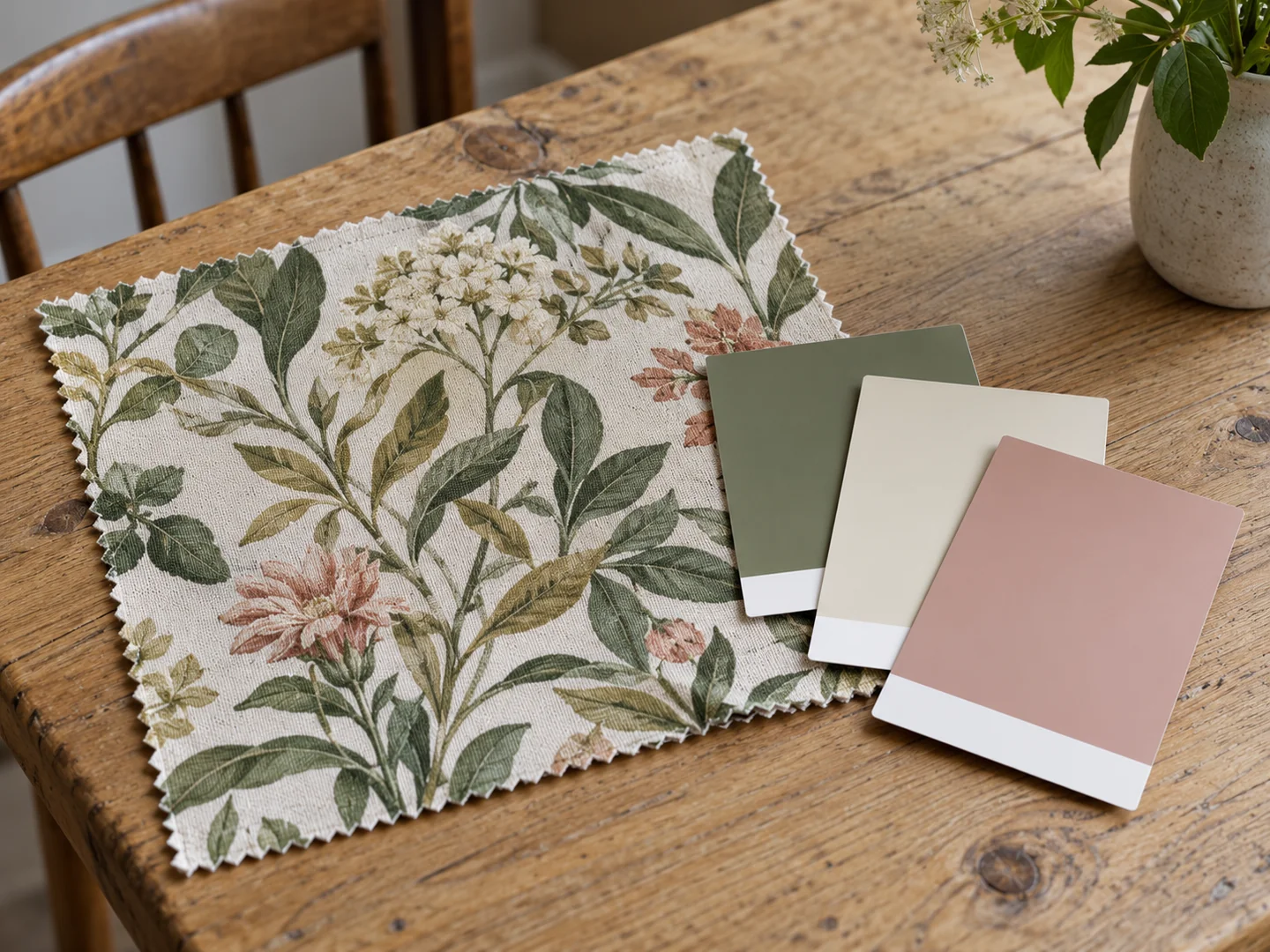
A patterned fabric offers more than a convenient list of matching colours. It also shows proportions: perhaps most of the surface is cream, with a little green foliage and a much smaller rust flower. Reversing those proportions across a room will produce a different effect even if every colour matches perfectly.
Spread the sample flat, then fold it as it would appear in the finished curtain or cushion. Some colours disappear into the folds while others become more conspicuous. If you only have a tiny cutting, ask to see an image of the complete repeat before basing the whole room on it.
Choose what you actually like about the fabric. It may be the quiet background rather than the brightest motif. That background can be a useful wall-colour starting point, with one of the smaller colours reserved for a chair or rug.
Build a palette with unequal jobs
Imagine a botanical cloth with cream, leaf green and dusky red. You could use cream walls, a green sofa and small red details. Alternatively, green walls with plain cream curtains might carry the same family of colours while leaving the patterned fabric for a cushion. The fabric does not have to become the biggest item in the room to influence the scheme.
Put paint and upholstery samples next to the real cloth. An exact colour match may not be necessary; a related shade can feel less rigid. Focus on whether the colours sit comfortably together in the room's light rather than matching a single printed dot under a shop lamp.
Include timber and metal finishes in the comparison. The pattern may provide a palette, but the oak floor and brass handles do not disappear because they are absent from it.
Keep room for something outside the pattern
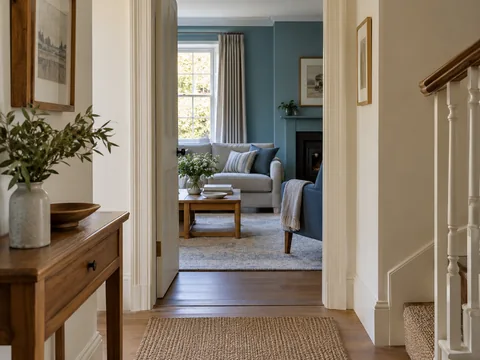
If every object repeats the fabric, the room can start to resemble a coordinated display. A plain neutral textile, a different wood tone or an existing artwork can keep it connected to the things you own.
Do not replace a useful sofa solely because its shade is not printed in the new curtain. Try the fabric beside it first. A pattern can bridge several colours without containing an exact sample of each one.
Once the major surfaces work, stop extracting new accents. The smallest colour in the print does not need its own vase, lamp and throw. Let the fabric remain a source of ideas rather than a specification that every future purchase must obey.