Open the door all the way
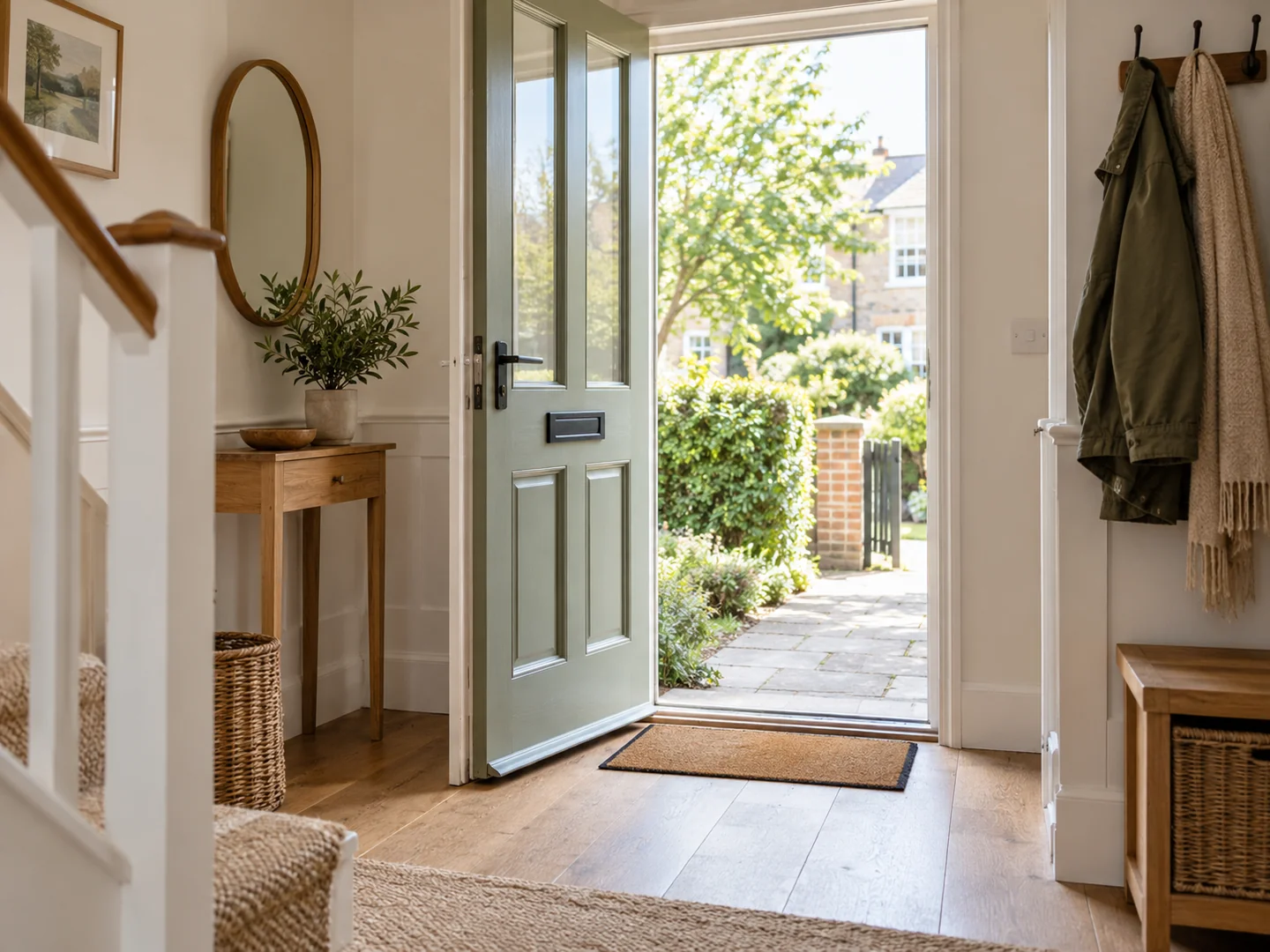
Start with the door in its normal fully open position. Look at the handle, letterbox flap if relevant and any closer or stop. Furniture should not prevent the door working as intended. Avoid placing a cabinet where it creates a pocket that traps a person behind the leaf or forces them to close it before moving further inside.
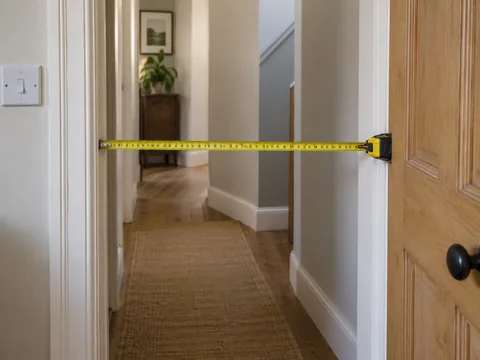
Measure the area where people step in carrying bags. This may be beside the door rather than directly ahead. A small clear patch gives somebody a moment to close an umbrella, put down shopping or remove a coat without blocking everyone behind them.
Watch where the first bag is normally put down. If it always lands on a chair further inside, the entrance may need a small clear surface or a better place for the bag itself. That does not necessarily mean adding a bench. In a tight hall, an open patch of floor used briefly can be more effective than permanent furniture. Keep the arrival space distinct from long-term storage so it remains available when the next person comes through the door.
Make the mat part of the test
A mat needs to sit flat and remain clear of the door's movement. Check its thickness with the door opening over it, including any unevenness in the floor. A mat that bunches, slides or catches the door is not improved by being the right colour. Follow the flooring and mat care guidance so the backing does not damage the surface beneath.
If the entrance opens directly into a living room, the mat can mark the arrival area without a screen or cabinet. A clear route beyond it helps the rest of the room stay usable. Avoid positioning the nearest armchair so that an arriving person's bags land on it by default.
Think about wet objects separately. A dripping umbrella or muddy pair of boots needs a suitable temporary place, not immediate storage against clean textiles. Keep that area modest and easy to clean so it does not become permanent overflow in the doorway.
Put daily items where hands naturally go
Keys may belong on a secure nearby surface, while coats need a reachable hook or cupboard. The best locations depend on how the door is used and who uses it. Hooks should not project into a tight head or shoulder route, and hanging coats take considerably more depth than an empty row of pegs.
Leave access to meters, controls and any building equipment. In shared entrances, keep communal routes clear and follow the building's arrangements. Furniture that is convenient inside a private room may be unsuitable on a shared escape route.
Rehearse leaving as well as arriving. Can you put on shoes, collect a bag and open the door without shifting a basket? Those small movements determine whether the entrance works. Add storage in response to a repeated need, while protecting the clear floor that makes the whole sequence easy.