Decide what should happen there
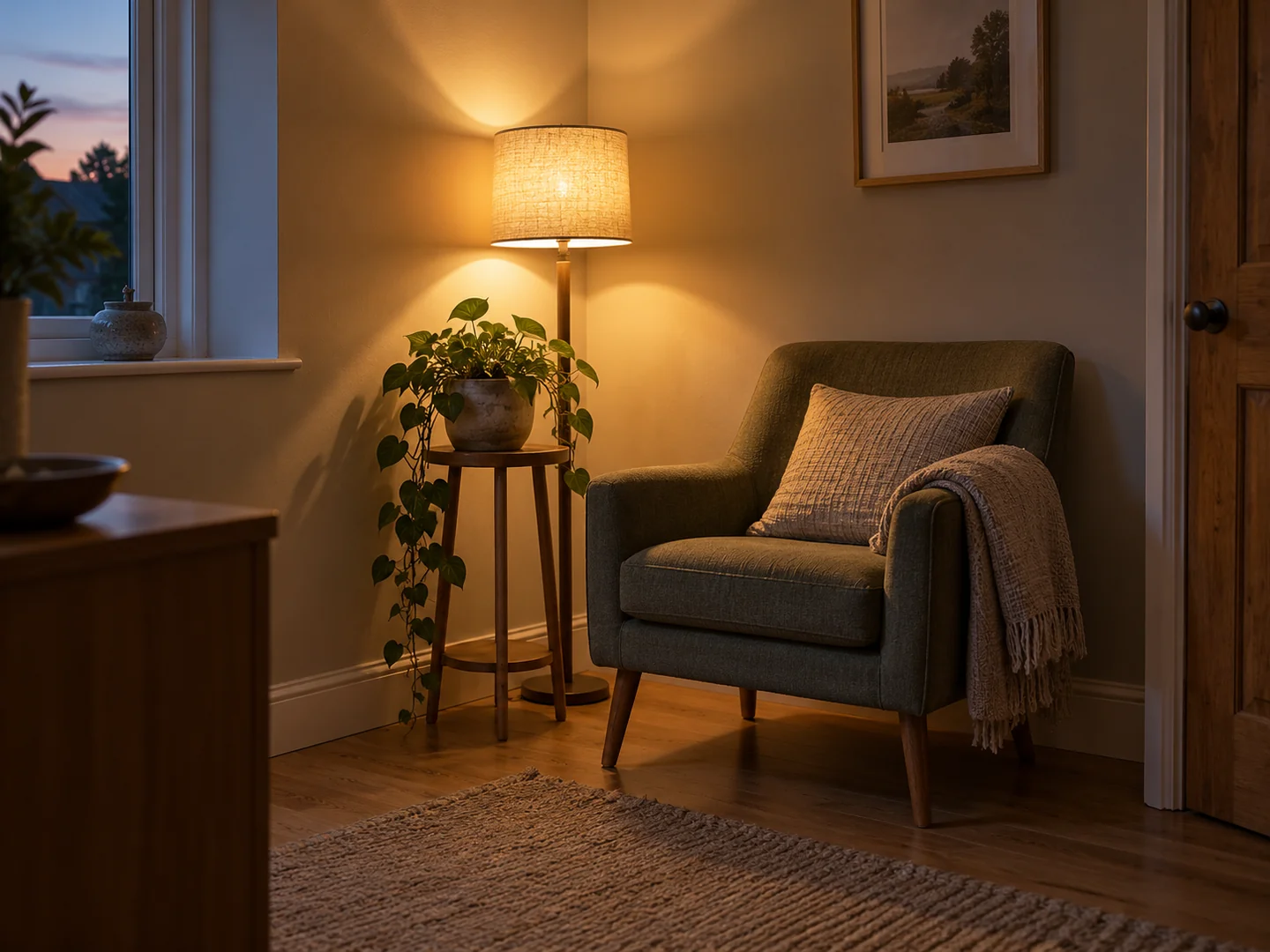
A dark corner is not automatically a defect. Behind a sofa, a little shadow can give the room depth. Beside the only spare chair, it may make that chair feel unusable. Before adding a lamp, decide whether you want to read, display an object, find a storage basket or just soften the edge of the room.
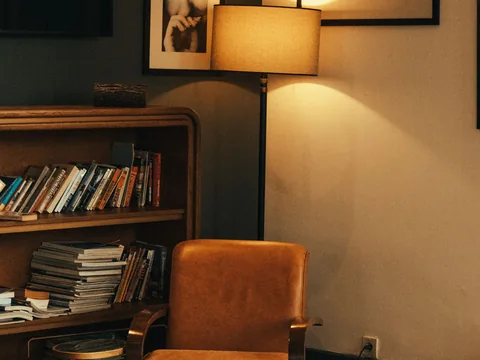
For reading, put the chair in a usable position first. Then find a lamp that reaches the page. A decorative glowing globe on the floor may look attractive but does not necessarily deliver light at the right angle for a book. The task should choose the light's direction.
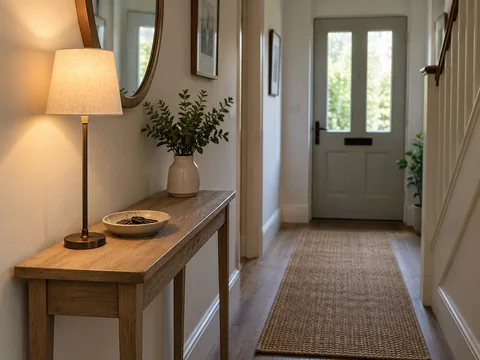
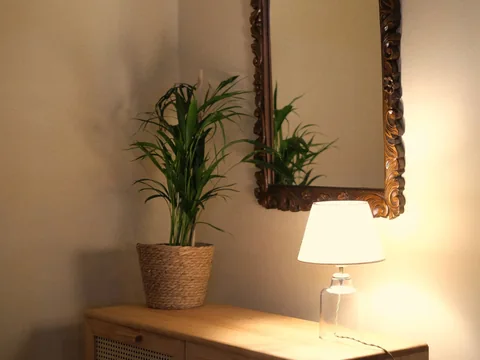
If the corner holds a small table for keys or drinks, a shaded table lamp can serve both the surface and the surrounding space. Check that the base leaves enough room for the table's original job. A lamp that consumes the entire surface may merely exchange one unused corner for another.
Check the wall and the approach
Try a portable lamp you already own before buying anything. Aim it towards the corner, then away from it, and compare the result. A pale wall may help spread the light; a dark finish may leave a more contained pool. Neither result is inherently wrong, but they create different impressions.
Look from the doorway. A corner lamp can become the first bright point you see, which may be useful when it draws attention to a chair or object. If it illuminates a pile of cables or the side of a cupboard instead, alter the arrangement before adding more output.
Keep the route to the corner clear. A floor lamp's base should not occupy the narrow gap people use to reach a window, radiator valve or cupboard. Its lead also needs a sensible path to power. If those conditions cannot be met, leaving the corner unlit or lighting it from an adjacent surface may be the more successful design. A room does not need a lamp in every available gap.