Measure the pinch point
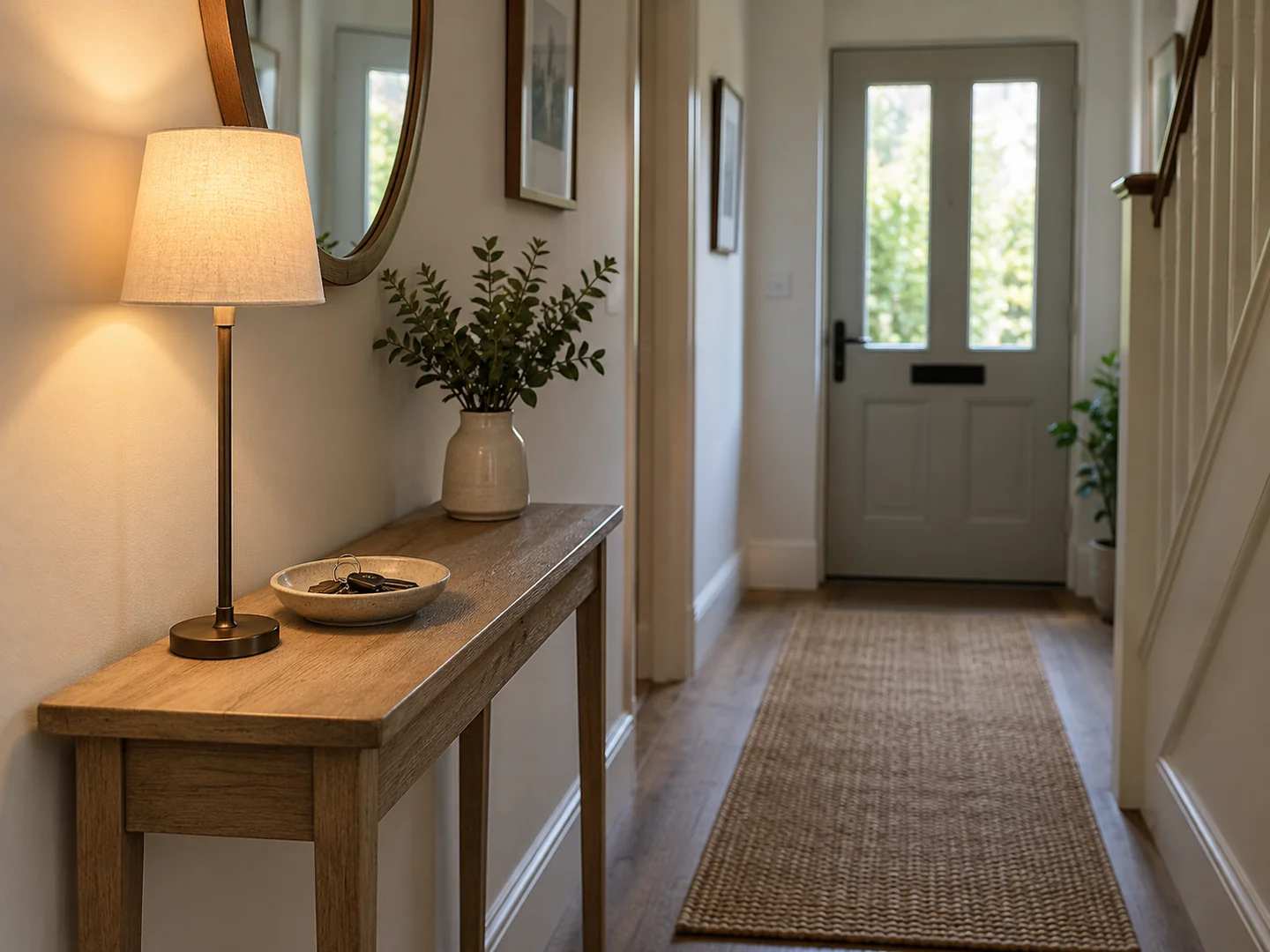
The narrowest part of a hallway matters more than the widest photograph of it. Measure the available depth with the console in place, including any projecting shade. A lamp base can fit comfortably while its shade extends into the route at shoulder or elbow height.
Open the nearby door fully and carry a bag through the entrance as you normally would. A lamp should not become the object you dodge every day. If the console already makes the hallway tight, adding a slim-looking lamp may not be enough; reconsider the furniture depth first.
Check the surface itself. A tapered table or curved top may have less usable area than its overall dimensions imply. Place the whole lamp base on a flat, stable part of the top, with room to operate its control without pushing it towards the edge.
Preserve a landing place
Decide which daily objects belong on the console. A shallow key dish needs little space, while post can spread across a surprisingly large area. Give these things a place before choosing decorative objects. Otherwise the lamp tends to be nudged backwards or surrounded by unstable piles.
A narrow stem can keep the arrangement visually open, but a heavy wide base may still occupy the useful patch. Conversely, a slightly broader ceramic lamp can work when the console is deep enough and only holds a few items. Judge footprint and use together rather than shopping by the word slim.
Avoid positioning the key dish directly beneath a low shade where you have to feel around for it. The light should help you see the surface. Try taking a set of keys out with one hand while holding a coat or bag in the other; it is a more revealing test than arranging the console while empty-handed.
Make the control obvious
An entrance light needs a convenient way to switch on. If the lamp's control is tucked behind it, a compatible remote control or a different lamp design may suit the location better. Do not rely on walking through an unlit hall to reach a decorative light at the far end.
Keep the cable behind the console where it cannot snag a bag, and avoid a route crossing a doorway. Where there is no suitable nearby socket, consider whether a rechargeable lamp meets the job, including the routine of charging it. It should supplement a usable entrance-lighting arrangement rather than create a new daily chore.
Stand in the doorway after dark and look towards the lamp. A shade that hides the bulb from the hallway but throws some light onto the wall can make the entrance easier to read. The console can then remain what it needs to be: a useful place to arrive, rather than a display that must be rearranged every time you come home.