Reserve the table's useful area
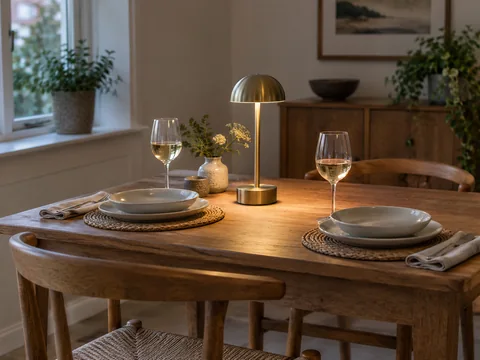
Put down the things the table needs to hold before measuring for a lamp. On a sofa-side table that might be a mug, book and glasses; on a console it may be a dish and a little post. The remaining surface is the lamp's working area, not the whole top.
Measure the base at its widest point and check that the entire base can sit flat. A flared ceramic foot may be wider than it looks in a frontal photograph. A tripod can have a surprisingly large spread between its feet. Neither should rely on a part hanging beyond the table edge.
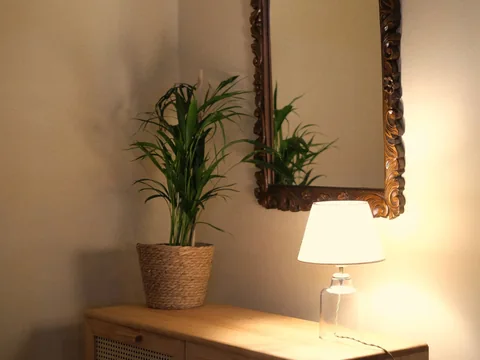
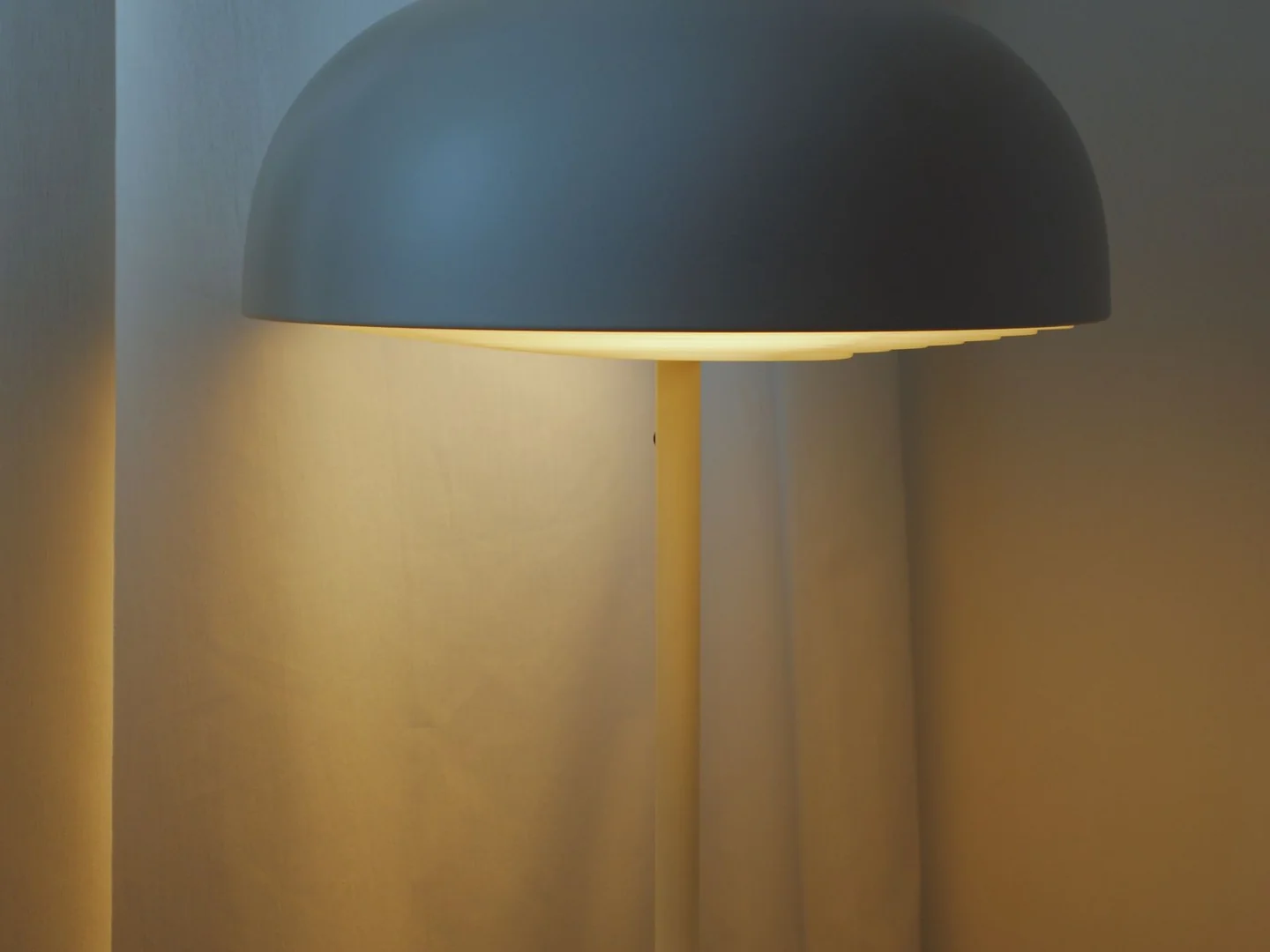
Now consider the shade above it. The shade can project beyond the base and collide with a wall, neighbouring chair or your hand as you reach for a drink. Its width matters at a different height. A small base with an enormous shade is not automatically a space-saving option.
Relate the lamp to the seated view
Look at the lamp from the sofa or bed. A tall table plus a tall base can raise the lower shade opening until the bulb is visible. A very low lamp may disappear behind the objects it is meant to light. There is no universal proportion that replaces checking the actual combination.
If you are buying a base and shade separately, ask for their assembled height and the appropriate shade fitting. Product dimensions can refer to different parts. Do not add two numbers blindly if one includes a fitting or support that the other measurement also includes.
A simple paper silhouette can help compare scale against a wall, but the real object will have depth and weight. Use it to reject obviously oversized options, then verify the practical dimensions before ordering. A photograph of the room with a drawn circle is not proof that a lamp will be stable on a curved table.
Allow room to operate and maintain it
Find the switch in the product photographs or instructions. A control hidden behind the base may require more clearance than expected. A rotary knob on the side needs finger room. If the lamp is adjustable, include the head's permitted sweep in your space calculation.
Think about changing a replaceable bulb and cleaning the shade. A lamp wedged tightly beneath a shelf may fit visually but be awkward to maintain. You should be able to move it safely without dragging a cable or dislodging the objects around it.
For a rechargeable model, find out whether the whole lamp moves to charge or whether it uses a removable pack. A heavy base on a high shelf is a poor match for a charging routine that requires frequent lifting.
Use proportion as a final judgement
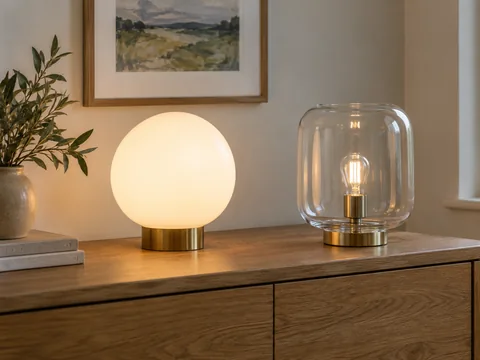
After the physical checks, compare how the lamp relates to the table and surrounding furniture. A broad low base can echo a substantial sofa; a narrow upright can sit quietly beside a delicate chair. These are visual choices rather than rules that every room must obey.
Give the lamp a little breathing room instead of filling every remaining gap with accessories. The table should still be easy to use and clean. When the proportions are right, the lamp belongs to the furniture arrangement without taking over the surface it was meant to help.