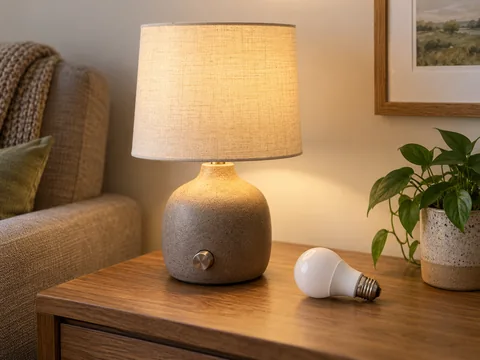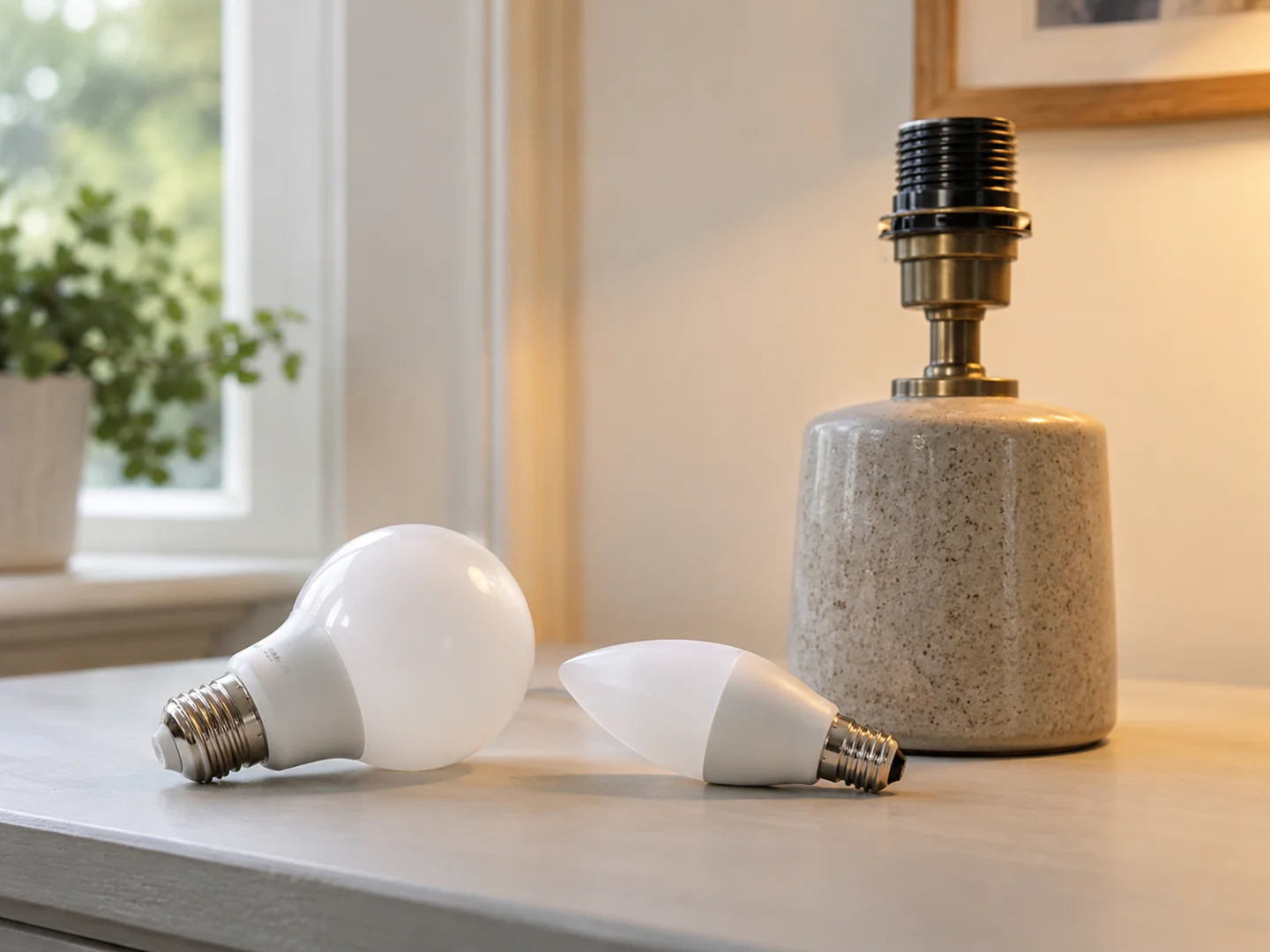
Start with the lamp, not the box
A replacement bulb has to fit the lamp physically before its light becomes relevant. With the lamp switched off, unplugged where applicable and cool, note the fitting specified by its maker. A familiar-looking screw or bayonet base is not enough to identify every size. Keep a photograph of the existing markings and the lamp's label when you shop.
Check the space inside the shade too. A larger globe can project below a shallow shade or leave insufficient clearance in a small enclosure. The correct cap does not guarantee that the whole bulb is suitable. Follow the lamp's stated bulb type, electrical limits and any restrictions concerning enclosed fittings.
Separate output from consumption
Lumens describe light output; watts describe the electrical power used. When comparing modern bulbs, use lumens to compare brightness rather than assuming equal wattage means equal light. Energy Saving Trust's lighting guidance makes this distinction particularly useful when replacing an older bulb with an LED.
There is no single lumen number that makes every table lamp suitable for reading. Shade material, direction, distance from the page and the room around it all affect the result. The figure helps you compare bulbs; it does not describe the complete lamp in your particular corner.
If an existing bulb gives comfortable light, record its lumen value before it fails. That becomes a useful starting point. If the page is gloomy but the visible bulb feels harsh, stop treating brightness as the only variable. A different shade or lamp position may direct more of the available light where you need it.
Compare bulbs in the same job
Suppose a lamp is comfortable for conversation but weak for detailed drawing. That does not mean its existing bulb is a poor product. It means the lamp is being asked to do a more demanding job. You could keep that lamp for general light and use a directed task light at the work surface, instead of making the whole seating area brighter.
For a fitting with several bulbs, record the specification of the full set and the maker's requirements. A label on one old bulb is a clue about what has been fitted, not proof that it was the correct choice. If earlier replacements have been mixed, return to the fitting's instructions before standardising them.
Read the remaining choices
Colour temperature is usually shown in kelvins, with a number followed by K. It describes the light's apparent colour rather than how much light there is. Compare this separately from output so you do not accidentally change the room's colour and brightness at the same time.
Also look for an explicit statement about dimming. An LED bulb is not automatically dimmable, and a dimmable one still needs suitable control equipment. If the lamp has an integrated dimmer, use its compatibility guidance. A fixed wall dimmer raises a separate compatibility question for an electrician rather than an invitation to experiment with the wiring.
Keep the packaging until you have checked the light in its intended setting and understood the retailer's returns conditions. Take the comparison home to the actual shade and actual chair. Shop displays often have many lamps operating together, making one bulb difficult to judge on its own. Once you find a combination you like, save the specification with the lamp's name so the next replacement is straightforward.