Lower your viewpoint
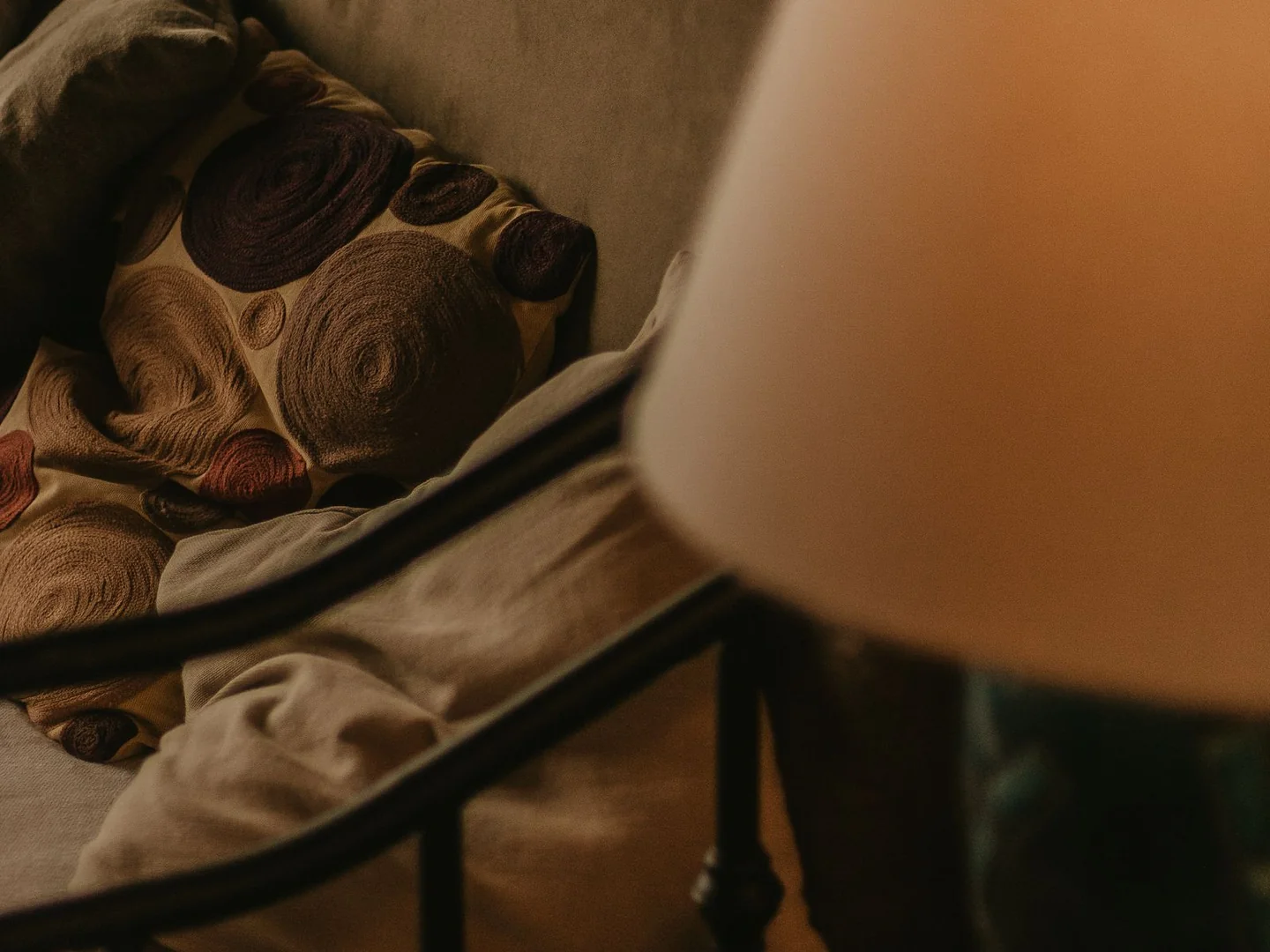
Walk into the room, then sit on the sofa. If the lamp suddenly becomes an exposed bright point, its shade is not screening the source from that position. The issue may be the lamp's height, the shade's lower opening or the position of the table. A brighter replacement bulb will not fix this particular problem.
Try each seat. Someone on a low armchair may see inside a shade that works well beside a higher sofa. Also try the position used for stretching out, if that is how the room is normally occupied. The design needs to suit an evening at home, not just a seated photograph.
Move the whole lamp a short distance sideways, keeping its cable safely routed. A small change can put the shade between your eyes and the bulb. Moving it farther back on the table may help too, provided it remains stable and the shade has appropriate clearance from the wall and other objects.
Change one element at a time
If position alone does not help, compare a compatible deeper shade or a lamp designed to conceal its light source. A frosted bulb may change the appearance of the source, but it should not be used as a reason to accept an uncomfortable direct view. Check the complete result rather than buying by bulb finish alone.
Avoid makeshift fixes such as draping fabric over the shade or sticking paper inside it. Use only a shade and bulb combination that the equipment is designed to accept. A decorative adjustment is not worth compromising clearances or stability.
Once the direct glare is reduced, read a page or look across the room for a while. You still need enough light for the task. Turning the lamp down until it barely glows may remove the bright spot but leave the chair unusable for reading. Aim the light where it is needed and keep the source out of the normal line of sight; those are separate checks, and both should pass before the lamp earns its place.