Make a list before making a moodboard
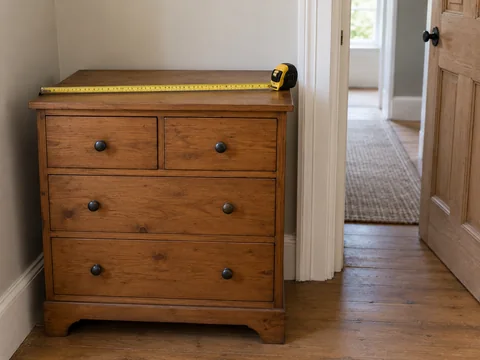
A furnished flat comes with decisions already made. Write down the large pieces, their dimensions and their condition. Separate what belongs to the property from what belongs to you. Confirm whether anything can be moved, stored or removed rather than assuming an unwanted item may be disposed of.
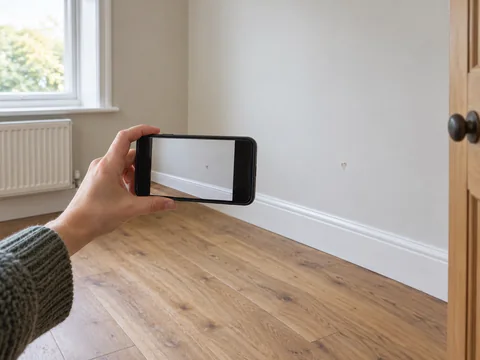
Photograph the starting arrangement and note the location of sockets, radiators and door swings. This gives you a way to compare layouts without relying on memory. It also prevents the tempting but impractical plan in which the sofa looks better while blocking the only convenient cupboard.
Live with the room long enough to identify the genuine problems. A dark sofa may be less troublesome than a table that occupies the route to the window. A dated finish may be easy to work around; an uncomfortable working position requires a more direct response. Rank function before appearance.
Use the largest piece as a reference
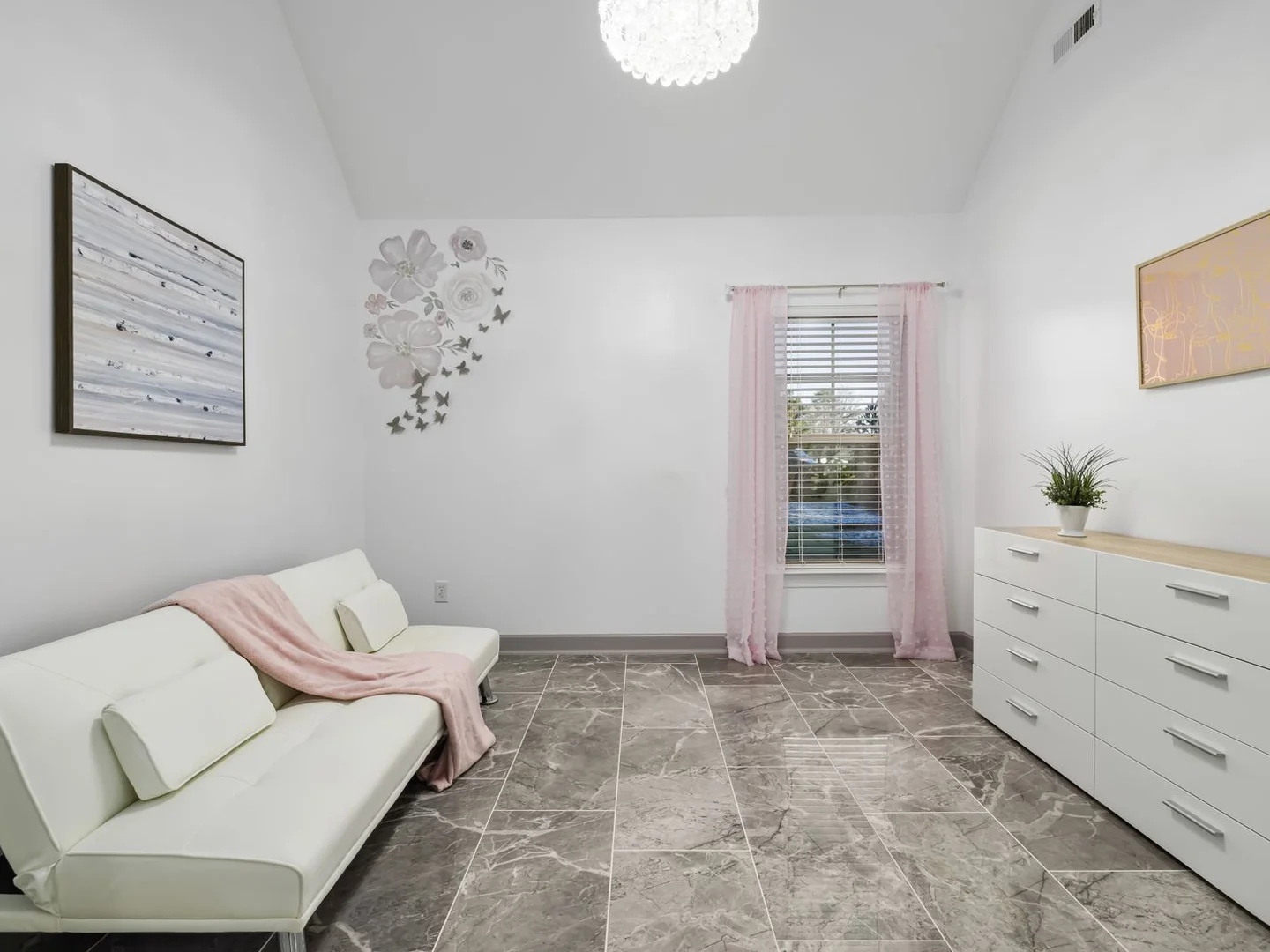
The largest existing object often provides a sensible starting point for colour. Look closely at the sofa or bed upholstery in daylight and under the evening lamps. Is it warm brown, cool grey, greenish beige or something more distinct? Choose additions that make sense beside the actual material rather than the colour you wish it were.
You do not have to match everything to it. A tan sofa can work with blue textiles, cream and timber without buying more tan objects. A grey bed can sit within a warmer arrangement of patterned bedding and a coloured lamp. The aim is a considered relationship, not a room of matching accessories.
Borrow or use existing textiles for a trial before ordering large quantities. A throw across part of the sofa or a pillowcase beside the curtains can reveal whether a direction is promising. Avoid covering every surface immediately; some of the supplied furniture may look better once the surrounding colours stop competing with it.
Reconsider the spacing
Small changes in position can help a room more than another object. Bring a chair into a useful relationship with the sofa. Move a side table where it can actually hold a drink. Leave enough room to open drawers and walk through without turning sideways.
Do not move heavy items alone or drag furniture across a vulnerable floor. Get appropriate help and use handling methods suitable for the piece and surface. If moving an item would disturb a required wall restraint, arrange a safe, authorised approach rather than simply disconnecting it and leaving it unsecured.
Freestanding does not mean a piece never needs anchoring. Follow the manufacturer's safety requirements for supplied and newly purchased furniture. If a required fixing cannot be permitted, choose a different solution rather than treating a rental restriction as a reason to omit it.
Add what the room lacks
Look for missing functions: a light beside the reading seat, a place for a laptop, somewhere to put shoes near the entrance. Add one item that solves a clear problem. An attractive extra chair is less useful if the room already has enough seating and no accessible surface for a book.
Prefer pieces that can adapt to another home. A compact side table may later work beside a bed. A freestanding lamp can move to a different corner. A highly specific unit cut to fit one odd recess may make sense for a long stay, but its limited future use belongs in the decision.
Keep the quantity of new furniture under review. It is easy to add layers around disliked supplied pieces until the room feels more crowded than before. The new item should justify its footprint, including the space needed to use it.
Store originals deliberately
If permission is given to replace a small fitting or put aside a supplied accessory, label and store the original safely. Do not leave a lampshade balanced under a bed where it can be crushed or put loose screws in a drawer shared with unrelated hardware. A simple box and a photograph can save a great deal of uncertainty later.
Retain care instructions for the supplied furniture. A removable cover is not permission to wash it on any setting, and a cleaning product suitable for one finish may harm another. When in doubt, ask before experimenting.
The finished room need not hide every sign that it was furnished before you arrived. It can feel coherent because the useful pieces are well spaced and your additions have clear roles. That is a more durable result than an expensive collection of temporary covers trying to disguise the whole flat.