Start with the piece in its real form
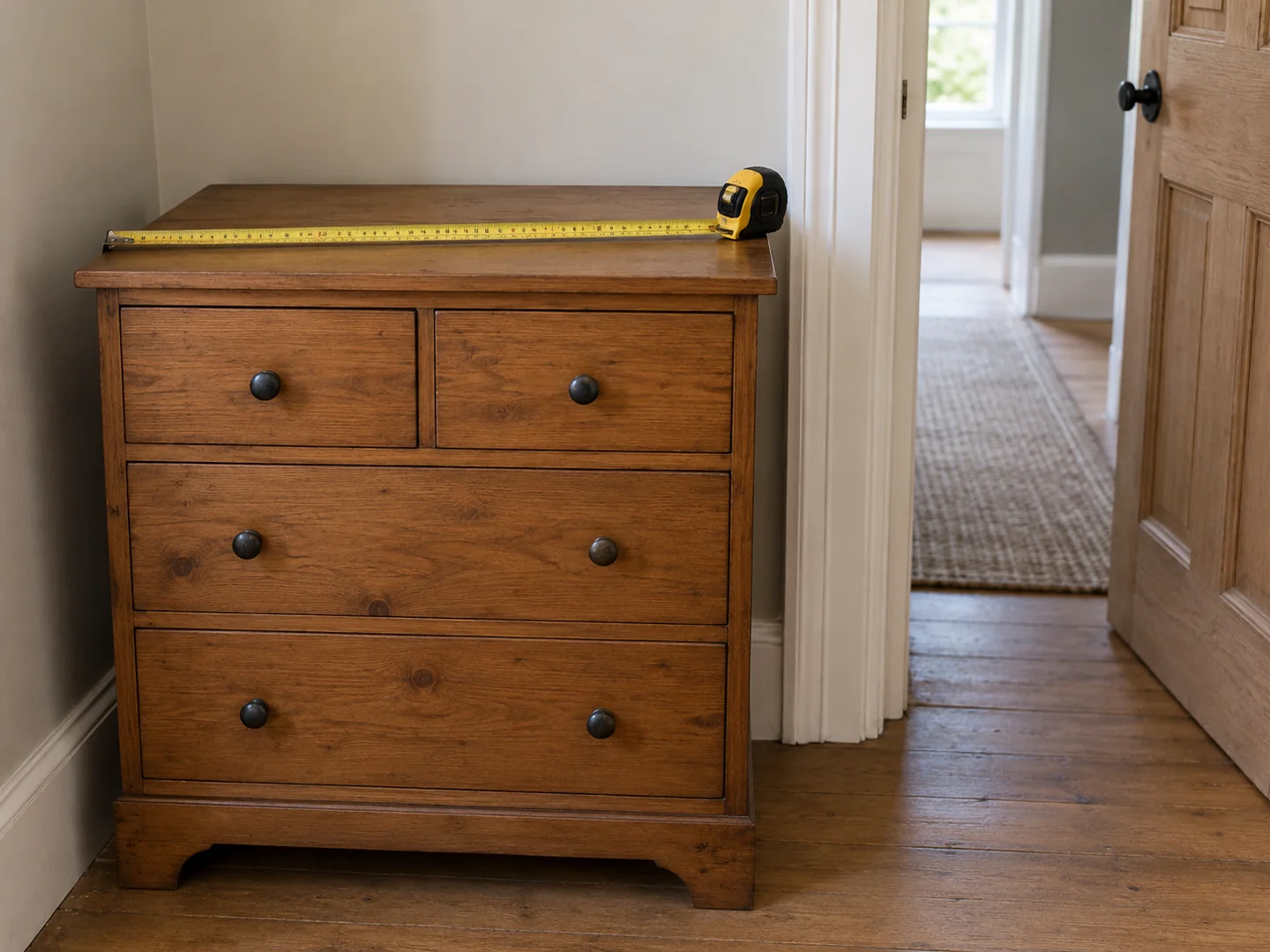
Ask for the furniture's overall height, width and depth, including projecting handles, cornices and feet. Sellers sometimes measure only the main body. A top that overhangs by a few centimetres can decide whether the piece passes a narrow opening.
Request photographs of the back and sides as well as the front. Find out whether it is one solid piece or designed to separate into sections. Do not assume feet, tops or doors can be removed without damage; ask for assembly information where available and avoid dismantling joints that were not intended for repeated removal.
Check the condition before treating transport as the only issue. Loose joints, missing hardware or damaged drawer runners may affect how the item can be handled and used. If the construction or condition is uncertain, get appropriate advice rather than planning a difficult move around an unexamined bargain.
Measure every restriction
Begin outside the home and follow the actual delivery route. Include gates, communal entrances, lifts, corridors, stairs and the final room door. Note the clear opening rather than the decorative frame size. A handle, handrail or door closer can reduce the available space.
The narrowest width is only one part of the journey. Corners and stair landings require room to turn the piece. Low ceilings and sloping sections can prevent tilting it into the position a straight corridor would allow. Record these constraints with photographs for the person moving the furniture.
Do not alter communal fixtures, remove a fire-door closer or assume a door can be taken off to make the route work. Any such proposal needs the relevant permission and competent assessment. A purchase should not depend on an unapproved modification to the building.
Allow for the people carrying it
The object does not travel through the house by itself. The people handling it need room for their hands, bodies and safe lifting positions. A mathematical fit through a gap may still be unsuitable for a safe move, particularly with a heavy or fragile item.
Share measurements and images with an experienced mover where the route is complex. Be clear about stairs, parking access and the piece's weight if known. Do not describe a difficult route as straightforward simply to secure a cheaper collection quote; the problem will still be there on delivery day.
Protect the building and furniture using appropriate materials and handling methods. Avoid dragging a loaded chest across a floor or lifting it by decorative handles. If you cannot arrange a safe move, passing on the item can be less costly than damage to the furniture, property or people involved.
Check the final position in use
Mark the footprint in the room and include the projection of open drawers or doors. Leave space for the person using them. A chest that fits neatly between a bed and wall may be almost unusable if the drawers open into the mattress.
Consider skirting boards and uneven floors. The item may not sit as close to the wall as its front photograph suggests. Follow the manufacturer's assembly and restraint requirements; a second-hand purchase does not remove the need for anti-tip measures where specified.
If required instructions or restraint parts are missing, contact the maker where possible and resolve that before use. A low price is not a reason to substitute improvised fixings or leave a piece insecure. In a rented property, arrange any necessary permission or select furniture suitable for the restrictions.
Agree what will happen on the day
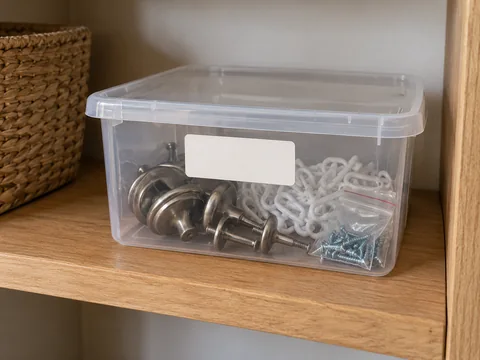
Confirm whether the seller expects collection assembled, whether loose parts are included and who is responsible for handling them. Keep screws and fittings labelled if the piece is designed to come apart. Photograph the approved disassembly so reassembly is not a guessing exercise.
Check the destination is ready. Clear the route, remove loose rugs that could interfere with handling and make sure the agreed space is available. Do not discover that the old item is still occupying the only place the new one can be safely set down.
Before paying, clarify the seller's collection arrangements and what happens if the item cannot be collected as planned. Do not assume a private seller offers the same services or terms as a furniture retailer. Keep the agreed description, dimensions and arrangements in writing. This makes the practical transaction clearer without relying on an informal promise that it should fit somehow.
The useful comparison is the complete cost and effort of owning the piece, not just its advertised price. Measuring the journey lets you spend on furniture that can arrive safely, fit the room and work properly once the excitement of finding it has passed.