Define the privacy problem
Write down what you want to obscure and from where. A ground-floor sitting room overlooked from the pavement has a different problem from a bathroom window facing a distant building. You may need to screen only the lower part of the view, or you may need a treatment that works across the whole pane.
Check the view at different times. Daytime privacy and privacy after dark are not necessarily the same thing, particularly with reflective products. Do not infer performance from a photograph taken in bright daylight. Ask the supplier how the chosen film behaves when the room is lit and it is dark outside.
Consider the view you want to keep. A fully obscuring treatment may solve the overlooking issue while removing a pleasant outlook or making it difficult to see who is approaching. A carefully positioned frosted section may be more suitable, subject to the film and glazing requirements.
Identify the glass before ordering
Glass is not a single interchangeable material. Double or triple glazing, coated panes, laminated constructions and other specifications can affect which films are suitable. The shape of the window frame does not tell you everything about the glass inside it.
Look for available installation documents or manufacturer information and ask the landlord or managing agent where appropriate. Photograph any visible corner markings without taking the window apart. If you cannot identify the glazing confidently, tell the film supplier that rather than guessing from appearance.
Purlfrost's compatibility guidance explains that film selection can affect thermal stress in glass. Its advice distinguishes types of film and glazing instead of treating every adhesive sheet as safe on every pane. Ask for an assessment of the exact combination, including any information the supplier needs about pane size or location.
Do not apply film over glass that is cracked, chipped or otherwise damaged. That is a condition issue to raise separately. A decorative product should not be used to conceal a defect or presented as a substitute for suitable glazing.
Distinguish decorative and performance claims
Frosted privacy film, tinted solar-control film, blackout products and safety films have different purposes. A pattern you like may be sold in several constructions. Read the exact product description and limitations rather than borrowing claims from another item in the range.
Avoid assuming that darker film is simply stronger privacy film. Its interaction with the glass and light can be different. If heat reduction is also a goal, explain that to the supplier and have compatibility checked for the proposed product. Do not combine layers of film to invent a result that the manufacturer has not approved.
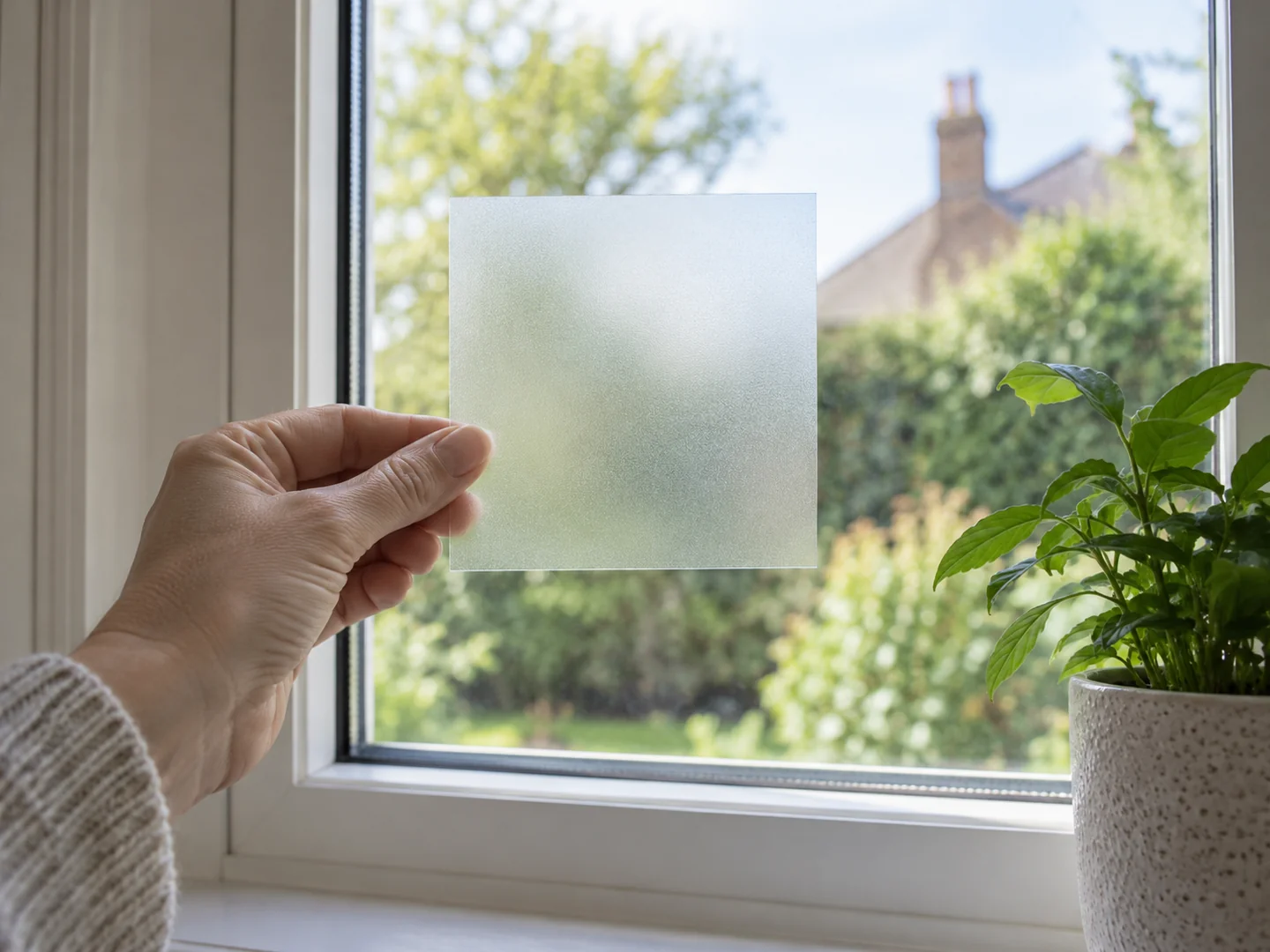
A static-cling product also needs the manufacturer's approval for the intended glass. Easy removal does not answer every compatibility question. The same applies to a small sample: a sample can help assess appearance, but it does not establish that a full pane treatment is appropriate.
Check permission and the installation conditions
In a rented property, discuss the proposed treatment before installation and retain the agreed details. Ask whether it should be removed when you leave and what condition is expected afterwards. Do not promise that every product removes without residue or that removal can never affect an existing surface.
Read the fitting and removal instructions in advance. Check the required side of the glass, permitted conditions and cleaning products. If access would involve unsafe reaching or working at height, arrange appropriate help rather than treating a small decorative job as automatically simple.
Keep handles, vents, seals and drainage features unobstructed. The treatment belongs on the approved glass area, not over every visible part of the window. A neat-looking installation is still wrong if it interferes with normal operation or conceals a component that needs access.
Use a sample for the visual decision
Once suitability is established, compare a sample against the actual view. Look at it from inside and, where safely possible, from the relevant outside viewpoint. Stand back to see whether the proposed boundary line relates sensibly to the window's proportions and the room's furniture.
Hold paper at the proposed height if you are planning a partial treatment; this can help judge the area before ordering a cut size. Use the supplier's measuring method for the final dimensions. A decorative planning exercise and an accurate product measurement are different stages.
For a patterned film, check how much of the pattern repeats across the actual pane. A narrow sidelight may show only a fragment of a large design, while several adjacent panes can create repeated cut edges. Ask whether the supplier can provide a suitable preview or sample size. Keep that aesthetic discussion separate from the compatibility approval so an attractive layout does not become the reason to overlook unresolved glazing details.
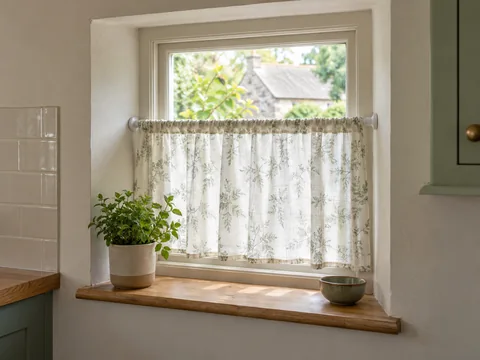
If the compatibility information remains uncertain, choose another permitted approach such as an appropriate curtain or blind. Film is useful when the product, glass and purpose agree. It should not be the default answer simply because a sheet can be ordered quickly and appears easy to remove.