Read removable as a product description
The word removable does not mean that every painted wall will remain untouched. Adhesive wallpaper is part of a combination: the paper, its adhesive, the paint, the preparation and the underlying wall. If one layer is weak or unsuitable, the result may be disappointing even when the wallpaper itself is functioning as designed.
Read the instructions for the exact product. Some manufacturers specify particular paint finishes and smooth, sound surfaces. Tempaper, for example, gives surface and curing guidance for its own products. Those requirements should not be generalised to another brand with a different adhesive.
In a rented home, establish permission before testing or applying the product. A sample is still adhesive applied to someone else's finish. Discuss the intended area and what would happen at the end of the tenancy rather than assuming a temporary appearance makes the work automatically acceptable.
Learn what is already on the wall
Check for flaking paint, damaged areas, damp or visible contamination. Do not cover an unresolved defect. Ask about the existing paint where possible, especially if the room has recently been decorated. Dry to the touch and fully cured are different conditions; follow the paint and wallpaper manufacturers' requirements.
Texture matters too. A slightly rough wall can prevent full contact or show through a thin covering. A thick painted texture will not disappear because the pattern is busy. View the wall with light from the side to understand the surface you are asking the adhesive to follow.
Do not apply a new primer or cleaning chemical merely because a general tutorial suggests it. That may create an additional alteration requiring permission, and it must be suitable for the actual materials. Use the wallpaper maker's preparation guidance and resolve conflicts with the paint supplier rather than mixing unrelated instructions.
Let the sample answer specific questions
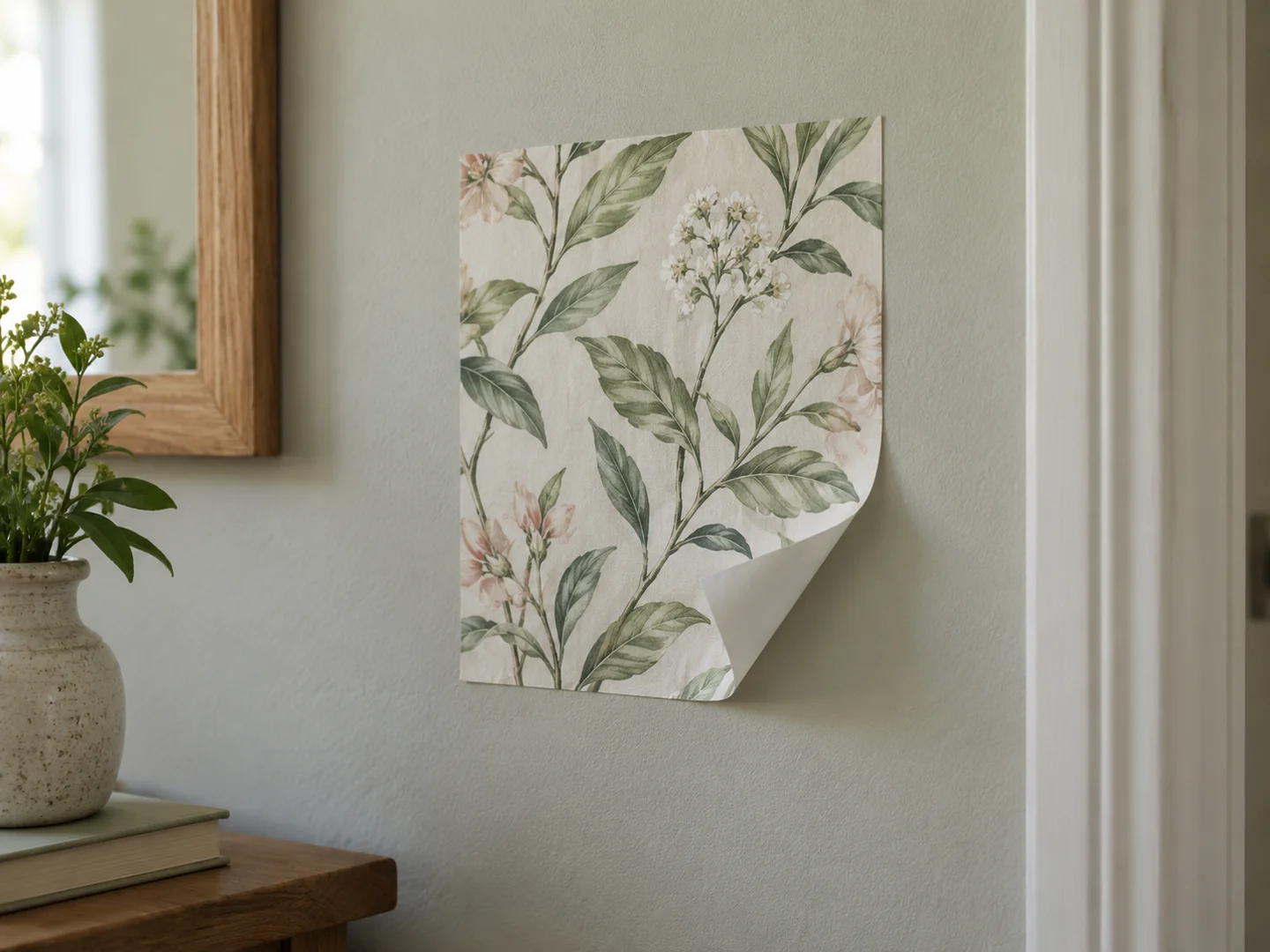
Choose a discreet, representative area with the agreed permission and follow the supplied preparation and test directions. A hidden patch with a different finish does not tell you much about the main wall. Record which product you used and how the surface was prepared.
Look for adhesion at the edges, visible texture, colour changes and any effect when a test piece is removed according to the instructions. Allow the recommended test period. An immediate peel-and-reapply experiment does not necessarily predict how the material behaves after a longer stay.
Even a successful test cannot promise perfect future removal across an entire wall. It can reveal obvious incompatibility and help you make a better-informed choice. Keep that distinction clear when discussing the project or deciding how much area to cover.
Plan the pattern before the quantity
Measure the actual wall and note corners, sockets and obstacles without disturbing electrical fittings. Check the roll width, pattern repeat and matching method. The area in square metres alone may not describe the quantity needed for a patterned product.
A sample can show the colours but not the full pattern scale. Ask for an image or repeat measurement and compare it with the room's dimensions. A large motif may look very different across a short wall interrupted by a wardrobe than it does in the supplier's wide room photograph.
Consider a smaller permitted application if a whole wall creates unnecessary cost and risk. The rear panel of your own suitable furniture may be an option only if the product approves that surface and its use does not affect the furniture's safety. Do not assume every smooth panel is compatible.
Know how it will come off
Read the removal method before the first strip goes on. Keep the instructions and product details somewhere you can find them later. Avoid attaching shelves, frames or other adhesive products over the wallpaper unless the entire arrangement is explicitly supported; extra layers complicate removal and support.
If a test or later removal starts to lift paint or damage the surface, stop and seek product-specific advice rather than pulling harder. In a rental, discuss the problem promptly through the appropriate channel. Do not hide the damage beneath a larger patch and leave an uncertain repair for moving day.
Wallpaper can bring a pattern into a room without the permanence of some traditional finishes, but it still deserves a considered decision. If the existing wall is unsuitable, colour in bedding, curtains or freestanding furniture may achieve the change with fewer unknowns.