Start with getting out of bed
Stand beside the bed and notice where your feet land. Then walk towards the wardrobe and door. Those small routes tell you more about a useful rug position than a symmetrical overhead photograph.
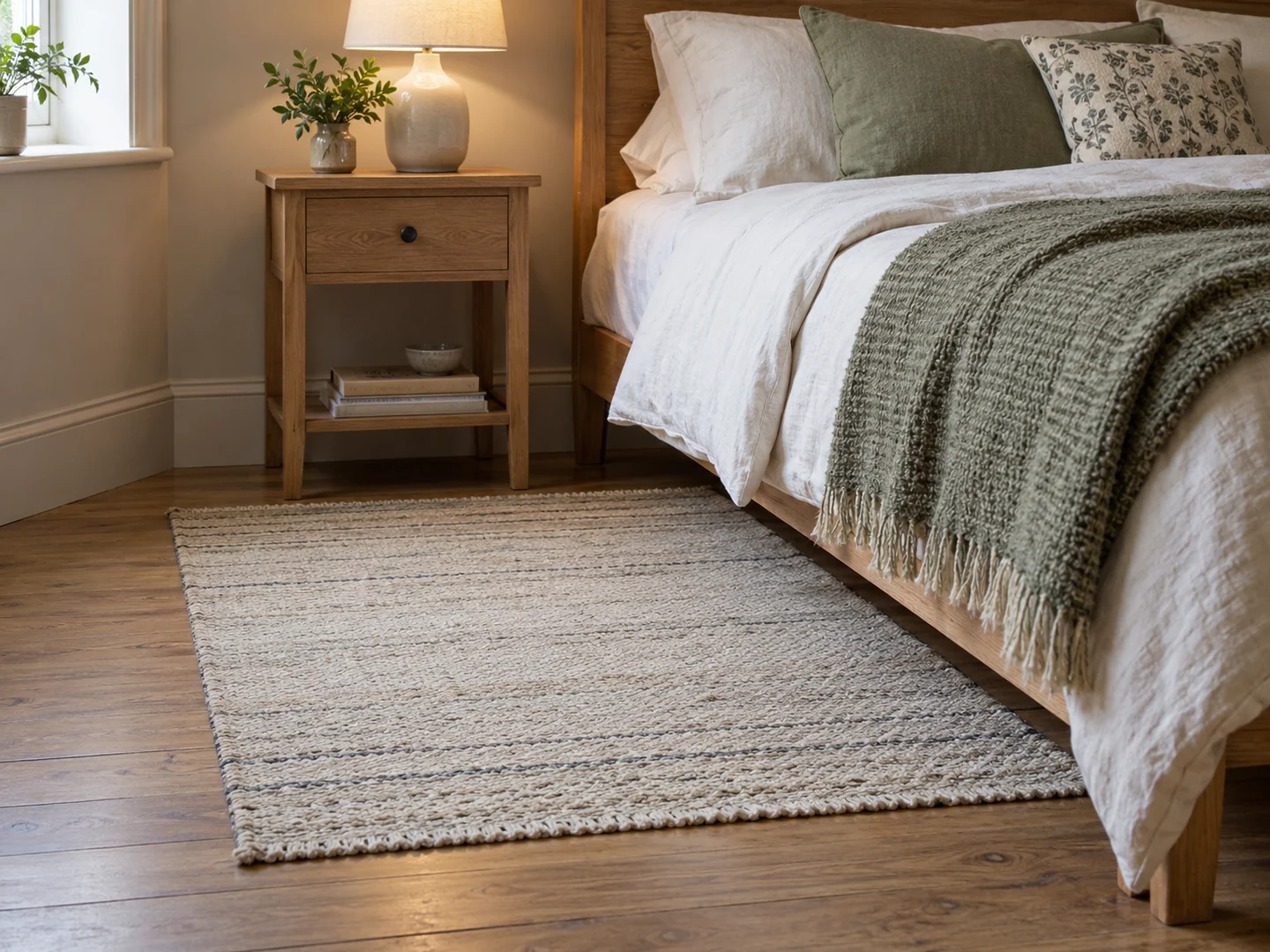
A rug extending from beneath the bed can give both sides a soft landing. A separate bedside rug may suit a narrower room or a bed placed against a wall. You do not need to buy enough rug to cover a large hidden area beneath the head of the bed if the visible, usable strips are the real priority.
Measure the actual bed frame, not just the mattress size. A wide upholstered surround can cover more of the rug than expected. Include bedside tables if you want their legs to sit on the same surface.
Check the moving parts
Open wardrobe doors and pull out under-bed drawers before choosing the rug thickness and position. A drawer that just clears the floor may catch a rug or underlay. An ottoman bed also needs the operating space described by its manufacturer.
If the bed moves easily on its feet or castors, check that the rug arrangement will not create an unstable partial support. Follow the furniture and rug guidance rather than using a soft layer to compensate for an uneven floor.
Keep the route from bed to door clear of curling corners or loose edges. This route may be used in low light, so its everyday condition matters as much as the daytime styling.
Look at what remains visible
A patterned rug under a bed may show only its border and lower section. Decide whether you like those visible areas without needing to see the central motif. A more evenly distributed pattern can be easier to place if the bed covers most of the design.
Try the rug colour beside the bedding and floor. A bedroom with a patterned duvet may benefit from a quieter rug, while plain bedding leaves more room for a strong floor pattern. Matching the duvet exactly is unnecessary and can limit future linen changes.
Before ordering, outline the available sizes on the floor. Choose the version that gives useful coverage beside the bed while leaving doors and drawers free. A smaller rug placed where it is felt can be more satisfactory than a larger one with most of its area hidden.