Judge the closed curtain first
A narrow strip of fabric beside a window can look like a small accent. Once closed, the same curtain may cover several square metres. Compare the colour as a substantial part of the room rather than judging only the decorative stack at each side.
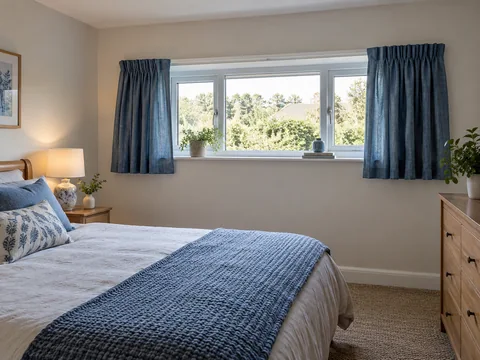
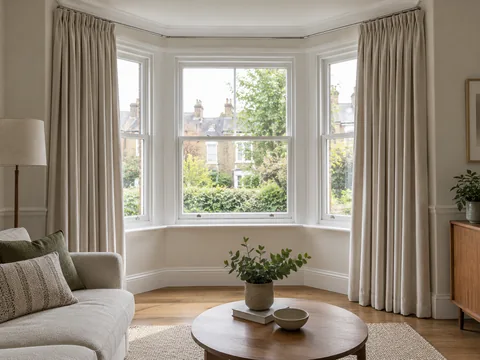
Curtains close to the wall colour can make the window wall feel more continuous. A clear contrast frames the opening and gives the textile more presence. Neither choice is inherently quieter: a shiny, heavily textured matching fabric may attract more attention than a plain contrasting one.
Use a large sample where possible and hold it vertically. Light passes through and across cloth differently from a painted board lying on a table.
A near match should be seen together
An olive curtain against a sage wall can create a layered relationship without matching exactly. Two slightly different creams may look less comfortable if one turns yellow beside the other. Put the samples in direct contact, then separate them by the distance created by the pole and folds.
If you want a close match, compare the fabric with the dried paint in the actual room. Online colour names such as stone, natural or grey tell you little about how two materials will sit together. Lining can also change the appearance of a light face fabric, so include it in the sample assessment where possible.
Bring the sofa and rug into the view. A curtain that matches the wall beautifully may still introduce the wrong relationship with the room's largest textile.
Let the choice do one clear job
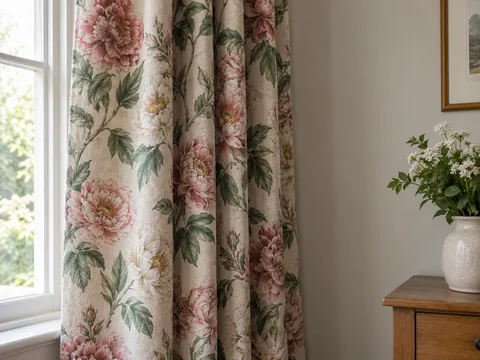
For a room with several patterns, a plain curtain near the wall tone can give the eye a rest. In a mostly neutral room, a stronger curtain may be the main colour change, making extra matching accessories unnecessary.
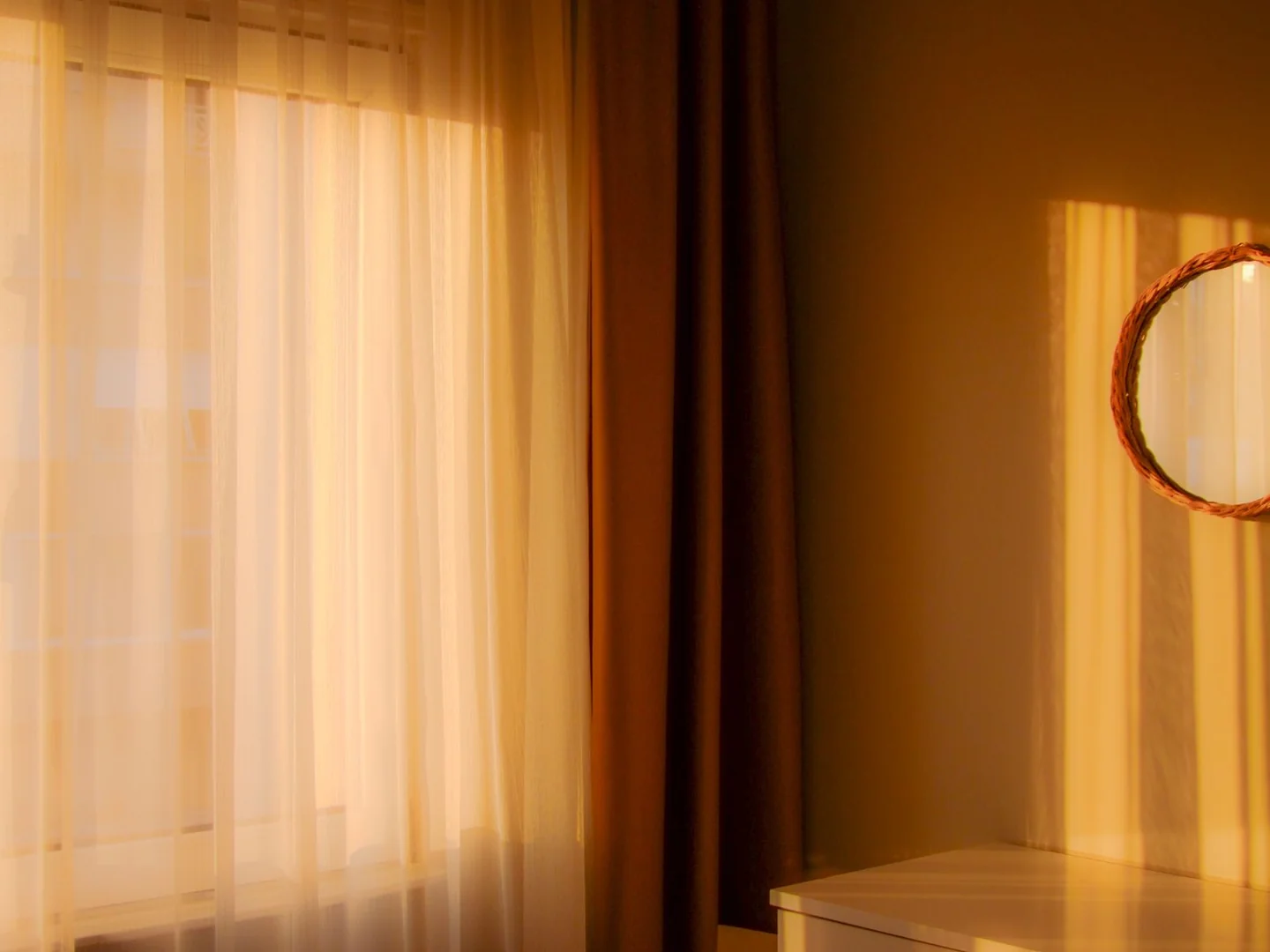
Look at the fabric under evening light, when the curtains are likely to be closed. A colour chosen in bright daylight can feel much deeper at night. If that suits the room, keep it; if not, test a lighter or less saturated version rather than assuming the installation will change it.
The final decision should include both positions. You should like the curtain as a full surface at night and as a gathered shape during the day. That is a more useful test than whether its colour is currently described as a neutral.