Use the surfaces you already own
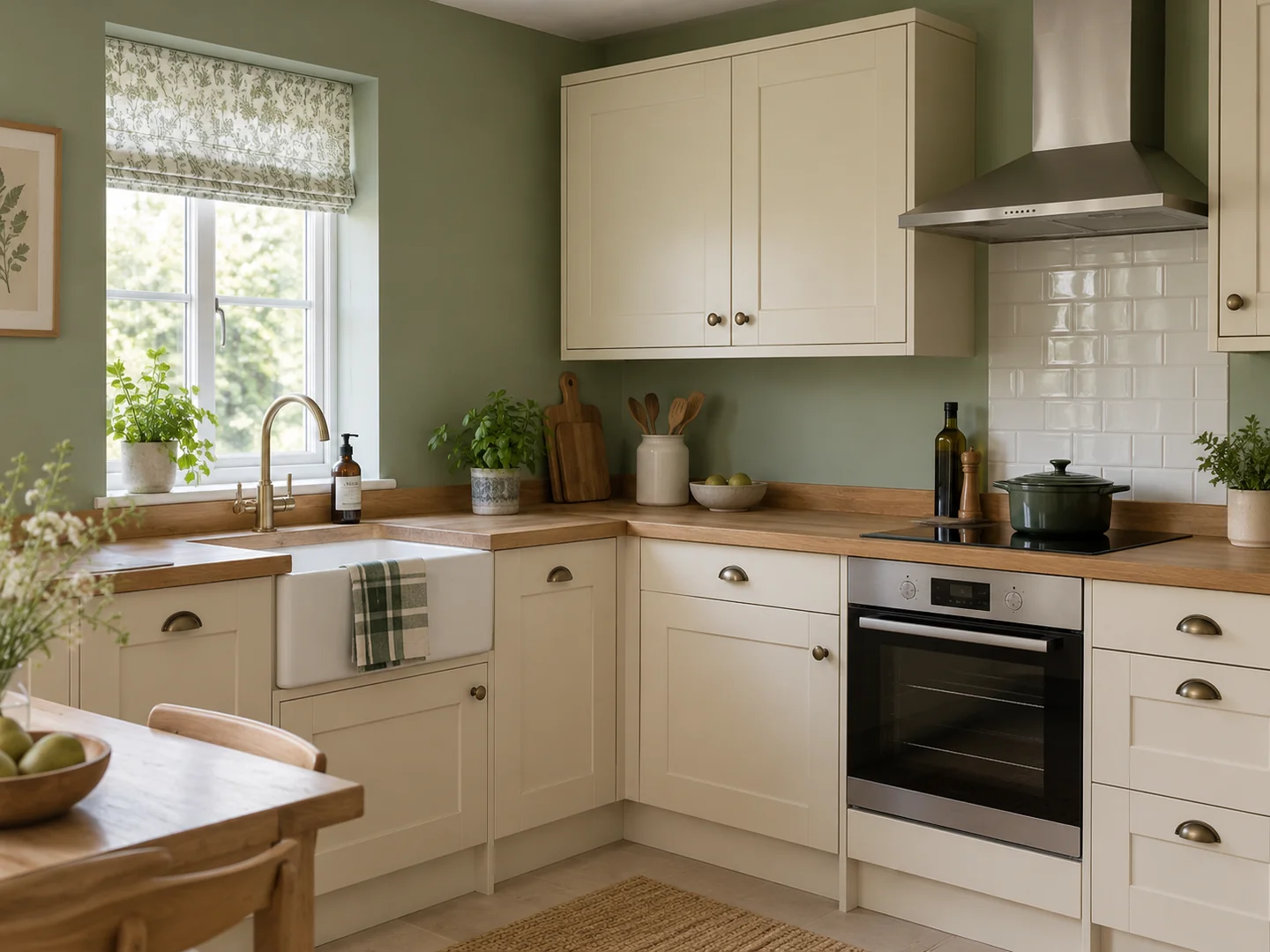
A kitchen with cream cupboards is not an empty setting for green walls. The doors may lean yellow, the worktop may be reddish timber and the splashback may have a cool glaze. Bring these into the colour decision before selecting a shade because its name sounds botanical.
Hold a painted sample beside a door and the worktop at the same time. Then take it to the splashback. If the wall area is small, even a relatively strong colour may be manageable, but its relationship with those fixed surfaces will be very visible.
A muted sage might make a cream kitchen feel quieter; an olive could reinforce its warmth; a bluer green might create more contrast. These are directions to explore with samples. There is too much variation within each name to choose confidently from a screen.
Include the cupboards’ shadows
The strip below wall units often receives different light from the wall near the window. Test the colour in both places, with under-cupboard lights on if they are normally used. A green that looks light beside the back door may appear much deeper beneath a shelf.
Also consider how much wall remains after utensils, shelves and appliances are in place. A colour board shown against a blank wall can exaggerate the finished effect. Conversely, a long exposed dining-end wall may make the paint a dominant part of the room even when the kitchen section contains little of it.
If the worktop is busy, keep the surrounding additions simple while you judge the paint. Patterned towels, jars and prints can be introduced later. Otherwise you may mistake an overloaded arrangement for a problem with the green itself.
Select the paint product after the colour test
Appearance and product suitability are separate decisions. The wall near a sink or cooking area may have different demands from a dry dining wall. Check the manufacturer's intended uses, preparation and cleaning instructions for the exact paint rather than assuming all green emulsions behave alike.
A decorative colour change does not replace a required splashback or solve damp and ventilation problems. Keep the project limited to surfaces suitable for the chosen coating, and ask for product-specific advice where the substrate is uncertain.
When the sample works with the cupboards in both daytime and normal cooking light, decide whether the green needs a small echo elsewhere. A plant or a piece of pottery may already provide it. The kitchen does not need matching green appliances to make the wall look intentional.