Treat the floor as a colour
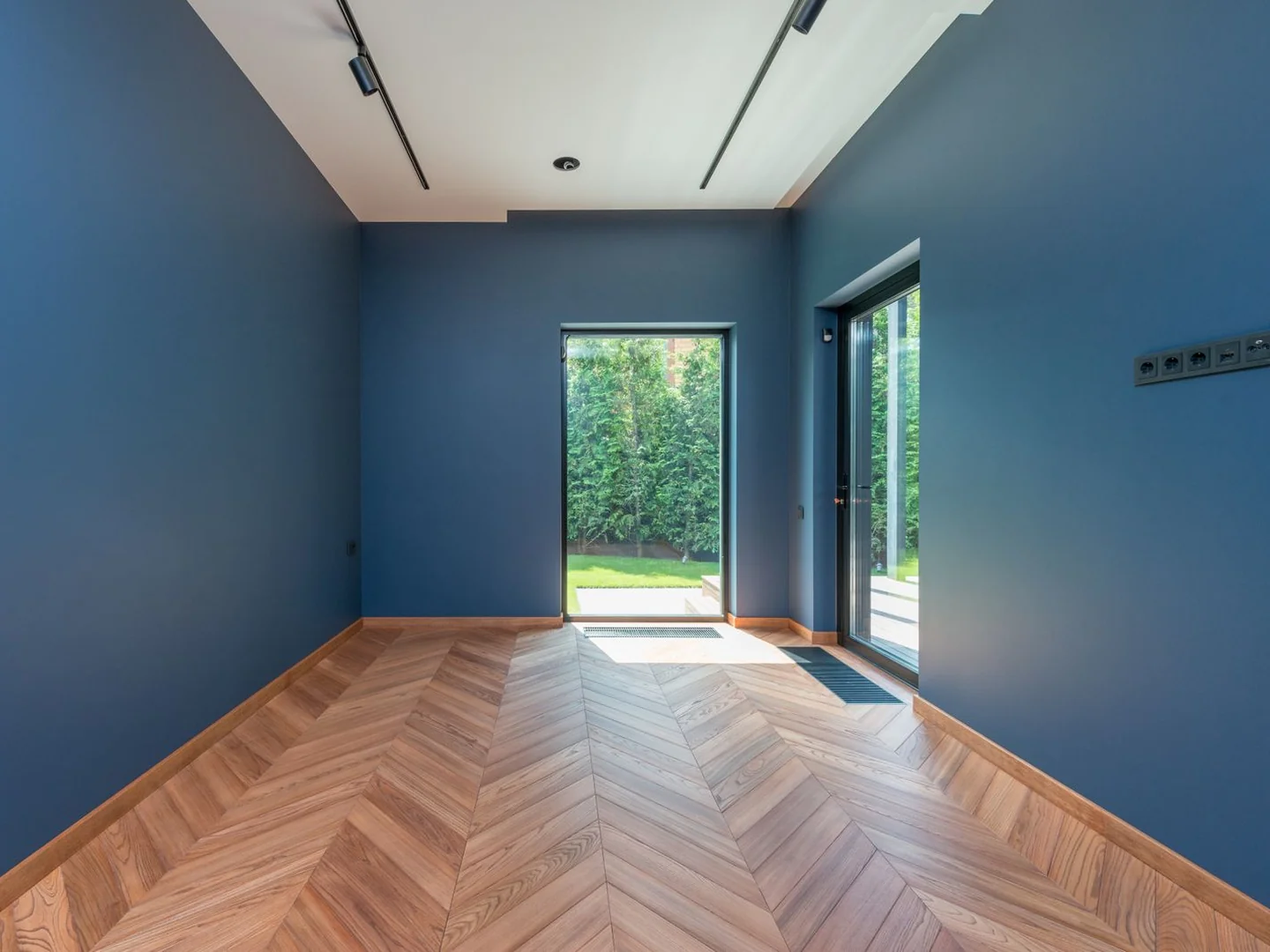
A timber floor can occupy as much of your view as a feature wall, especially in an open room. Calling it neutral does not make its yellow, orange or reddish notes disappear. Put a chair aside and look at a clear patch of floor before selecting the wall palette.
Bring sample boards down to skirting-board level. A pale blue-grey may provide a clear contrast with honey-coloured oak; a warm stone shade may make the transition quieter. Neither will cancel the floor's colour. In fact, a cool wall can make warm timber seem more obvious because the two sit in contrast. Decide whether you want that emphasis rather than expecting the paint to disguise it.
Include the rug in this comparison if a large one is staying. A grey rug, an oak border and a proposed pinkish wall are three adjacent colours, not a simple wall-and-floor pairing.
Try three different directions
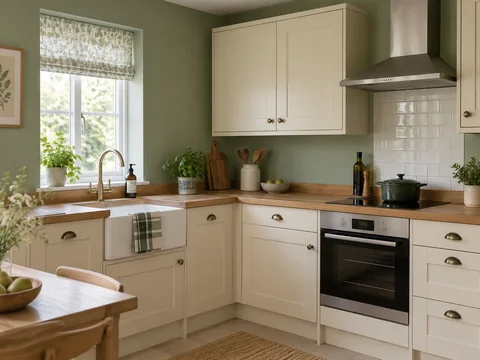
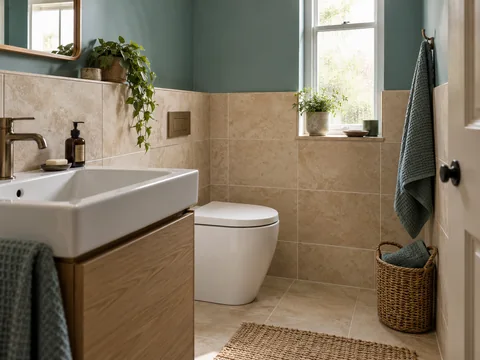
For a gentle scheme, start with an off-white that has enough warmth to sit comfortably beside the wood without becoming buttery. Compare it with a soft green and a muted blue. These are starting points for testing, not a promise that any colour from those families will work.
A green with a strong yellow note can echo the floor so closely that the room feels very warm. A greyer green may give more separation. Similarly, a bright blue and a dusty blue have quite different relationships with oak. Choosing between them is easier when the sample is large enough to see alongside several floorboards rather than one small knot.
If you prefer a deeper wall, try the colour behind the main piece of furniture first on a movable board. The sofa might cover much of the lower wall, leaving a narrower band of paint against the timber than you imagined. Judge the visible area rather than an empty-room moodboard.
Finish the junction
Skirting boards are the bridge between these two large surfaces. White skirting draws a clear line; a colour close to the wall makes that line quieter. Existing dark or glossy skirting can influence the comparison too, so include it rather than mentally deleting it.
Look at the samples when the room is bright and when lamps are on. Warm evening light may amplify the golden impression of the floor. If that is the time you enjoy the room most, it deserves a say in the final choice. Once the wall, floor and main furniture work together, smaller textiles can add contrast without forcing the paint to solve every detail.