Lay out the real pieces
A colour borrowed from one painting can be a good start, but it may be less comfortable behind the other pictures in the group. Put the artworks, frames and mounts together before choosing the wall. Include the pieces you intend to keep even if they are not part of a perfectly coordinated set.
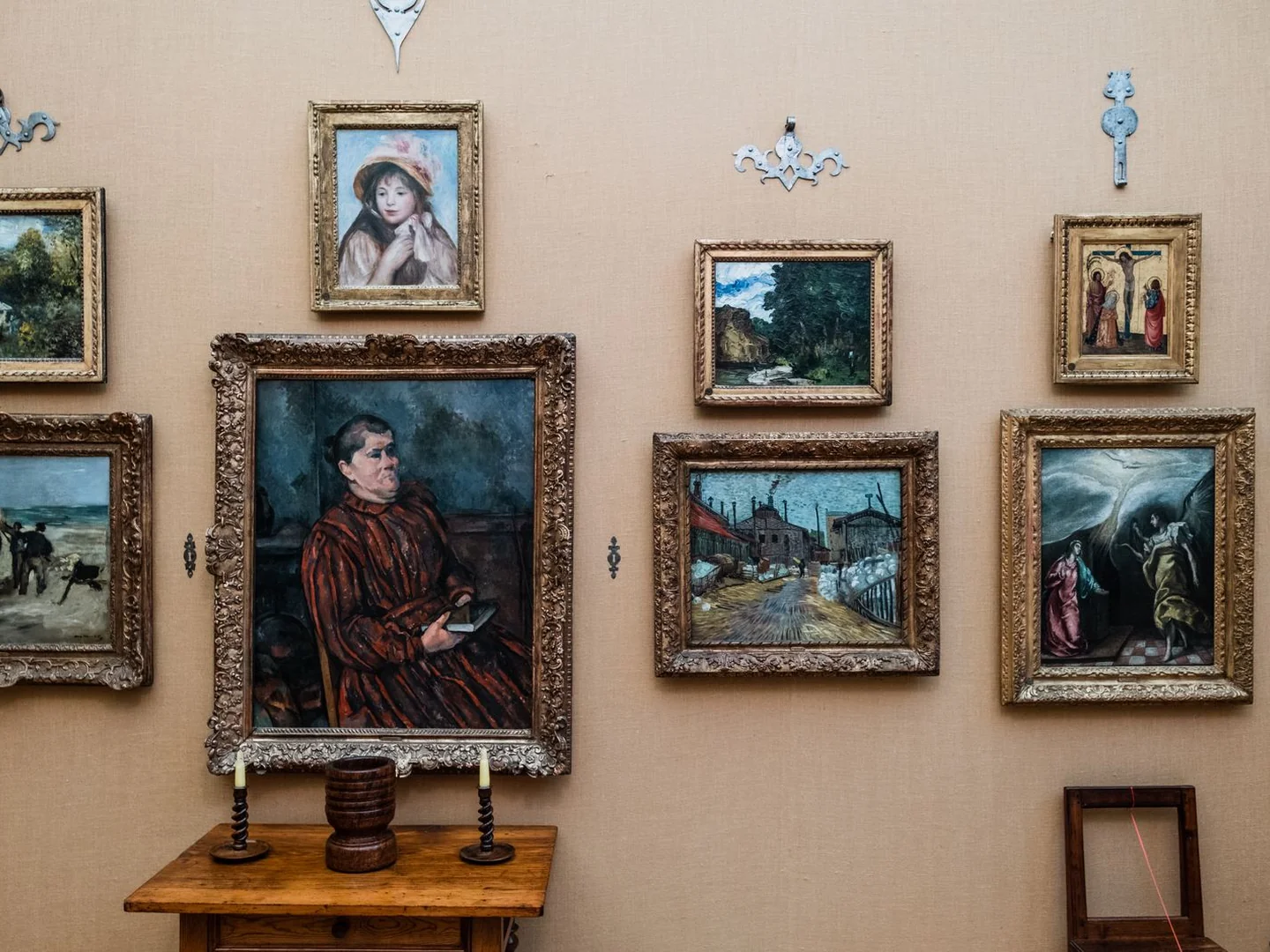
Look at the lightest and darkest frames. On a pale wall, black frames form a strong outline. On a deeper wall, pale mounts may become the brightest shapes. Decide which effect gives the collection the emphasis you want.
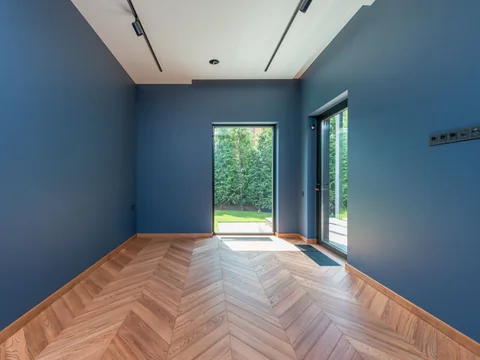
A muted taupe, green or blue can provide a background without repeating a prominent colour from every artwork. The wall does not have to explain the collection. It needs to let the individual pieces remain readable.
Use a board behind several frames
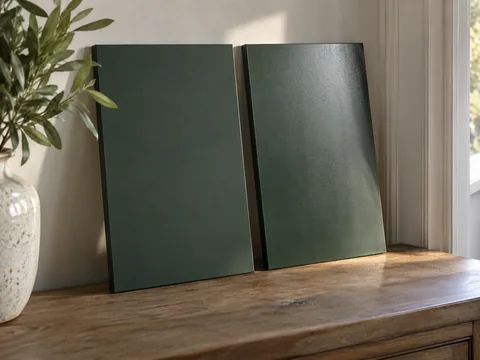
Hold a large painted sample behind two or three contrasting pictures, or place the frames safely in front of it on a stable surface. Compare the group from a distance. A colour that looks charming beside one corner of a print may be too strong across the whole arrangement.
Include the mounts in the test. Cream and bright white mounts can look different against a new wall, and that difference may become more noticeable than the frames. You can accept the variation or change a mount where appropriate, but do not assume it will disappear once hung.
If the pictures are visually busy, try a quieter wall colour before ruling the group out. If they are mostly restrained line drawings, a deeper background may help their pale papers stand apart.
Leave a little room around the group
The edge of the collection matters as much as the spaces between frames. A wall crowded right up to furniture or a door can feel unsettled regardless of the paint. Arrange the pictures before treating colour as the solution to every spacing problem.
Check reflections in glazed frames from the usual seating position. A change of paint does not remove glare from a badly placed light. Once the pictures can be seen comfortably, choose the background that supports the group as a whole and leaves room for the collection to evolve.