Decide which surfaces belong to the change
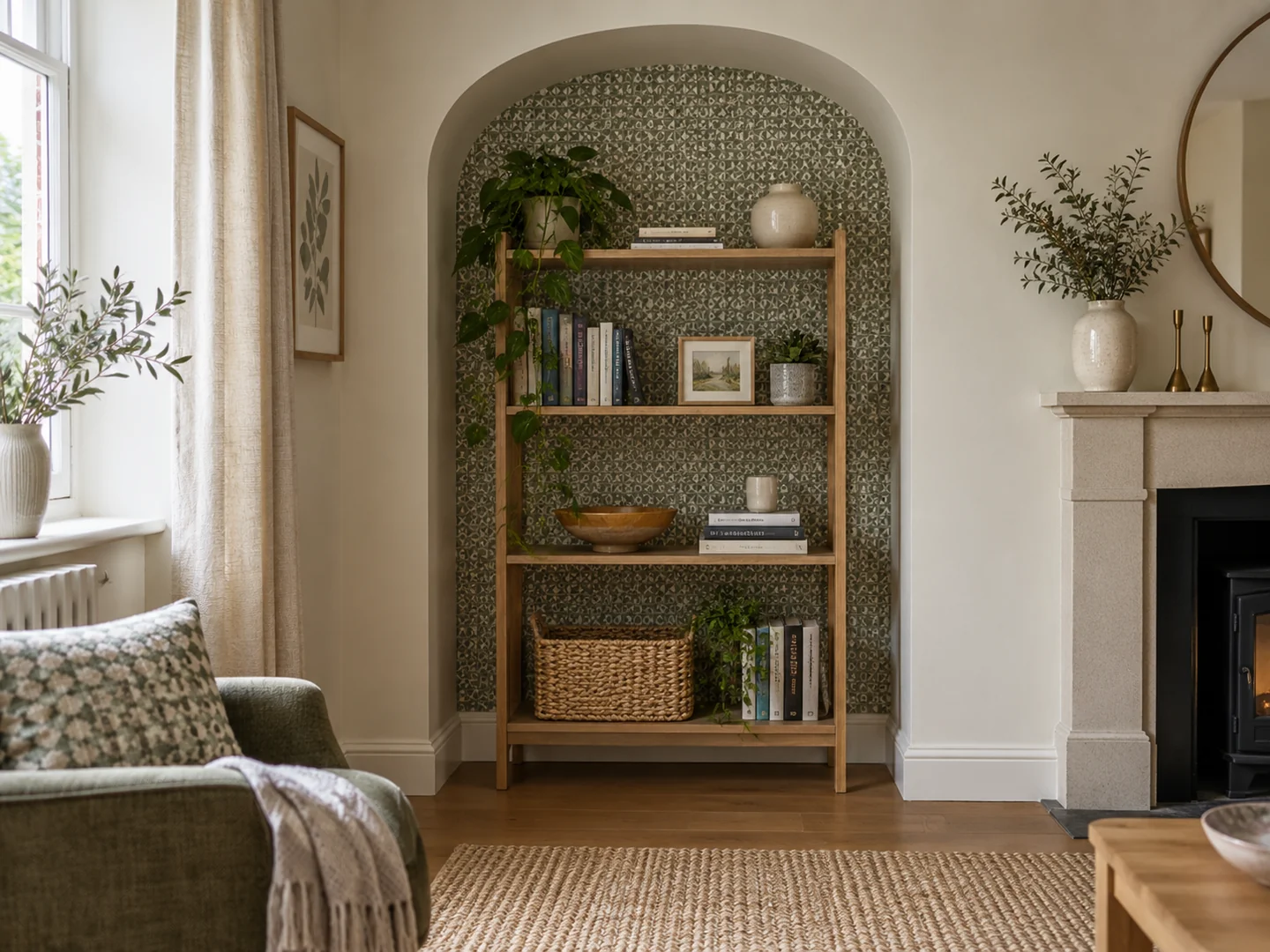
The back of an alcove, its side walls and the surrounding chimney breast do not have to receive the same treatment. Papering only the back makes a contained panel. Continuing onto the sides creates a more enclosed patterned recess. Sketch the boundary before ordering so the decision is intentional.
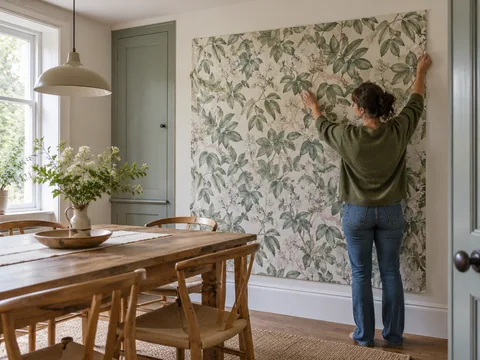
Consider what will stand in front. A freestanding bookcase with an open back leaves small areas of paper visible between objects. A low cabinet leaves a much larger field above it. If the wallpaper has large motifs, choose a sample showing the full design so you can judge how much might disappear.
A narrow alcove does not necessarily need a miniature print. A small dense pattern can look quite busy; a larger open design may have more breathing room. The visible area and contrast matter as much as the size of each motif.
Compare the two recesses separately
Paired alcoves often have different widths or light. One may sit beside a window while the other stays shaded. Put the sample in both places before assuming the colour will read identically. You can still use the same paper, but the difference should not come as a surprise.
If only one alcove is being papered, give the other a clear role. A plain bookcase or artwork may provide enough balance without creating a matching feature. Symmetry is an option, not an obligation imposed by the fireplace.
Check the colour against the hearth, mantel and surrounding wall. The paper may introduce several colours, so select the wall paint from the whole combination rather than from its brightest detail alone.
Plan for the actual surface
A decorative recess still needs suitable preparation and a paper appropriate to its location. Follow the manufacturer's instructions for substrate, paste and hanging. If the alcove contains a working fireplace, heater or unusual heat exposure, obtain relevant product and clearance advice instead of treating it as an ordinary cool wall.
Measure each recess independently, including returns if they are part of the design. Pattern matching and trimming affect quantity even in a small area. Do not assume one leftover roll is sufficient merely because the total wall area seems modest.
After hanging, put the furniture back before adding new objects. The pattern may already supply the detail the alcove needed. Leave a few clear areas where the wallpaper can be seen rather than covering the entire result with accessories.