Look for the strongest comparison
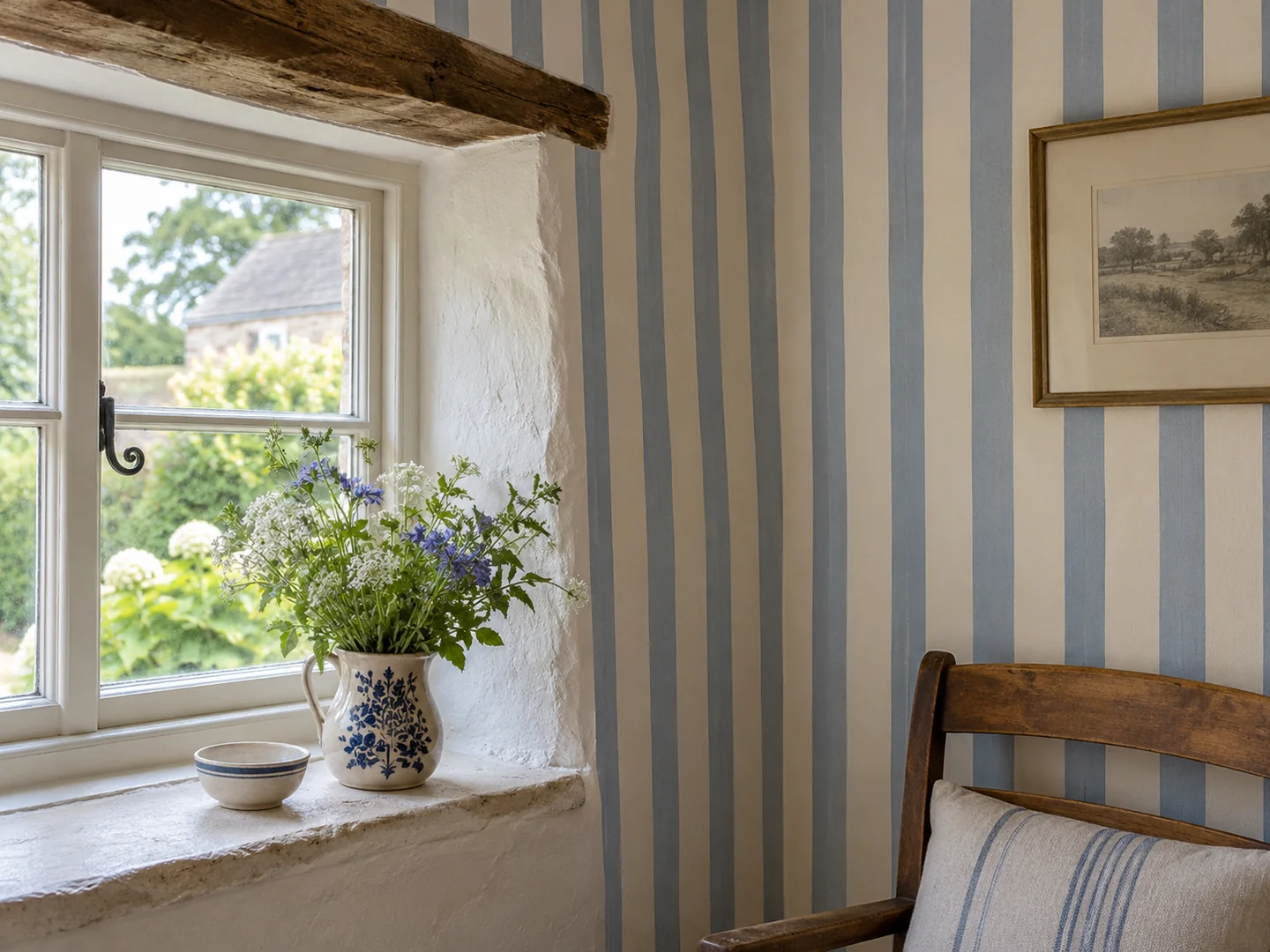
A vertical stripe beside a window frame invites the eye to compare the two lines. In an older cottage or terrace, the frame, plaster corner and ceiling may not all agree. The wallpaper has not caused the irregularity, but a precise pattern can make it more visible.
Stand a striped sample beside the window and look from the normal room entrance. A narrow high-contrast stripe may emphasise a lean more than a wider, softer one. A loosely drawn stripe can offer a different effect again. Choose by what you see rather than assuming that every striped design behaves alike.
The same issue applies at corners. A small gap that widens between a stripe and the corner may catch your attention every time you enter. If that bothers you at sample stage, a less rigid pattern may be the simpler choice.
Do not use the pattern to diagnose the building
Wallpaper selection is a visual decision, not a structural assessment. New or changing cracks, significant movement or damp need appropriate investigation. A softer pattern can reduce visual emphasis on an old irregular line, but it cannot correct a problem with the wall.
For installation, follow the wallpaper manufacturer's hanging guidance and use a competent installer when the room presents difficult angles. Starting from an unreliable corner can compound alignment problems. Avoid planning the job as though all four walls form a perfect rectangle merely because the room is small.
Let the rest of the room respond
Stripes already provide a strong rhythm. A plain curtain and a rug with a different scale of pattern may sit more comfortably than several competing narrow stripes. If you want striped textiles too, compare them together at the distances where they will be seen.
Look at the ceiling and skirting colours around the sample. Strong borders make the wallpaper's edges clearer; a related colour can soften them. Neither approach removes the need for accurate hanging.
If a stripe still appeals after these checks, you can choose it knowing which irregularities will remain visible. An older room does not need to imitate a new square box. The aim is simply to avoid being surprised by a contrast that the sample could have revealed.