Turn towards something
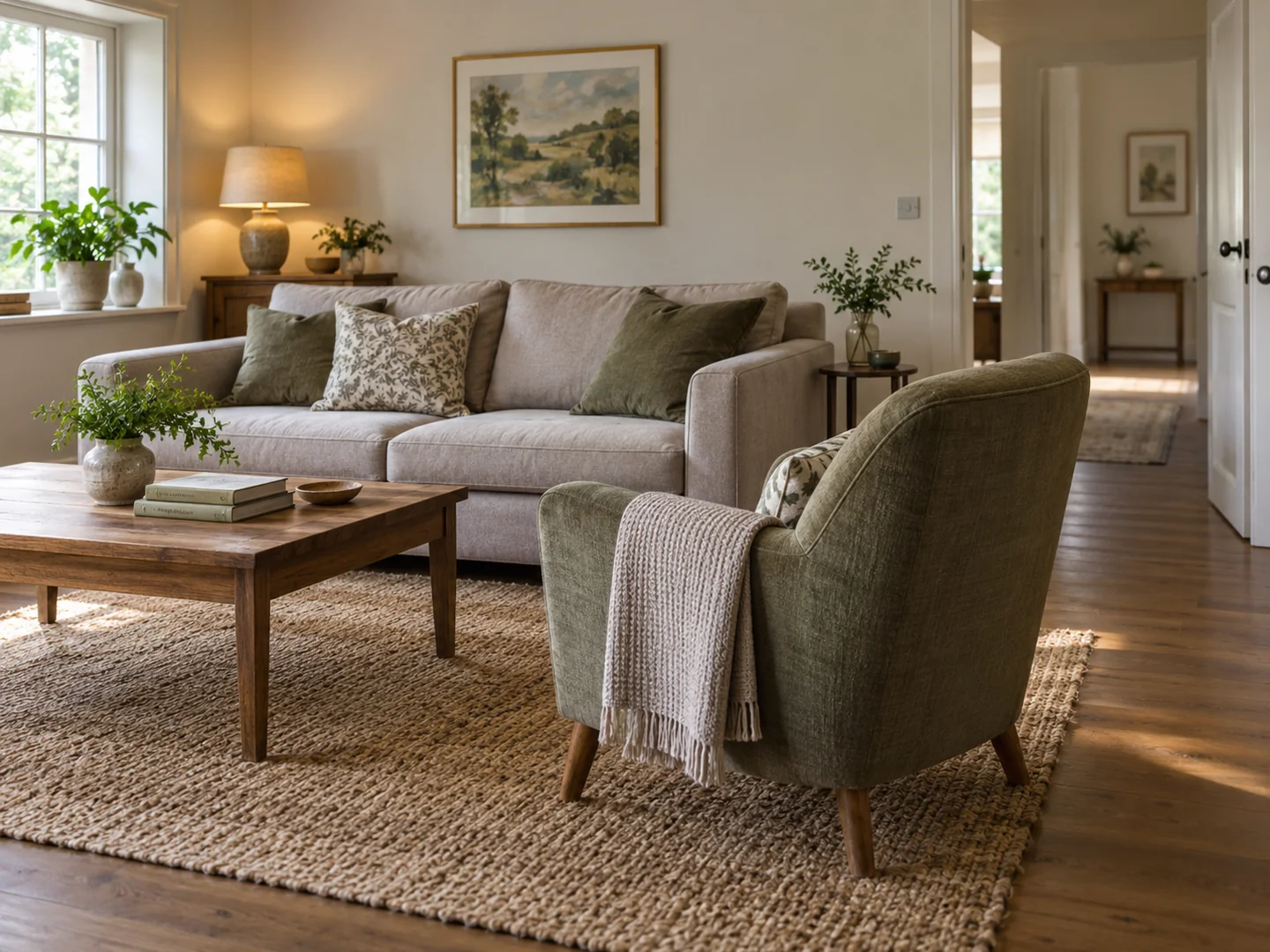
An angled chair works best when the angle has a reason. Turn it towards the sofa for conversation, towards a window for a view or towards a suitable lamp for reading. A chair placed diagonally simply to fill a corner can consume more floor than expected while giving its sitter nowhere comfortable to look.
Try the position with somebody seated. Their feet extend beyond the chair's drawn outline, and a footstool extends it further. The view from an empty room can hide that difference. Check whether the sitter can stand without stepping straight into the main route or catching the edge of a nearby rug.
Watch the back corner
When a rectangular chair rotates, one back corner moves further into the room. That corner can become the point everyone brushes past. Leave a clear route behind it if people need to pass there, or move the chair closer to the rest of the seating so the route naturally runs elsewhere.
The triangular gap left behind an angled chair does not need to be filled. A tall plant or lamp may fit visually but still make cleaning awkward or block access to a socket. Use that space only when it has a clear purpose and the object can be reached without dragging the chair away every time.
A side table should remain reachable from the sitting position after the chair turns. It is easy to leave the table neatly parallel with the wall while the armchair has moved away from it. Reach for a book or mug during the test rather than judging the distance by eye.
Try a smaller change
Sometimes a slight turn is enough. Moving from square-on to a modest angle can connect a chair to the sofa without sending its legs into the centre of the room. Photograph both positions from the doorway if the difference is hard to judge. Then sit in each position for a while. The more convincing view is useful, but the chair still needs to feel as though it belongs to the person using it.