What will the surface hold?
A coffee table might carry everyday drinks, a board game, a large book or simply the television remote. Those uses call for different amounts of surface. Write down what would be on it during a normal evening. If the answer is two mugs and a remote, a large rectangular table may be doing more to obstruct the floor than to support the room.
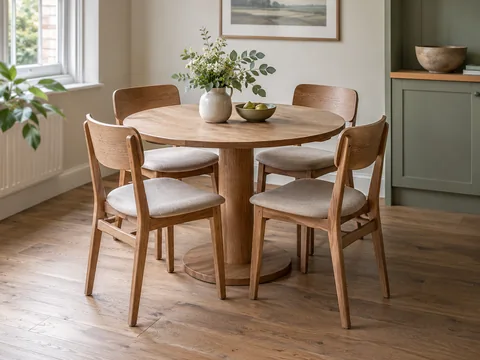
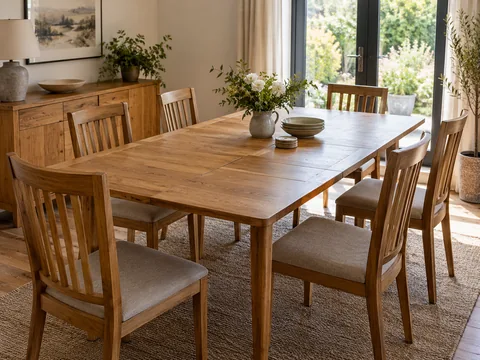
If you eat occasional meals there, test the sitting position rather than assuming a higher top solves everything. A low sofa and fixed table may leave you leaning forward awkwardly. A dining surface elsewhere can be a better answer than turning the coffee table into furniture that tries to do every job.
Storage beneath the top deserves the same scrutiny. A lower shelf can hold current magazines, but it may make the table look busier and leave less room for feet. A lift-up top changes its height and centre of gravity when used; check the mechanism's instructions and the position of nearby seats. Decide whether that additional function will be used often enough to justify a more substantial piece, especially in a room where the table has to move for other activities.
Trace the edges around the seats
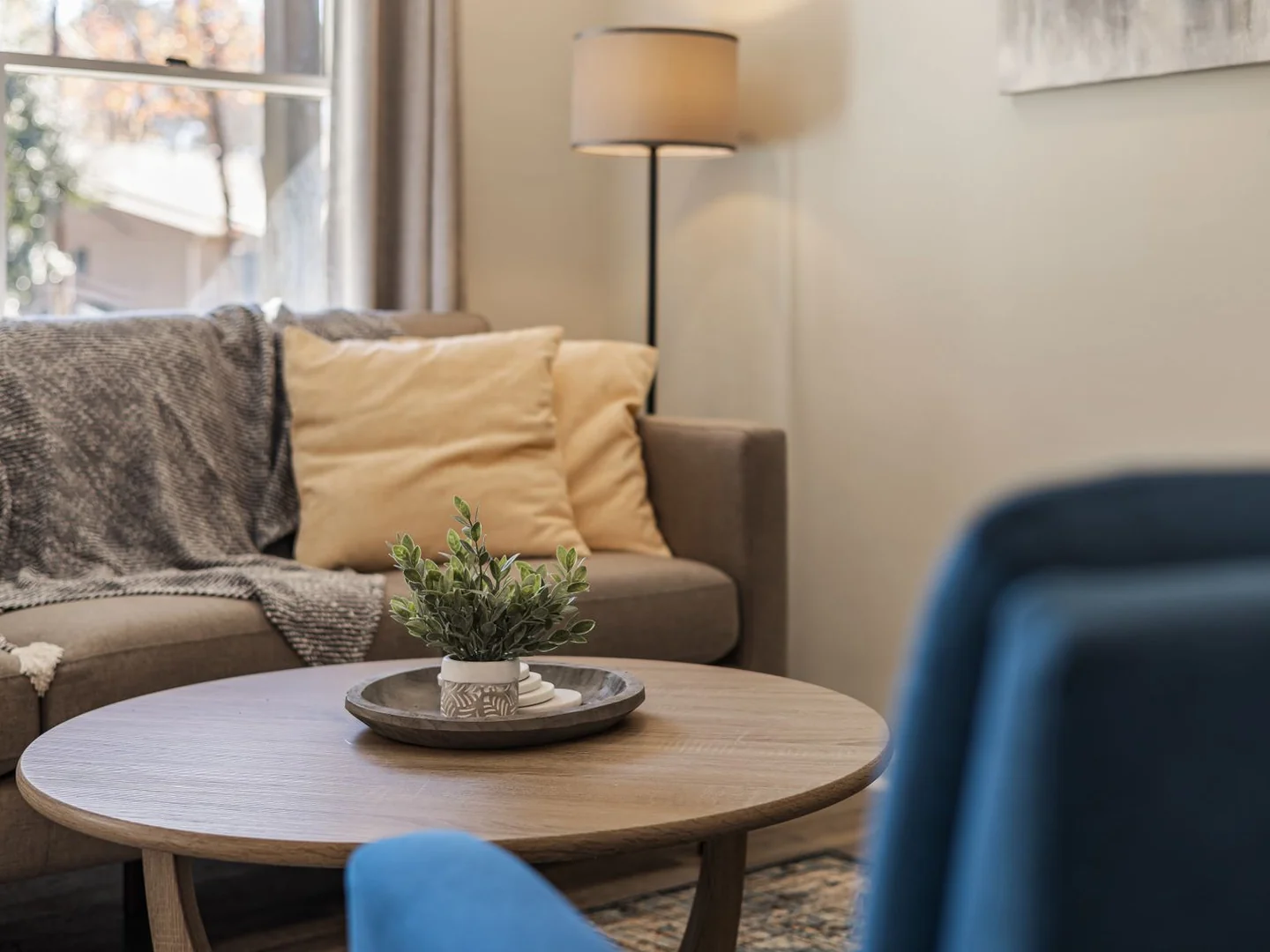
Place the proposed outline in front of the sofa and any chairs. People should be able to get into and out of each seat without navigating a narrow gap sideways. Include their feet, not just the furniture legs. A chaise end often reduces the area available for a table much more than the sofa's overall width suggests.
A round table removes corners but still has a full diameter. An oval can offer a longer surface while softening the ends of a route. A rectangle may suit a long sofa, particularly where the main route runs beside rather than through the seating group. None is universally space-saving; compare the actual outlines at similar useful surface areas.
Check the base as well as the top. Widely splayed legs may project into the route, while a solid plinth can reduce room for feet. A table that appears light in a product photograph may have a much more substantial presence when viewed from sofa height.
Consider two smaller surfaces
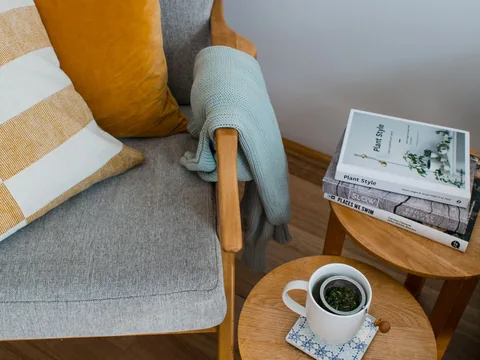
Nesting tables can separate for guests and gather together later, provided there is somewhere for the smaller pieces to stand. They do not save space when permanently scattered across the only walkway. Test their everyday position, then their busiest position, before deciding the flexibility is useful.
Side tables can remove the central obstacle entirely. They work particularly well when a room is crossed frequently or when the seating forms two smaller groups. A single side table may not serve everybody, so check each seat rather than solving only the sofa end nearest a wall.
Before buying, live for a few evenings with a temporary surface at a similar height. Notice whether you reach naturally, put your drink somewhere else or keep moving the object out of the way. That behaviour is more useful than a rule about what percentage of the sofa length a table ought to occupy.