Compare diameter with real seats
A round table has no corners, yet its widest measurement extends in every direction. Mark the actual diameter on the floor and add the chairs. A table that fits between two walls may still be too large once somebody pulls a chair out to sit. Include the route behind the most frequently used seat.
The number of diners stated in a listing is a starting point, not a promise about your chairs. Broad upholstered seats need more room than slim dining chairs. Arms can prevent a chair pushing underneath, making the whole arrangement occupy more floor even when nobody is eating. Compare the underside height and the arm height before ordering.
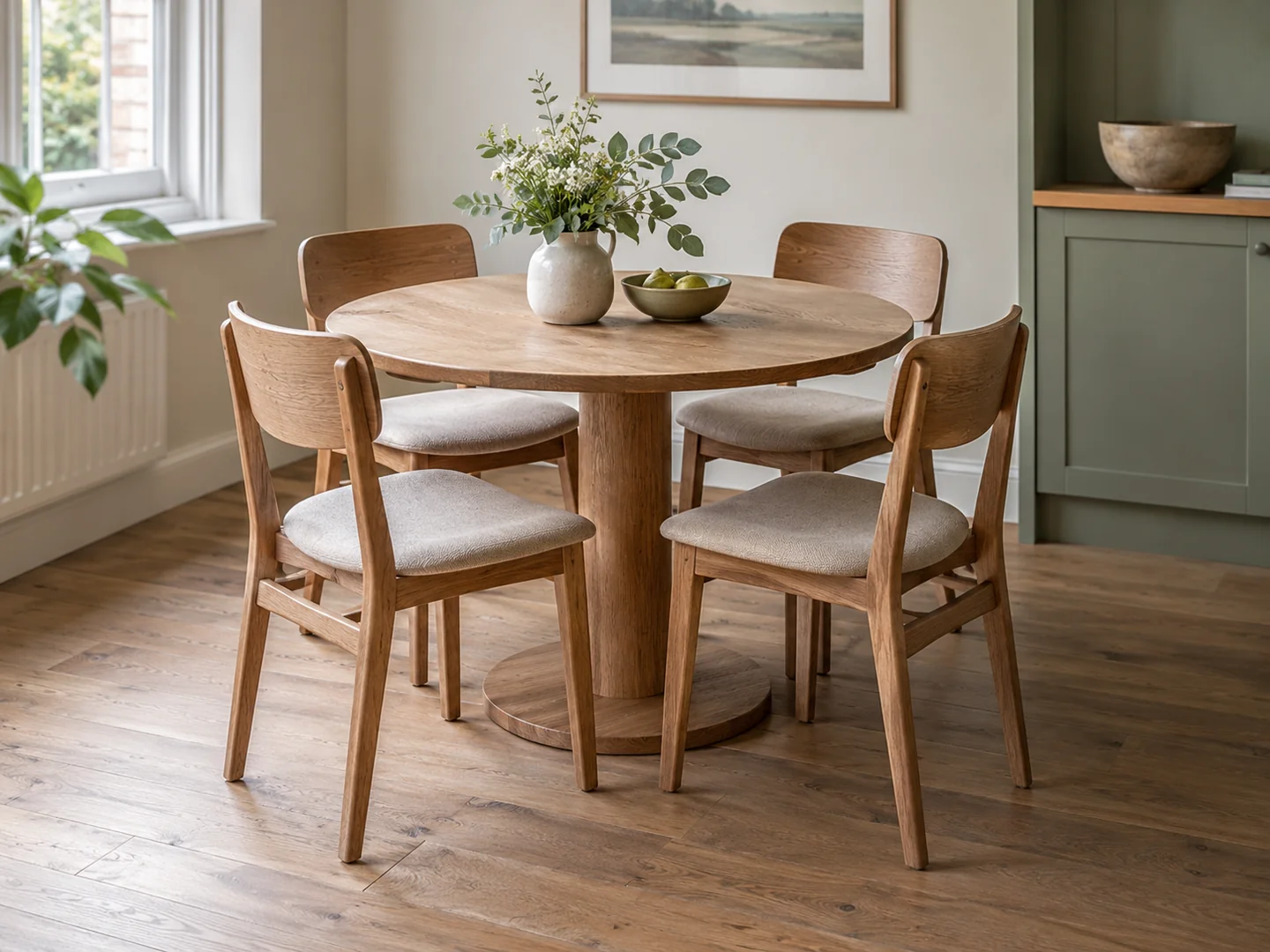
A useful comparison is to draw the chairs you already own around the proposed circle. For illustration, two tables may both be advertised for four people, but one might leave little separation between broad chair backs while the other provides a more relaxed setting. There is no need to turn that into a universal seating formula. The real chair dimensions and the way people approach the table give you the answer for this particular room. Include anyone who regularly needs more space to sit or move.
Look below the tabletop
A pedestal can give diners more freedom around the perimeter because there are no corner legs to straddle. Its base still has to fit feet comfortably. A wide disc may interfere with some sitting positions, while several splayed supports can be awkward when the table is used by an extra person.
With a four-legged table, check where the chairs land relative to the legs. The table's geometry may encourage four particular positions rather than allowing seats anywhere. If you need to add a fifth chair occasionally, test that position in a showroom or ask for a dimensioned drawing of the base.
Think about the middle of the table. A wide round top may offer plenty of surface but place shared dishes beyond an easy reach. If your meals usually include several serving bowls, compare how they would sit on a circular and rectangular top. More surface is not always more usable surface.
Match the shape to the corner
A round table can work well in a roughly square dining area or beside a bay, where its edge softens the route past it. In a very narrow rectangular room, a slim rectangular table may use the available shape more efficiently. Try both outlines before deciding that round automatically means smaller.
If the table stands against a wall most of the week, consider how it moves out for meals. A round top touching a wall leaves wedge-shaped spaces at either side; those may be harmless, or they may make the arrangement feel less settled than a straight edge would.
Keep the choice connected to daily life. A table for two people and occasional visitors has a different job from one where four people eat, work and do homework every day. Choose a diameter that handles the ordinary setting comfortably, then decide whether extra guests require an extension or a temporary arrangement elsewhere.