Find the returning section on the drawing
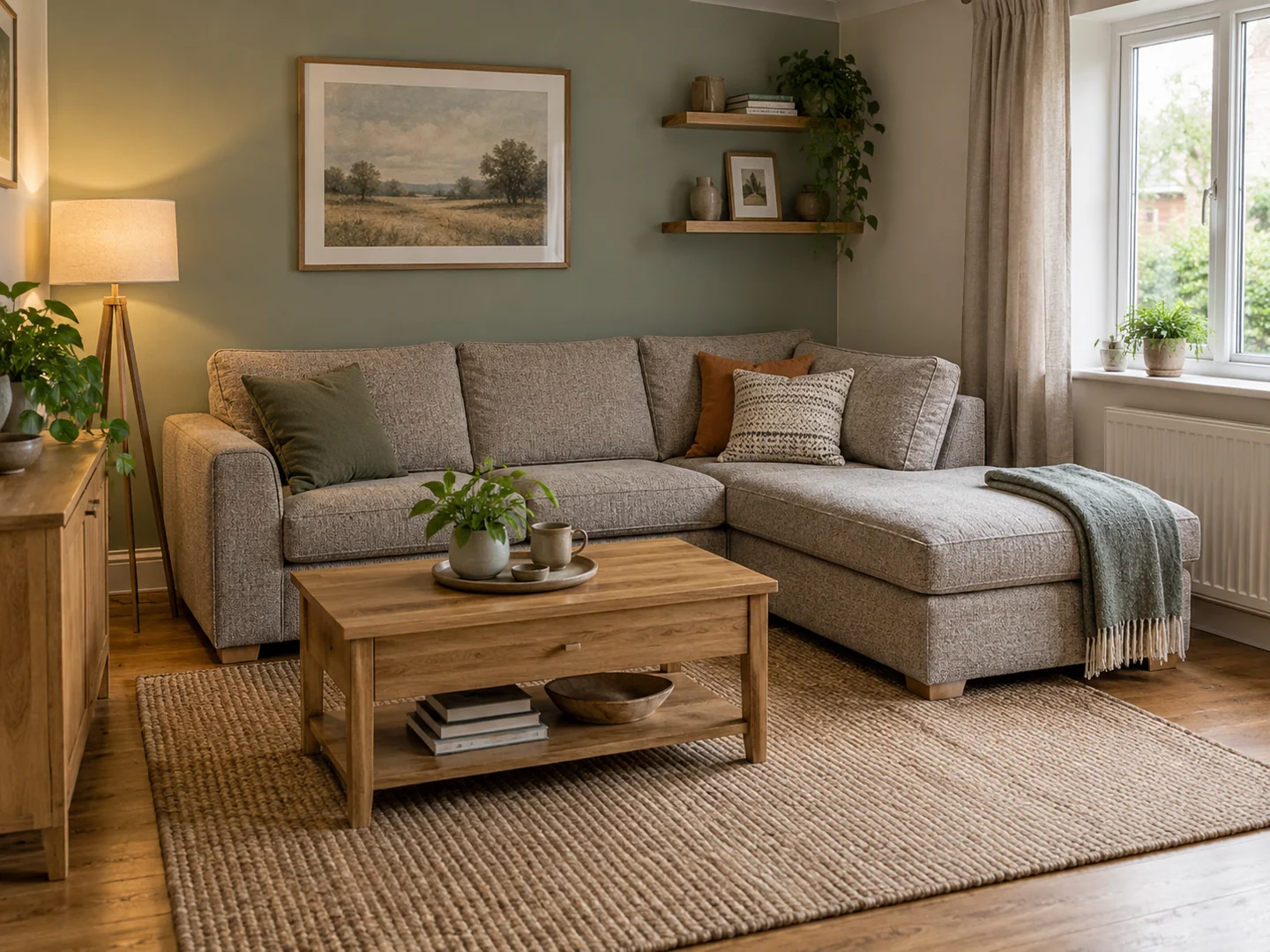
Product photographs do not always make the arrangement clear. Identify which part is the main sofa and which part projects into the room. Retailers may describe left and right from different viewing positions, so check the plan drawing and written description rather than interpreting a label from memory. Confirm the exact configuration you are ordering.
A chaise and a corner seat also behave differently. A chaise extends one sitting position for stretching out; a corner arrangement may provide upright seats along both sides. The useful number of seats depends on how people sit. A generous corner can become one favourite lounging place rather than two seats that adults regularly share.
Write down the overall width, depth and return length, including arms and any projecting frame. For a modular design, ask whether these figures include connectors or gaps between sections. If the pieces can be rearranged, obtain dimensions for the arrangements you would actually use, not only the display configuration.
Mark the complete shape
Draw both arms of the L on the floor using a method suitable for the surface. Test tape in an inconspicuous spot before applying it to a finish that might lift. The empty rectangle inside the L is part of the seating group; it is not automatically free circulation space. Add the proposed coffee table before judging the layout.
Walk from the doorway to the places you use: the window, dining area, television controls and adjoining room. If the return forces every journey around a long detour, try reversing the configuration or moving the whole sofa. A comfortable lounging section can still be poorly placed if everyone has to step around it repeatedly.
Do the same test with people sitting. Feet and a blanket can extend beyond the upholstery, especially on the chaise. Someone getting up from the inside corner should not have to step over another person's legs. Leave a reachable surface for drinks at that seat too; the sofa end nearest a side table is not the only position that matters.
Consider the wall and the view behind
A corner sofa need not stand in the corner of the room. Its return can define the edge of a sitting area in an open-plan space. In that position, the back is visible from other parts of the room, so check its finish and height. A high back may create the separation you want or block a view you hoped to keep open.
If the sofa does sit against two walls, check the corner carefully. Skirting, sockets, radiator pipes and curtains may prevent it from meeting the walls as neatly as the product photograph suggests. Do not trap access to a socket or heating control behind an immovable section. Allow the space required by the furniture and any nearby heat source.
Windows introduce daily movement. Full curtains need to open, and handles need to be reached without climbing across cushions. A lower sofa back may help keep the window visible, but it does not solve an inaccessible handle. Try those movements in the floor outline before treating the window wall as the obvious location.
The inside corner can also become the least convenient place for a lamp. A floor lamp behind the sofa may be difficult to reach, while a table at the outer end may not serve that seat. Consider the lighting alongside the configuration, with switches and safe cable routes included. Solving this early avoids buying a large sofa that leaves its most comfortable lounging position without the light needed for reading.
Think beyond the first arrangement
A large connected piece has less flexibility than separate seats. Consider whether a future desk, play area or dining table would need part of its footprint. That does not rule it out; it helps establish whether the return is useful enough to justify making the room less changeable.
Modular pieces can offer options, but only within their connection system. Check which sections have finished sides, whether connectors can be reversed and how the individual units stay together. Do not assume a corner piece can become a standalone chair unless the manufacturer says it can be used that way.
Finally, check delivery dimensions for each section and the route into the room. A sofa arriving in several pieces may be easier to deliver, but a large corner module can still cause problems on a tight stair turn. Confirm the plan with the retailer before purchase. Once the footprint, daily use and delivery all work, fabric and leg choices become decisions within a sound arrangement rather than distractions from an oversized piece.