Begin with the fixed parts
Draw the bedroom with its door swing, windows, radiators, fitted cupboards and sockets. These are the parts the bed has to work around. Note low beams or ceiling slopes too. A plan seen only from above can make a bed look possible where sitting upright against the headboard would be awkward.
Measure the bed frame rather than using the mattress size alone. Upholstered headboards, end panels and projecting legs can add considerably to its footprint. If you already own the frame, measure its widest points directly. If you are buying, ask for the full assembled dimensions and check how it arrives in the room.
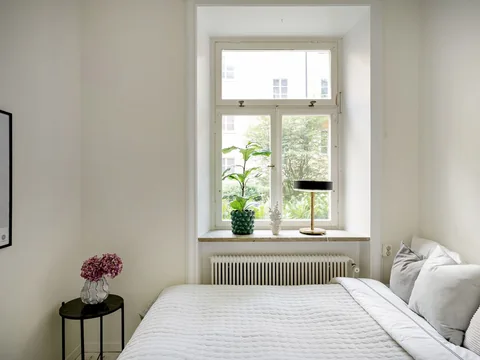
Consider the wall behind the headboard as a working surface. A socket placed directly behind a solid headboard may become inaccessible. A radiator needs appropriate clearance and access to its controls. A window may be usable above a low bed, but curtains, handles and the sill still have to work without climbing across pillows.
If the room has two plausible bed walls, compare them with the same furniture list. Draw one complete arrangement for each rather than moving the bed alone in your imagination. The alternative wall may release a better wardrobe position or make a desk possible, even if the bed looks slightly less centred from the door. Conversely, a pleasing bed position may remove the only suitable wall for necessary storage. Comparing complete arrangements makes those trade-offs visible before one attractive view determines every other decision.
Try the everyday entry and exit
For a shared bed, access on both sides can make getting in and out easier. In a small room that may require a smaller frame or a different storage arrangement. Decide whether pushing one side against a wall is an acceptable compromise for the actual sleepers rather than treating it as a universal solution.
Mark the bed on the floor, then walk from the door to each side. Include a bedside surface and any open drawer. A narrow gap can feel more constrained beside a tall wardrobe than beside a low stool, so test the height of nearby furniture as well as its plan outline.
Think about making the bed. A position that leaves no way to reach a far corner may become irritating even if sleeping there is comfortable. If the frame has storage drawers, open their full footprints on the plan. Bed storage is not useful when it can only be reached after moving another substantial piece.
Check what faces the bed
A chest of drawers at the foot can use an otherwise blank wall, but its drawers need opening space and somewhere for you to stand. A wardrobe door has its own sweep. Do not measure only the gap between closed furniture fronts and conclude that everything fits.
The view from bed is a personal choice, but it is worth considering before installing a headboard or wall lights. You may prefer to face a window, a quiet wall or the room entrance. Try the position with a temporary pillow or chair at roughly the right viewing point. The view from the doorway is not the only view the room has.
If the bedroom also contains a desk, avoid letting the desk chair's working position overlap the route to bed. A desk tucked tidily underneath a window may look compact when the chair is pushed in but occupy much more floor while someone is working. Test both activities together if they may happen at the same time.
Use the room's asymmetry
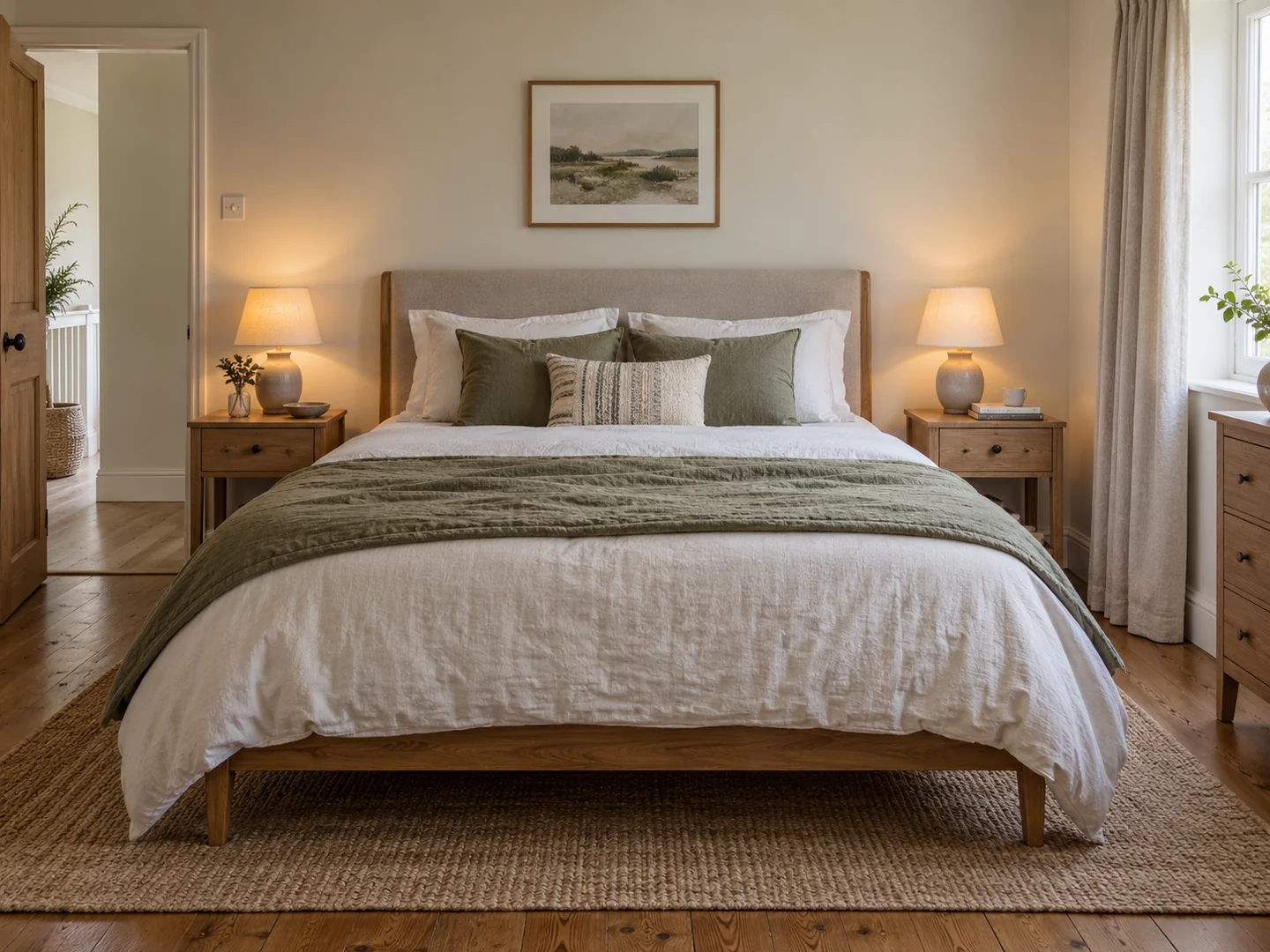
The best bed position may not leave equal gaps on both sides. Matching bedside tables are optional. A small shelf on one side and a narrow cabinet on the other can meet different needs without forcing the bed into an inconvenient location. What matters is that each sleeper has the access and surface they need.
An off-centre bed can still look intentional when the surrounding objects relate to it. Position artwork and lamps with the bed arrangement in mind rather than automatically centring everything on the wall. If the wall is wider on one side, that extra area might remain open instead of attracting another piece of furniture.
Live with the proposed position before fixing elements permanently. A few nights reveal whether light reaches your eyes early, the door feels too close or a bedside lamp is difficult to reach. These are specific problems with specific adjustments. Choosing the wall carefully lets the smaller pieces follow the way you use the bedroom instead of asking your routine to accommodate a symmetrical photograph.