Define the work before choosing the desk
A laptop used for occasional correspondence asks less of the room than a workstation with a separate monitor, keyboard and paperwork. List the equipment that stays on the desk and the space needed to use it. A shallow decorative console may hold a closed laptop without providing a suitable surface for a working day.
Consider frequency as well as equipment. A few minutes at a desk is different from several hours each day. Where you work from home for an employer, use the relevant workstation assessment process rather than relying on a room styling guide to establish suitability. The HSE explains that furniture and equipment should support the person and their work; appearance alone cannot establish that.
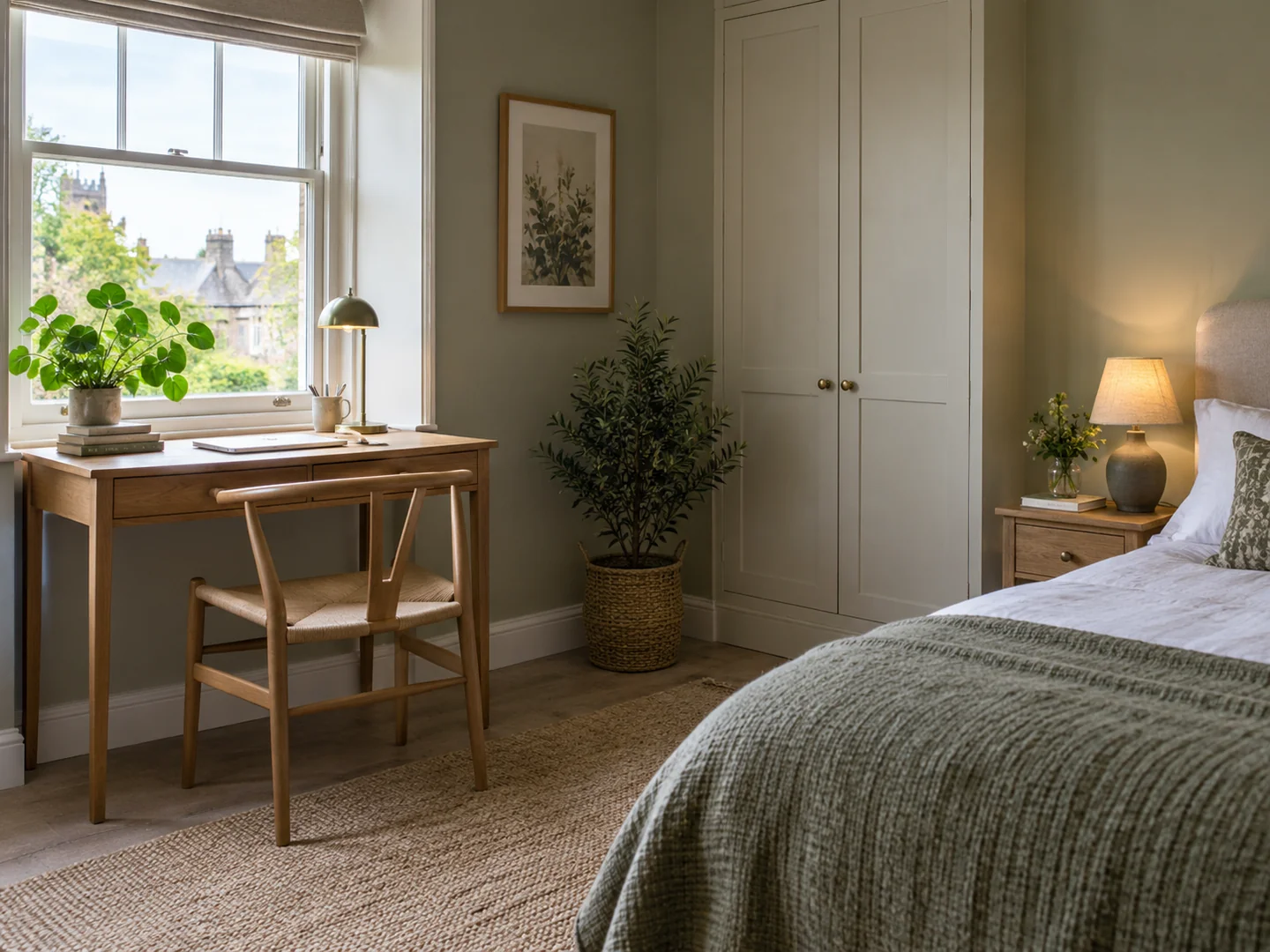
The chair belongs in the measurement from the beginning. Include its width, its occupied position and the space needed to move it back and stand. A desk that appears to fit neatly at the foot of the bed may leave no usable chair space. Do not count the bed as somewhere the chair can overlap while you work.
Paper-based work can require surprisingly generous depth. An open notebook in front of a laptop, or a drawing beside a reference book, occupies more surface than either object alone. Lay out the typical task on an existing table and measure the area actually used. This can prevent choosing a desk that looks discreet in the bedroom but immediately forces materials onto the bed. If the necessary surface will not fit, changing the work location may be more useful than searching for an ever narrower desk.
Try the window position without assuming it wins
Daylight can make a desk pleasant, but screen reflections and direct brightness change through the day. Try a screen in the proposed position at the times you normally work. A desk side-on to the window may be easier than one directly facing or backing onto it, though the best position depends on the room and window.
Check curtain movement and the reach to window handles. A desk beneath a window can turn opening it into a stretch over equipment. The desk also needs to avoid obstructing a radiator or its controls. If those conflicts accumulate, another wall may be a more comfortable location even if it looks less obvious in a photograph.
Look for a safe electrical route. Power leads should not cross the route to bed or trail where the chair moves. Do not run them beneath bedding or pinch them behind furniture. If the available sockets make the arrangement impractical, seek appropriate electrical advice about a better provision instead of treating an extension lead as an unlimited solution.
Separate the desk from the bedside
A bedside table and a desk have different heights and working positions. Combining them may save a piece of furniture, but test both jobs. A surface comfortable for typing may be difficult to reach from the pillow, and a bedside lamp may not illuminate work adequately. It is acceptable for each area to have a small, distinct surface.
Keep the route to wardrobes and drawers open. Working in a shared bedroom can be frustrating if another person has to squeeze behind the chair to dress. Test the room with the chair occupied and the relevant storage open. If simultaneous use is unavoidable, move one activity rather than hoping everyone will be careful.
A desk should not require rearranging the bed each morning. Small items can move, but the basic room needs to function without a daily furniture operation. If the only available desk position demands that, consider whether a workstation elsewhere in the home would serve both work and sleep better.
Make stopping work straightforward
Provide a place for the work that remains unfinished. A drawer, document box or closed cupboard nearby can keep papers from migrating onto the bed. Match its size to the actual materials. A small cable organiser may help with charging leads, but it cannot replace storage for notebooks and files.
The screen can face away from the bed if the layout allows, or a closed laptop can be stored when work ends. Neither choice needs to become a decorative performance. The useful distinction is that the desk can return to a contained area rather than spreading work across every spare surface.
Before buying, rehearse a complete day: sit down, open the equipment, reach the storage, stand up and put things away. Then use the bedroom normally with the desk in place. That sequence exposes conflicts a tidy floor plan misses. A successful bedroom workstation earns its footprint during work and leaves the rest of the room usable afterwards.