Give it a defined area
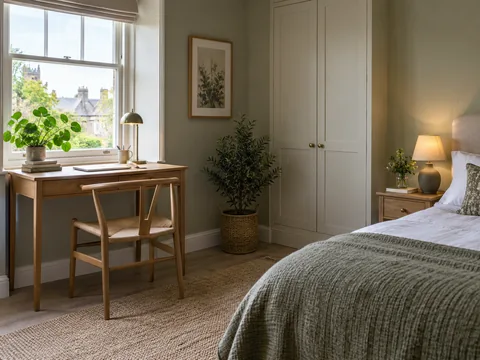
Look for a position that does not interrupt the route between seats, doors and windows. A wall beside the sitting area may work better than the space directly behind the sofa if a pulled-out chair would occupy the walkway. Mark the chair in its working position before deciding that a shallow desk fits.
Keep the working surface large enough for the actual equipment. A narrow writing desk may suit letters and occasional laptop use, while a full workday can require a different arrangement. For employment-related home working, use the appropriate workstation assessment; a piece chosen to blend into the room may still be unsuitable for sustained computer work.
Noise is another part of the location. A desk beside the kitchen route may be fine for occasional correspondence but difficult for frequent calls. The furniture cannot provide sound isolation simply by facing a wall. If calls are a major part of the day, consider whether another space can handle them or whether the room's uses can happen at different times. That decision may reduce the need for large screens or dividers that would otherwise consume living-room space without solving the underlying conflict.
Choose the view from both sides
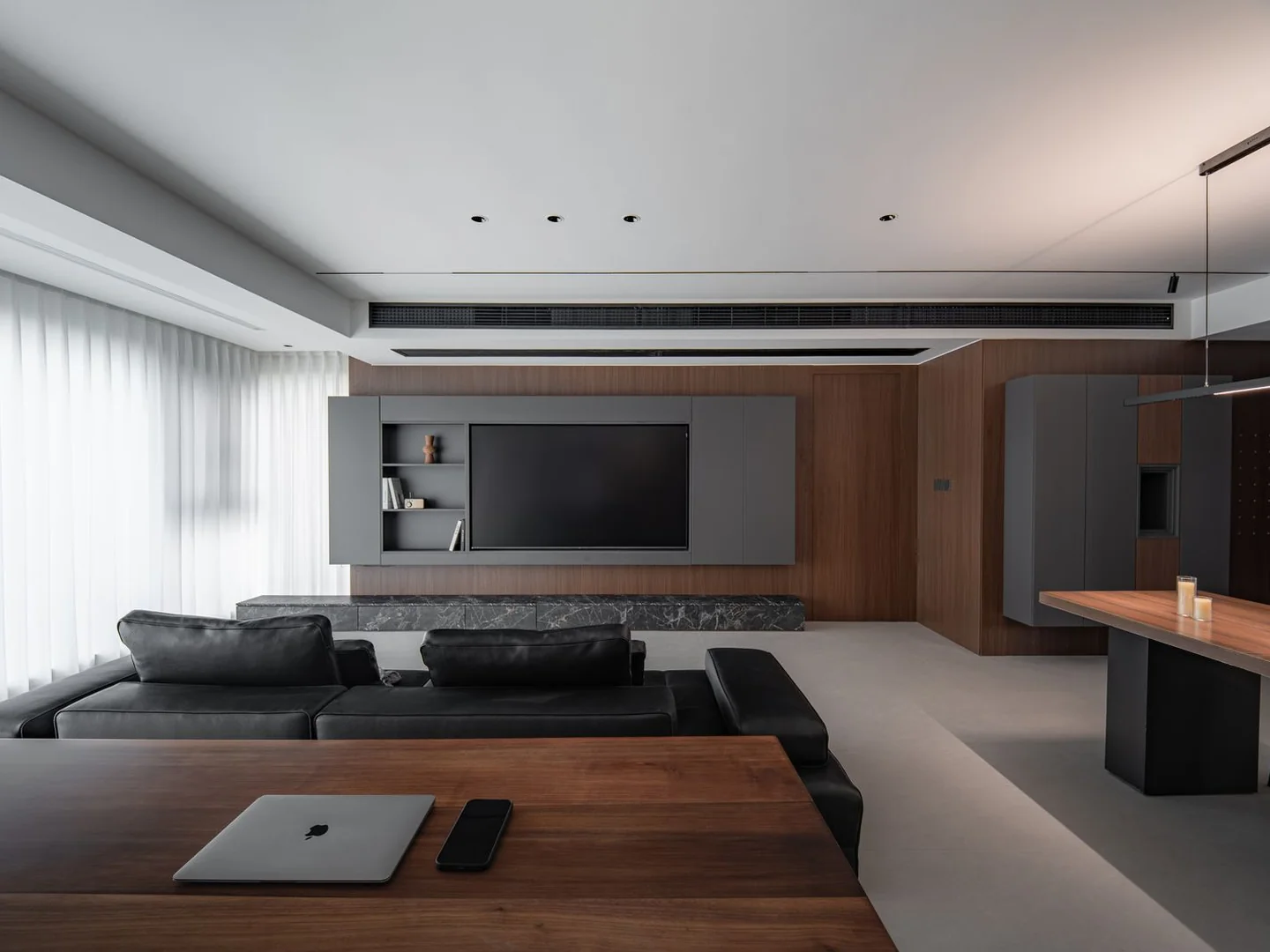
The person at the desk needs a usable view of their work without persistent screen glare. Other people see the back or side of the equipment from the sofa. Turn the desk or screen where possible so neither view is ignored. A monitor standing in front of a window can be visually prominent even when the desk itself is small.
A desk in an alcove can keep work contained, but check legroom, ventilation around devices and the space to move the chair. Do not fill every surrounding wall with shelves merely because the desk is recessed. The equipment and papers you actually use should determine the storage.
The living room's lighting may be comfortable for conversation yet inadequate for paperwork. A task lamp can help, provided its cable stays out of the route and its light does not shine directly towards someone watching television. Test the desk after dark as well as beside the daytime window.
Give unfinished work a home
One nearby drawer or file box can make a considerable difference at the end of the day. The point is not to hide every sign of work; it is to avoid scattering papers and chargers across the sofa and coffee table. Choose a container that accepts the largest item without folding or balancing it on top.
If several people share the surface, agree where each person's materials go. A desk that must be completely emptied for the next user needs more storage than one person's permanent workstation. Labelled folders inside a closed compartment may be simpler than a collection of small decorative organisers.
Leave the layout easy to reset. A chair that slides underneath and a clear place for the laptop can restore the room without moving furniture. If the desk requires a lengthy tidy every evening, it may be too small or lack the right storage. Solve that practical mismatch before trying to make it disappear visually.