Choose an activity, not a display
Ask what people will do in the room. Conversation benefits from seats that face one another, while reading needs a comfortable chair and suitable light. Listening to music may suggest another arrangement. The furniture can acknowledge several activities without making one wall carry all the attention.
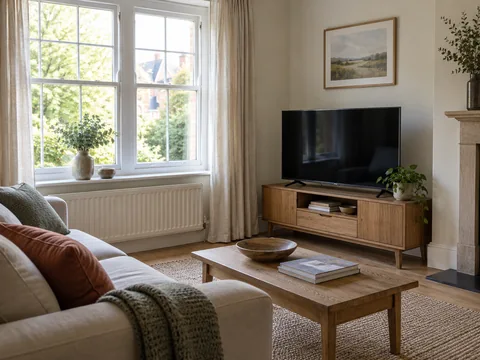
A window can provide a view, but do not point every chair towards it automatically. A pair of seats angled between the window and the rest of the group may make conversation easier. Check privacy and the appearance of the window after dark, when the daytime view changes.
For board games, the table and seats may deserve more attention than any wall. Check that the playing surface is stable and large enough for the games actually used, with places for drinks that do not crowd the board. A room arranged mainly for reading might instead have two separate comfortable seats. These different uses produce different layouts naturally. Choosing an activity first prevents the room from becoming a collection of attractive pieces with no convincing reason to face one another.
Give the seats a relationship
Arrange the main sofa and chairs so the people using them can see and hear one another without sitting in a rigid circle. Side tables should be reachable from the seats that need them. A large central table is optional; it may support games and shared books, or simply consume the floor between people.
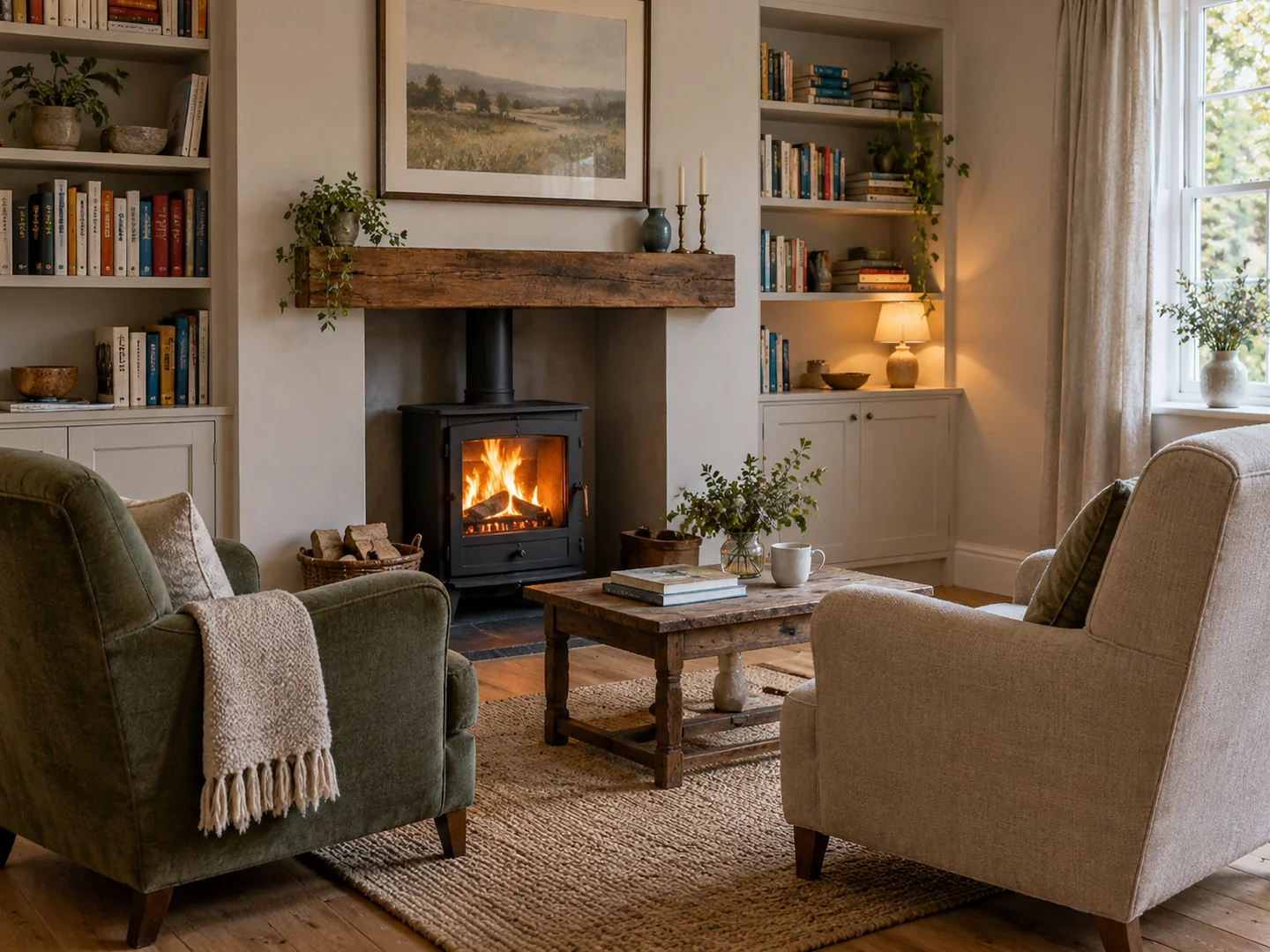
A fireplace can remain a focus if the room has one. Active fires require the proper clearances and precautions, so follow the relevant appliance guidance. Furniture should not be pushed towards a hearth just to make the room feel intimate. An unused fireplace can act as an architectural centre without being filled with objects.
Bookshelves or artwork can give a wall interest, but avoid replacing the television with an equally dominating display unless you want that effect. A room can have several quiet points of attention. Leaving part of a wall empty allows the shape of the furniture and the light to do more of the work.
Make evening use easy
Without a screen providing an obvious centre, lighting helps distinguish the places people use. A reading lamp beside one chair and a softer lamp near the sofa may be more useful than brightening every corner equally. Keep their cables away from the walking routes.
Provide storage for the activities the room supports. Games need a cupboard large enough for their boxes; magazines need a place other than a growing stack on the floor. This is where the room's purpose becomes tangible. Storage chosen for actual belongings is more convincing than a decorative shelf arrangement that leaves those belongings elsewhere.
Try the layout with several people present if conversation is the main aim. Notice the chair everyone avoids or the seat left outside the group. Move those pieces first. A television-free room succeeds through comfortable use, not through making the absence of a television its most conspicuous feature.