Think about who sits where
A bench works particularly well when its users can approach from the open ends or when the table can move easily. Against a wall, the person in the middle may need others to move before they can get out. That can be acceptable for occasional meals but frustrating for somebody who frequently stands to serve food.
Test the sitting height and depth with the table. A bench intended for a hallway may be too high, too low or too deep for dining. Measure the clear space beneath the table, including any apron, so knees fit comfortably. A cushion changes the sitting height and may need to be included in that check.
Tucking away is a specific measurement
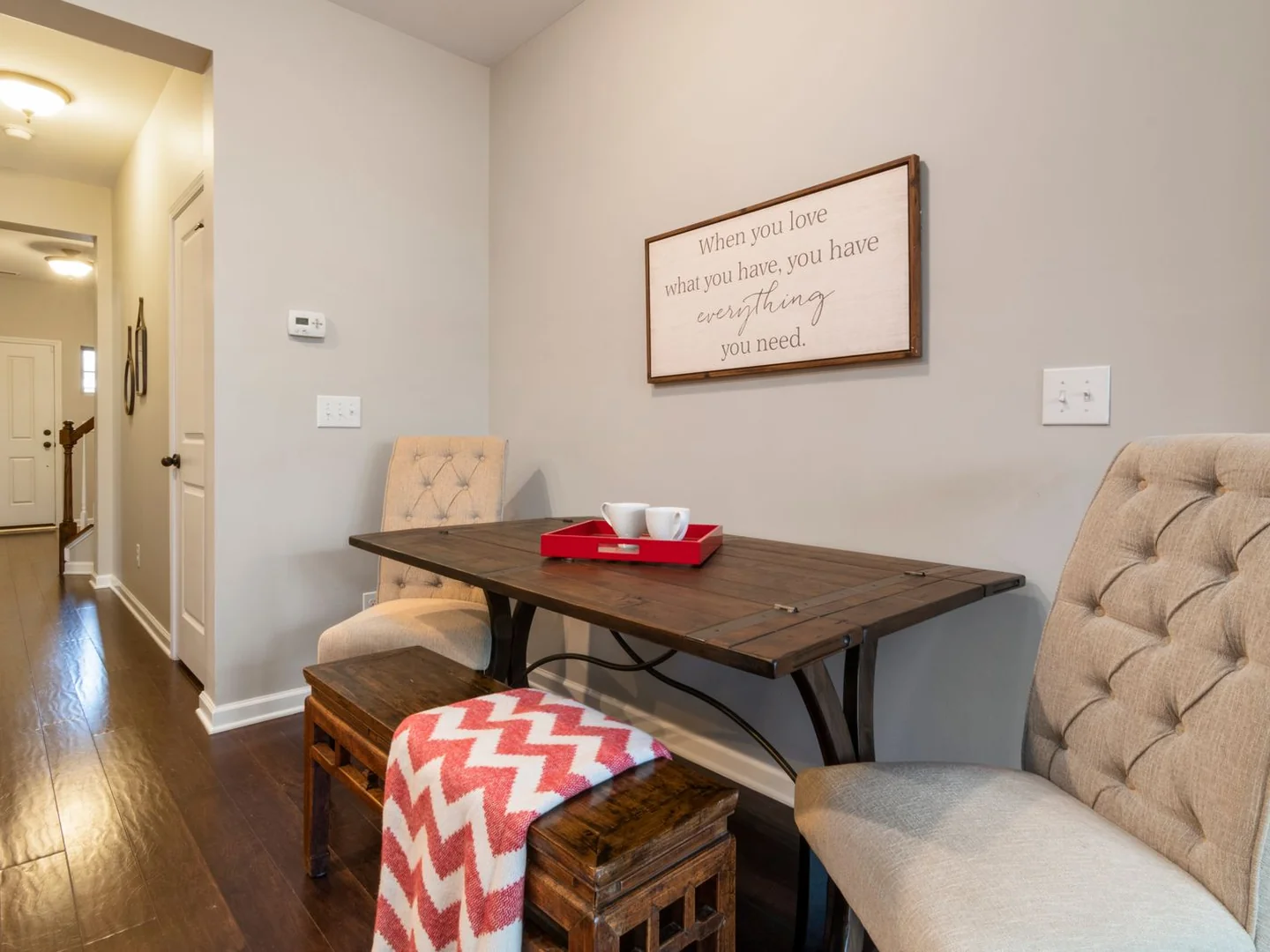
For a bench to slide fully underneath, it must fit between the table legs as well as below the top. A long bench can match the table beautifully and still collide with its base. Check the leg positions on both pieces, and include any stretchers close to the floor.
If the bench does not tuck away, measure it in its resting position rather than pretending its footprint disappears. A bench beside a main walkway can become a broad obstacle even when nobody is sitting there. Rounded corners may soften the encounter but do not create more room.
Check how the bench is lifted for cleaning. Some long designs are cumbersome for one person, and dragging them can damage the floor. Suitable feet or glides should follow the furniture and flooring guidance. Everyday maintenance is part of the decision, especially in a dining area that needs frequent cleaning underneath.
Mix it with chairs where useful
Chairs on the opposite side allow people to leave independently and may offer a backrest for longer meals. The two types of seating need not match, although similar sitting heights help them share the table comfortably. Try the full arrangement rather than judging each piece in isolation.
A bench is not automatically the way to add more diners. People still need room for their shoulders and place settings. It can offer flexible spacing, but avoid counting seats by squeezing the maximum number onto the timber. Choose it because its daily use suits the household, including how it is moved for cleaning and how people get up after dinner.