Sit before arranging
Choose the chair for the way you read. Some people sit upright with a book held high; others curl up or use an e-reader in their lap. Arm height, seat depth and back support affect those positions. A chair that looks appropriate beneath a lamp may be uncomfortable after a few pages.
Place it where you can enter and leave without squeezing past another piece. If you use a footstool, include the space between it and the chair as part of the arrangement. The stool also needs somewhere to rest when not in use. Do not let it turn the main route through the room into a slalom.
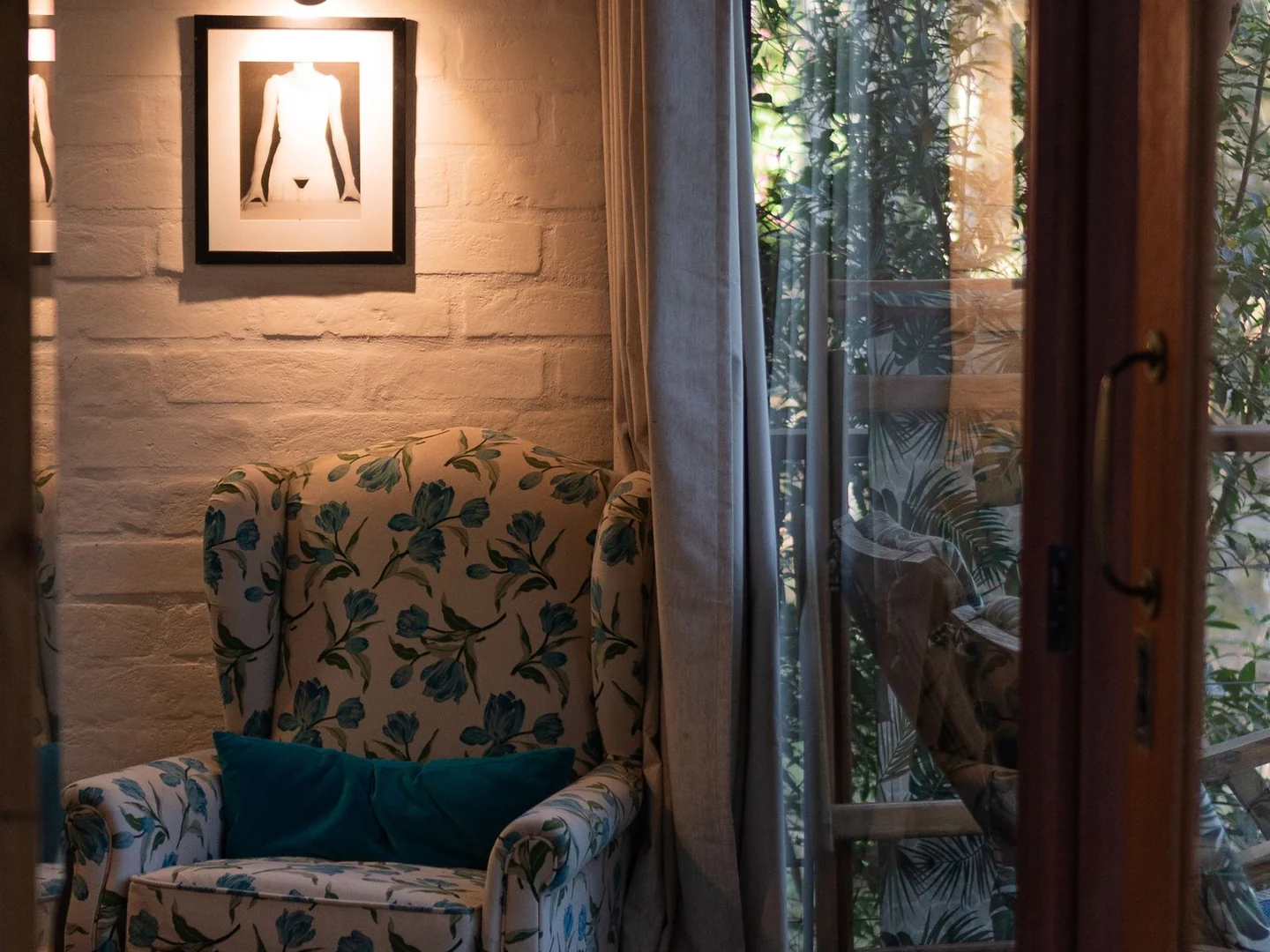
A window can provide pleasant daylight, but consider the view after dark. You may want the chair to face partly towards the rest of the room rather than directly into a blank pane. Check the curtains can move freely and that you can reach the window without climbing over the seat.
Put the useful things within reach
A small surface for a book and drink can be more valuable than an elaborate shelf display. Position it from the seated person's reach. If a table lamp occupies the top, make sure enough surface remains for the objects the table is meant to hold.
If you use reading glasses or headphones, give them one nearby place too. A small drawer or a shallow dish can prevent them disappearing between cushions. This need not add another piece of furniture; it may be a modest adjustment to the table already there.
Try the reading light with the actual book or device. Its position should illuminate the page without shining into your eyes or reflecting strongly from the screen. Check the arrangement in the evening, and route the cable away from feet and passageways. A lamp that cannot reach a socket safely belongs somewhere else.
Keep only a manageable number of books nearby. A full bookcase is useful if the corner is also the room's library, but it is not required to signal that reading happens there. An inviting chair with a suitable light can be complete on its own. Add another object when it solves a small problem you have noticed, rather than because the corner looks unfinished in a photograph.