Start with the sleepers
One person may need a lamp, glasses and a book beside the bed. Another may need only somewhere for a phone and a glass of water. Those are different storage requirements, even when the bed is shared. List them separately before choosing furniture.
Check the height of each proposed surface against the mattress in its normal position. A table that looks right beside an empty frame may feel low once the mattress and bedding are in place. Reach from the pillow position as well as from sitting on the edge. The surface should work at the moments it will be used.
Use different forms carefully
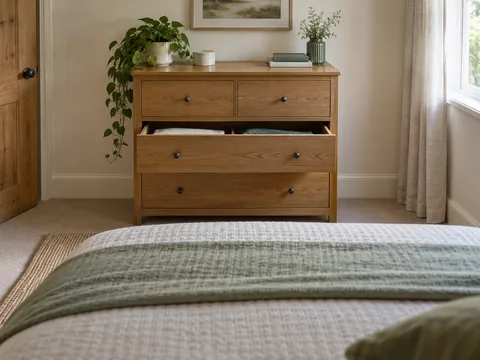
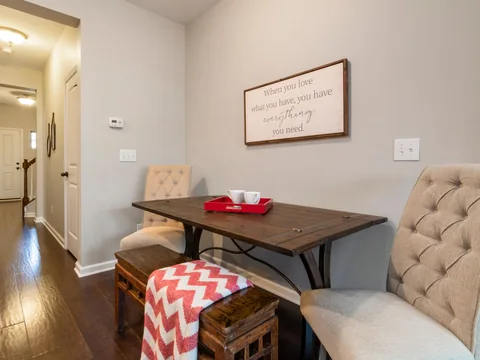
A narrow drawer unit can serve one side while a small stool or wall shelf serves the other. A stool needs a stable top and enough surface for the intended objects; not every decorative stool makes a useful bedside table. A wall shelf requires suitable fixing and must not project into the route where someone gets out of bed.
Keep tall objects away from the edge of a small surface. If a lamp uses most of the space, consider a suitable wall-mounted or floor lamp, with its cable safely routed. Fixed electrical changes need appropriate professional work. The point is to reduce congestion without moving the problem into the walkway or behind the pillows.
Different pieces can share one feature, such as timber tone, a rounded edge or a similar top height. They do not need to pretend to be a pair. Too many attempts to make unlike furniture match can draw more attention to the difference than simply choosing two pieces that serve their sides well.
If a floor-standing piece is still useful, consider the area its legs occupy. A narrow top on a splayed base can take more room than expected beside the bed. A cabinet with a flush base may offer more internal storage, while an open-legged table makes the floor easier to see and clean. Compare those effects at the actual bedside gap rather than treating one construction as inherently better. The piece on each side can answer that question differently.
Protect the space around the bed
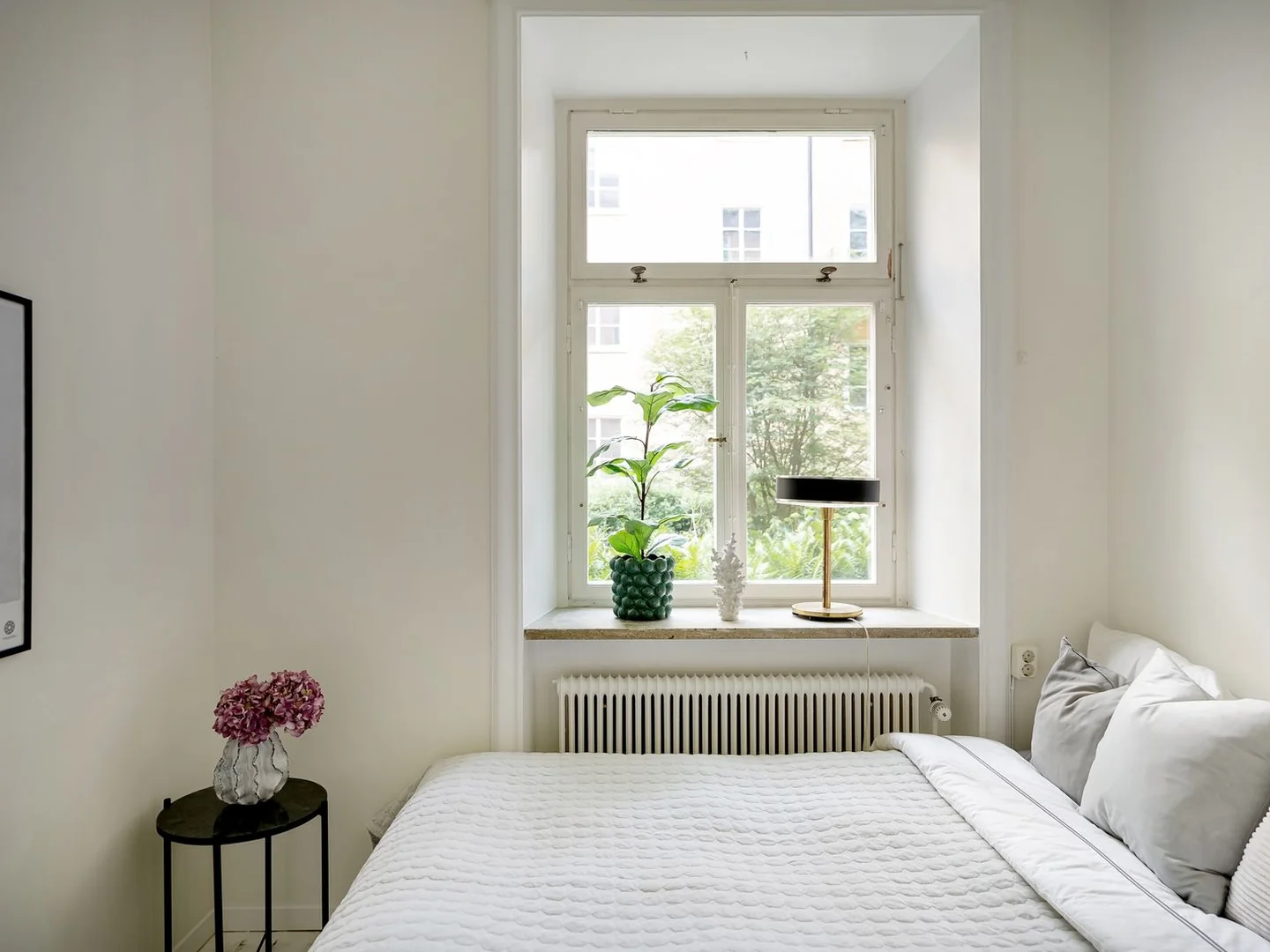
Look at the door swing and wardrobe access before adding either surface. A tiny table can still catch a door handle or prevent a drawer opening. If one side is particularly tight, leave it free and place a shared surface elsewhere only if it can be reached safely and conveniently.
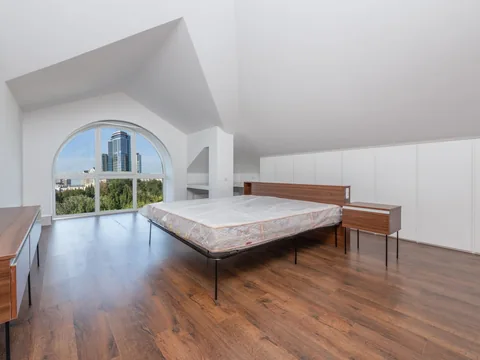
Avoid using bedside furniture as an excuse to buy a bed that is too large for the room. Removing both tables does not help if getting in and out is still awkward. Compare the full frame dimensions and the routes first; the bedside pieces should complete a workable layout.
Keep the arrangement provisional until you have used it. A tray on a stable temporary surface can reveal the space needed for everyday objects. After a week, the objects that remain there tell you more than a staged photograph. Buy storage for that small collection, rather than adding drawers because bedside tables usually have them.