Use the screen as a mirror first
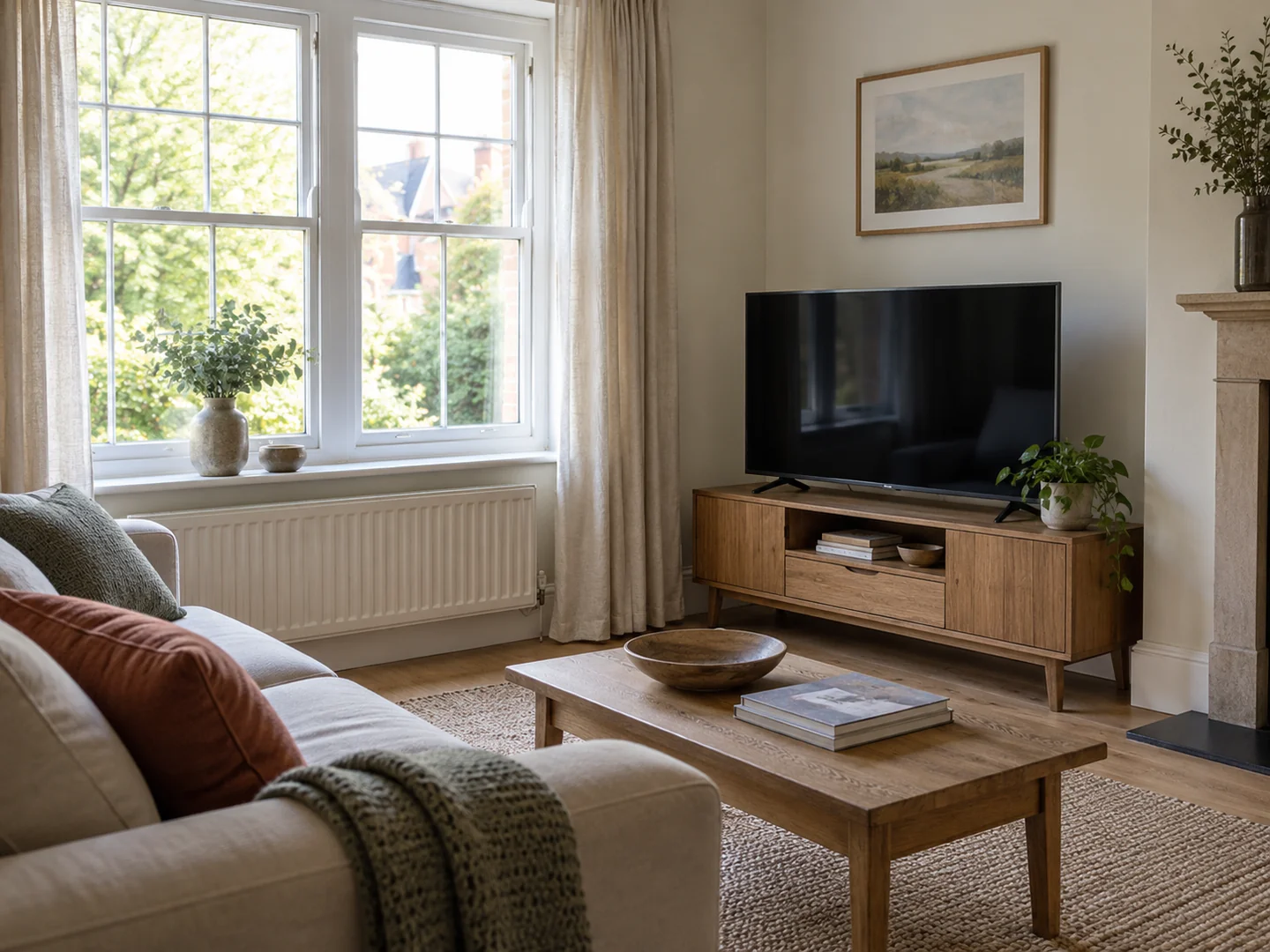
With the television switched off, sit where you plan to watch and look for window reflections. Try the position at different times of day. The reflection may be tolerable in the morning and distracting later. A bright window directly behind the viewer can reflect on the screen, while one directly behind the television can create a strong brightness contrast.
Placing the screen on a wall perpendicular to the window is worth testing, but it is not a universal answer. The size and direction of the window, nearby surfaces and the screen itself all affect the result. Use the actual room rather than a fixed compass rule.
Do the test with the window covering in the positions you normally use, not only fully closed. A blind lowered halfway may control one reflection while leaving the room bright enough for another activity. Curtains gathered at the sides can change the amount of exposed glass. If you use the television mostly in the evening, prioritise that real pattern while checking that the daytime arrangement remains acceptable. There is little value in redesigning the entire room around an hour of glare at a time when nobody normally watches.
Keep the sitting position comfortable
Changing the television position can require changing the sofa as well. Check whether each regular seat faces the screen without a persistent sideways turn. A neat television wall is less useful if the most-used chair has a poor view. Consider how the room works for conversation too, especially if watching is only an occasional activity.
Measure the television's overall dimensions and its stand footprint. A cabinet must be designed to support the set, with the stand fully supported and the manufacturer's installation instructions followed. Do not substitute a chest of drawers simply because its height seems convenient. Wall mounting also depends on the wall and the correct fixing system.
Think about cables and nearby devices before fixing the location. A window wall may have no suitable power or connection route. Keep cables away from passages and moving furniture, and seek appropriate professional help for fixed electrical or mounting work.
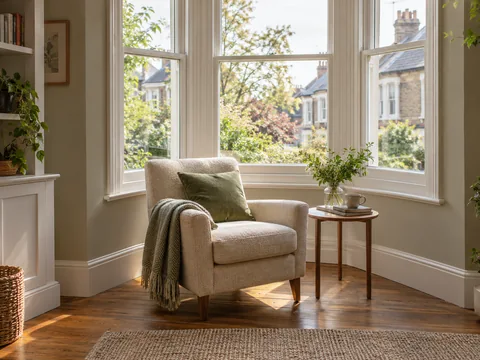
Let the window remain usable
The television should not make curtains difficult to draw or handles hard to reach. If it stands beside the window, check the fabric in both open and closed positions. A screen that blocks the gathered curtain can turn a small daily task into a repeated adjustment.
Window coverings may help manage glare, but the room should not require complete darkness whenever somebody watches daytime television. Try the proposed combination before buying a large new unit. Sometimes a modest shift of the existing screen solves more than a heavy curtain or a higher mounting position.
If no arrangement satisfies everything equally, rank the room's uses. A room mainly used for reading and conversation may reasonably give the window priority. A television-focused room may give the clearest screen position more influence. Making that choice openly is easier than forcing furniture to serve two incompatible centres without compromise.