Look at the whole bay
A bay window is rarely an empty rectangle waiting for furniture. Its sill may project into the space, a radiator may sit below it, and curtains need somewhere to gather. Measure the floor at the front and back of the bay before shopping. The widest measurement is not necessarily where the legs of a chair will stand.
Check which windows open and how you reach the handles. A deep chair that appears to fit can force you to climb behind it every morning. Also look at the view from the room's doorway. Furniture that sits below the sill tends to leave the outline of the window visible, while a tall back can turn the bay into a dark barrier. Neither is automatically wrong; they simply create different rooms.
The shape outside the glass can influence the arrangement as well. A bay looking onto a busy pavement may need different privacy choices from one overlooking a garden. Try the chair at the height at which a person will sit and check the view both in and out. This can change which direction it faces without requiring a larger piece of furniture.
A chair is often enough
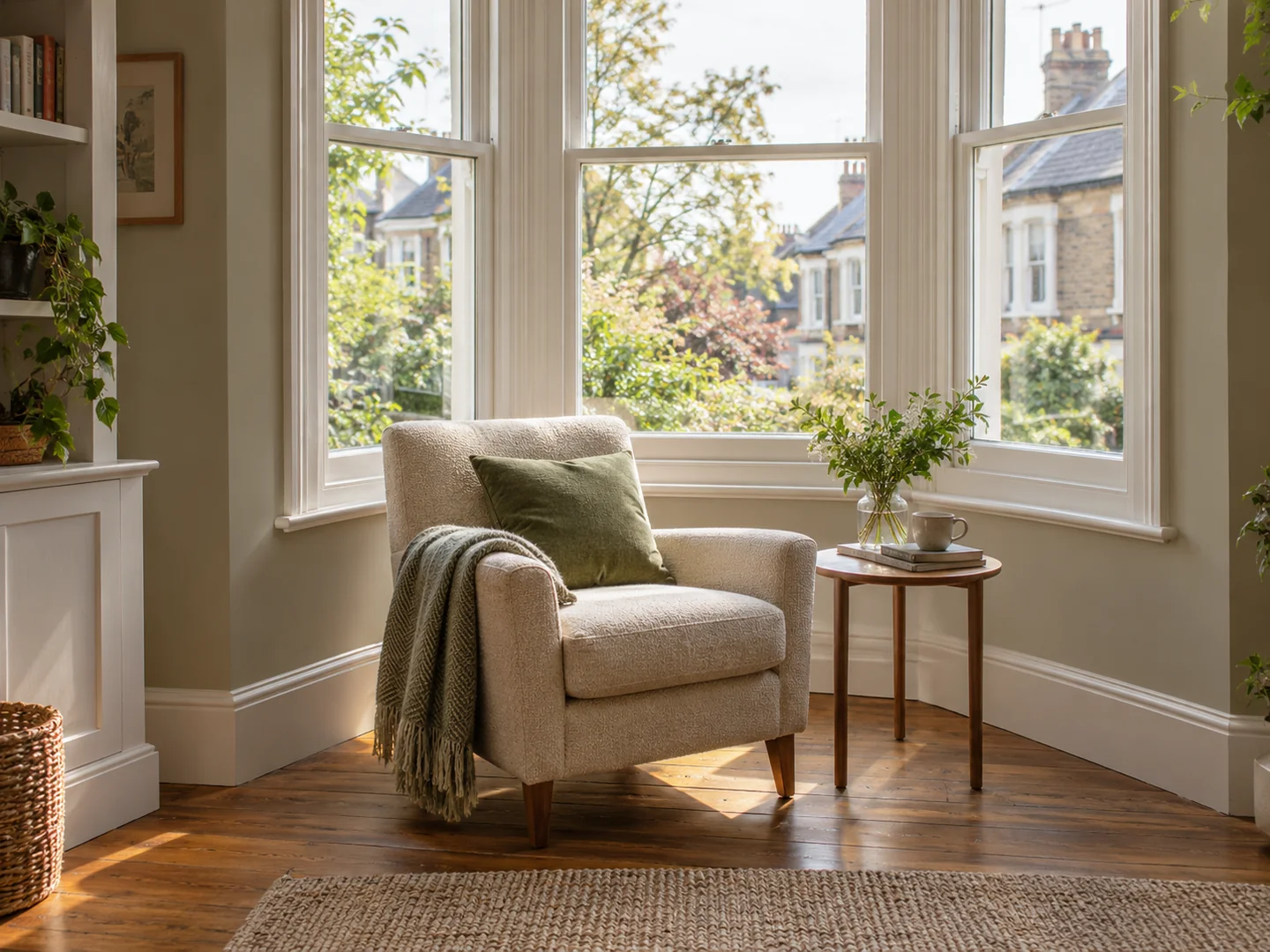
For a reading place, try one chair before trying a pair. Angle it towards the room so the person sitting there is not always looking straight at the glass. Add a small surface on the reachable side and test where feet land. A footstool needs its own space and a parking place when you stand up.
A bay used for occasional conversation might suit two upright chairs with a shared table. A bay intended for a long evening with a book needs a different seat. Test the chair for the activity instead of choosing it because its shape echoes the window. If it cannot be positioned comfortably without obstructing heating or the windows, leave the furniture in the main room.
A small round table can work where a rectangular top would collide with angled walls, but include the chairs in your measurement. There should be room to pull out the chair you use most without moving the whole table. A table pressed into the narrowest part of the bay may be better as a display surface than as a place for meals.
Consider the empty option
Leaving a bay largely open lets it contribute daylight and visible floor to a crowded room. One low object, or nothing at all, can be a deliberate arrangement. You do not have to make every architectural feature perform a separate job.
Before buying a window seat, distinguish a freestanding bench from fitted joinery. Check lid movement if the seat contains storage, and avoid covering ventilation or a radiator. A cushion can make a hard bench inviting, but it also raises the sitting height and changes how close the sitter is to the sill. Test that relationship with a temporary seat of similar height.
Try the arrangement through a full day. Morning glare, evening privacy and the reach to the curtains may matter more than how the bay looks in one photograph. The best use is the one that still leaves the window easy to live with.