Make the first sketch in daylight
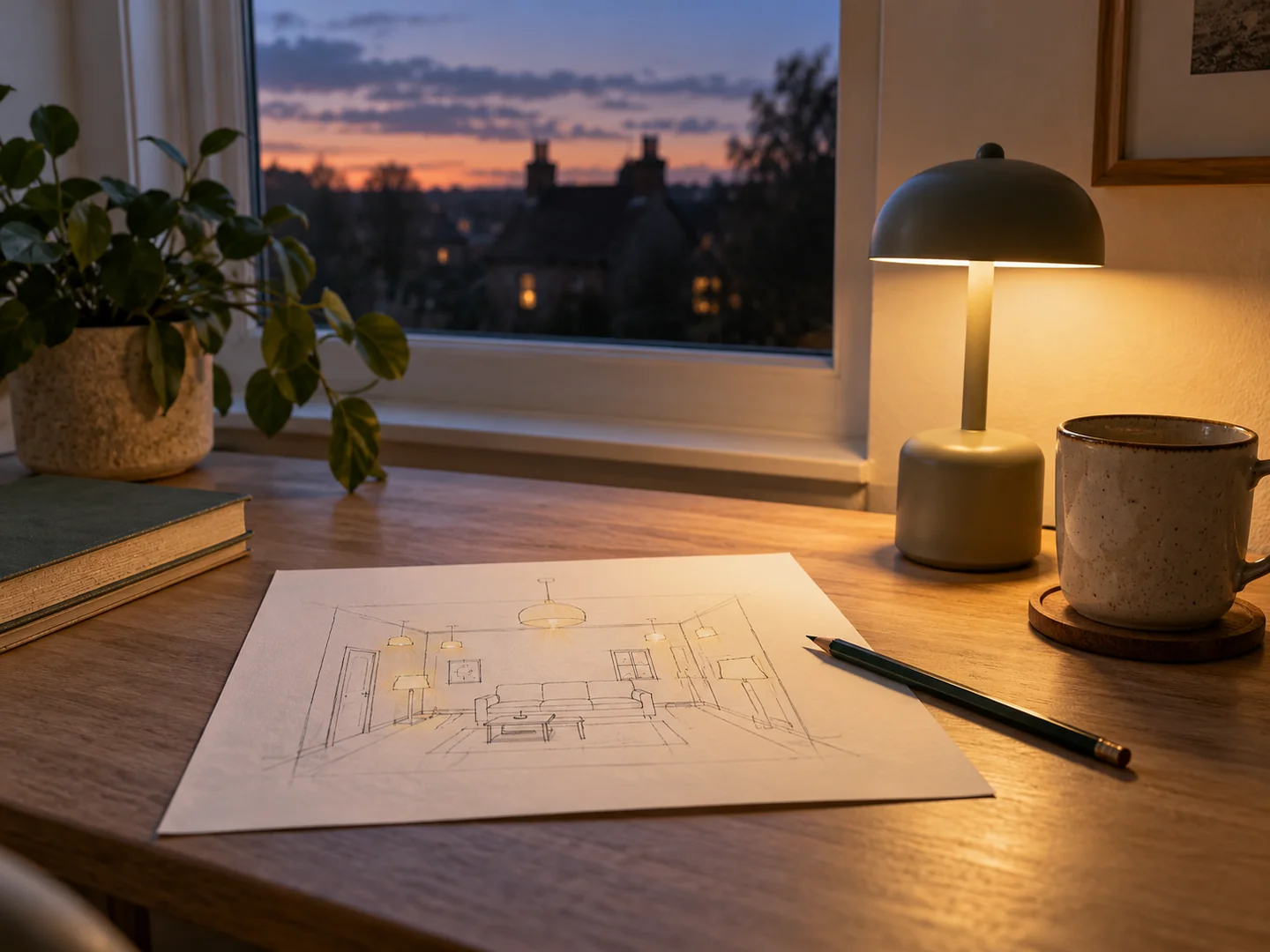
Draw the room's basic outline and place the large furniture, windows, doors and available sockets. Precision matters for dimensions, but artistic skill does not. Mark the seats and surfaces where you do things that need light: reading, writing, dressing, cooking or sorting papers.
Visit the room at a time when you ordinarily use it. A room that looks bright at midday may be dull during the early breakfast you actually eat there. Note which areas receive daylight and where your own body or furniture blocks it. Include any blinds or curtains in their normal position.
Write observations in concrete terms. Notebook in shadow at the back of the table is more useful than room too gloomy. Window reflected in laptop is more useful than desk needs better lighting. Specific notes prevent you from expecting a new lamp to solve a problem caused by a screen facing the wrong way.
Return when the windows are dark
Keep the furniture in place and repeat the same activities after sunset. Switch on only the lights you would normally use, then add the others separately. Notice what each one contributes. A lamp may be attractive without making any task easier, while an unfashionable fitting may be doing an essential job.
Mark the lamps that create direct glare from the seats. Record reflections in mirrors, screens and glazed pictures. These problems can be invisible during the day because the lamps are off or daylight dominates the view. The evening visit turns a collection of fittings into an arrangement you can assess.
Also walk through the room. Check the path to the door, around chair legs and beside any changes in floor level. Lighting is not only for the objects you want to emphasise. It needs to make the room usable when you stand up with a cup or carry laundry through it.
Separate the observations into jobs
Some findings suggest moving furniture. A desk turned slightly away from a bright window may have fewer reflections. Others suggest a local light, such as a reading chair that remains dark throughout the day. A third group concerns controls: the lamp may work perfectly once you have squeezed behind the sofa to turn it on.
Do not turn every note into a purchase. Try moving a portable lamp or changing the direction of an adjustable shade. Test one alteration at a time so you can tell which change helps. Keep all cables and bases safely placed during the trial rather than accepting a temporary trip hazard for the sake of an experiment.
If the plan needs new sockets, moved ceiling fittings or changes to fixed controls, mark those separately for a qualified electrician. Keep decorative preferences clear, such as a pendant centred over the table, without assuming how the installation should be carried out.
Think through the seasons and routines
Your observations describe particular days, not every day of the year. A room used through a British winter may need its lamps during hours that are bright in summer. You do not need to wait six months to plan, but note where the daylight-dependent arrangement would need support.
Consider different users too. A person who reads in an armchair needs something different from someone who mostly watches television. If the room serves both at once, separately controlled lights may matter more than total brightness. Ask each person to try the arrangement from their usual position.
A spare room that is occasionally a bedroom can need a different switch location when the bed is in use. A dining table extended for guests changes the area to illuminate. Include those genuine changes without allowing rare situations to dictate every permanent decision.
Keep a small specification record
Once you have settled on the arrangement, record the bulb specifications and the lamps they belong to. Note compatible controls and any special replacement parts. This saves you trying to reconstruct the scheme from memory when a bulb fails or a lamp moves to another room.
Keep the plan simple enough to update. A photograph of the room and a short note beside each light may be more useful than a complicated drawing. The purpose is to remember why each source is there, so future changes preserve the parts that already work.
Review it after living with the arrangement for a few evenings. Remove ideas that no longer solve a problem and adjust the ones that almost work. A lighting plan is most valuable when it describes the room you use, including its ordinary clutter, changing daylight and imperfectly positioned sockets.