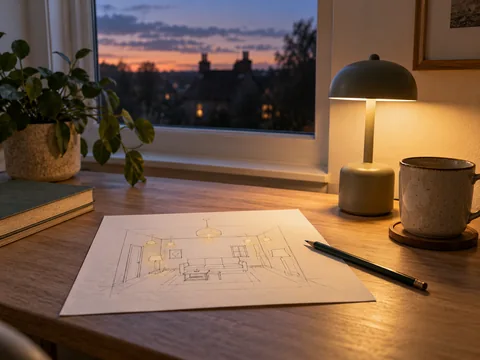
Draw the evening, not the floor plan alone
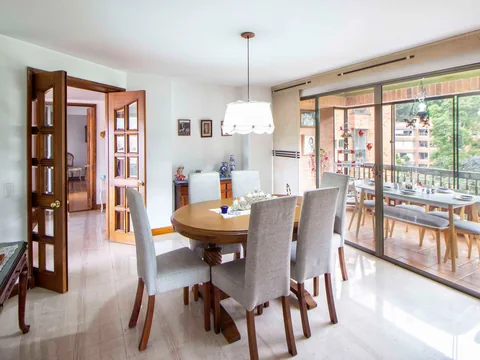
An open-plan room can contain a meal, a television programme and a half-finished notebook at the same time. Mark where those activities happen on a simple sketch. Then mark the routes people take between them. This reveals why one powerful ceiling light often feels like a blunt solution: it treats several different jobs as if they were identical.
Choose the activities that occur regularly. A dining table used for supper every day deserves a different priority from a corner used for wrapping presents once a year. You can keep a portable task lamp for occasional work without making that temporary activity the centre of the permanent lighting scheme.
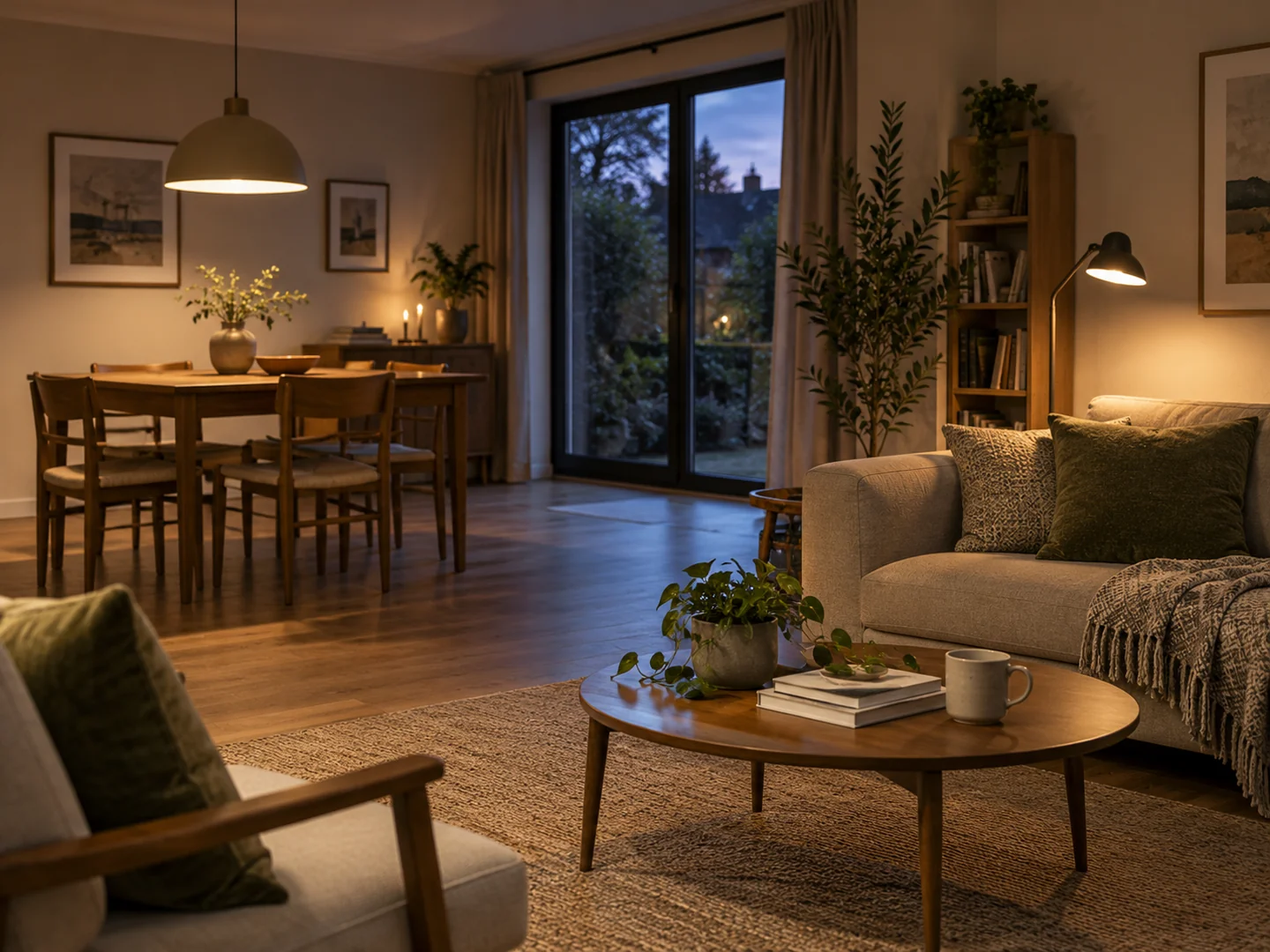
Also note what is seen across the room. The sofa may face the dining pendant as well as the television. A bright kitchen worktop can sit directly behind someone talking at the table. Each area has its own needs, but the views between them make the arrangement a shared design problem.
Give the main areas independent light
The dining table needs light on its surface and a comfortable view of the people around it. The sitting area may need a shaded lamp for conversation and a more directed light beside a reading chair. A desk at the edge of the room needs its own controllable source rather than relying on light intended for the dining table.
Separate control is often more useful than adding more fittings. If the dining light can be turned down or off while the reading corner remains usable, the room can change through the evening. The appropriate controls depend on the equipment; any alterations to fixed wiring belong with a qualified electrician.
Start with existing lamps and switches where possible. Try the dining area lit on its own, then the sitting area. Add the other sources one at a time. This helps you see whether a new light has a distinct purpose or merely brightens a patch that is already well served.
Keep the joins comfortable
The spaces between bright areas should not become awkward dark gaps. Look at the route from the sofa to the kitchen, the edge of a rug and the area around a step if the room has one. The lighting arrangement needs to support movement as well as the seated activities.
A shaded lamp that throws some light onto a nearby wall can help connect two areas. So can an existing ceiling light used at an appropriate setting. There is no need to line every boundary with LEDs. A few considered sources can leave the room legible while preserving differences between the zones.
Avoid creating a row of exposed bulbs across the view from the sofa. A pendant that works directly over the table may be uncomfortable when seen from lower down on the other side of the room. Check its shade and underside from every frequently used seat before confirming the arrangement.
Let colour differences be deliberate
Look at the colour of the light across the whole space. A markedly cool desk lamp beside several warm lamps can make the corner feel unrelated, even when each light is useful on its own. You may prefer that distinction, but establish it consciously rather than letting random replacement bulbs decide.
The materials will affect the result too. A timber table, dark sofa and white kitchen cabinets reflect light differently. Do not assume that matching every bulb specification will make all surfaces appear equally bright. Compare the room in use and adjust direction or output where needed.
Where one space is used for close work and another for relaxing, preserve enough control to serve both. A blanket instruction to dim everything can leave the person at the desk struggling. A task light aimed at the work may allow the rest of the room to remain subdued without sacrificing function.
Rehearse a shared evening
Ask one person to sit at the table while another occupies the sofa. Use the lights as you expect to use them after dinner. Check reflections, direct views of bulbs and the route to each switch. Then swap positions; the problem may be visible only from one side.
Keep a note of the smallest changes that help: turn the reading shade slightly, move the side lamp behind the chair, use a different compatible setting at the table. A successful open-plan arrangement is adjustable enough to accommodate these ordinary changes without needing the whole room to be uniformly bright.