Begin with an ordinary evening
Leave the shopping tabs closed and sit in the room after sunset. Use the chairs you normally use, with the curtains in their usual position. Notice where you want more light and where there is already too much. A ceiling fitting can make the carpet very clear while leaving the book in your lap in shadow. Adding another bright light in the middle of the room may simply repeat that imbalance.
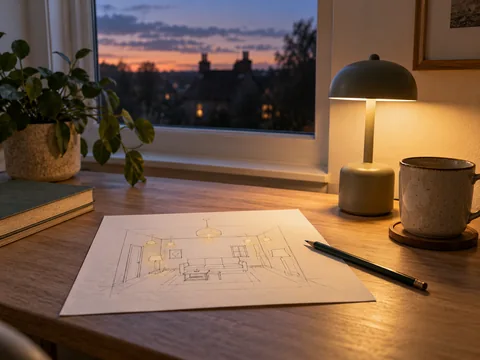
Write down a few actual activities: reading in the armchair, eating at the small table, talking on the sofa, putting things away. Place each activity on a rough room sketch. This need not look like a professional drawing. The useful information is where the light needs to arrive, where someone will be looking and where the power is available.
An empty corner does not automatically need a lamp. If it is a route through the room, a source nearby may already light it sufficiently. Equally, the chair that looks beautifully illuminated from the doorway may be uncomfortable when the bulb is directly in the reader's eyes.
Give each light a job
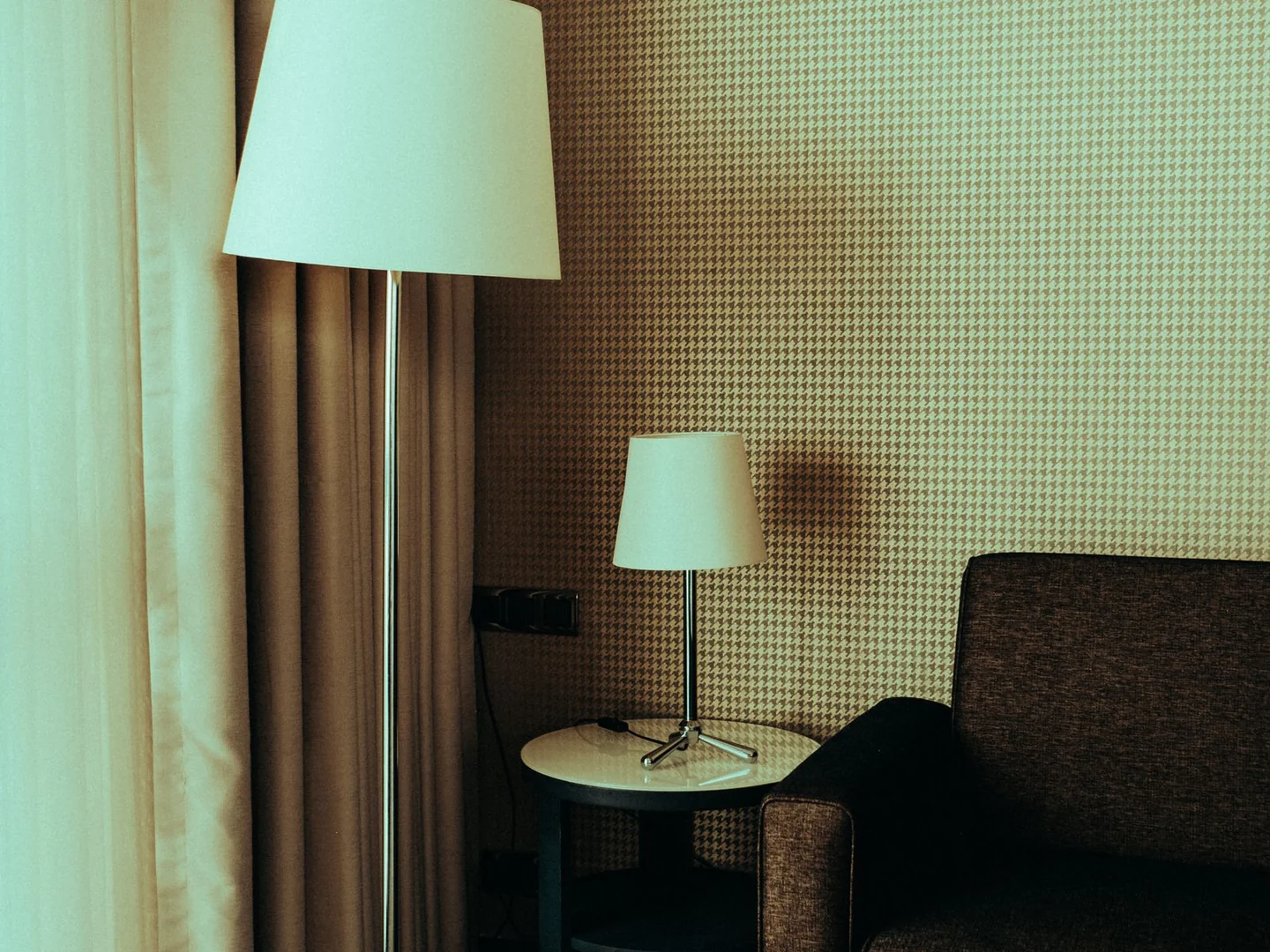
A reading lamp should put light on the page. A shaded table lamp can make the surrounding seating area feel less stark. The main room light remains useful for cleaning, searching and occasions when everyone needs to see clearly. These roles can overlap, but expecting one fitting to do everything usually narrows the choices too far.
Start with the most demanding task. For an armchair used every night, an adjustable floor lamp may deserve the best position near a socket. Choose a position that works with the chair reclined as well as upright. Then consider the sofa. A table lamp at one end may be sufficient for conversation, while someone sewing at the other end could need their own directed light.
Try existing lamps in different places before adding more. One useful experiment is to move a lamp from a rarely used surface to the far side of the seating group. You may find that the room needs a second illuminated area rather than a higher-output bulb. Keep the cables out of circulation routes during the trial.
Connect the lit areas
Isolated bright spots can leave a room feeling fragmented. Look between the reading chair and the sofa, and from the sofa towards the door. You should be able to move through these areas comfortably without switching on every lamp. A gently lit wall or a broad fabric shade can help bridge the gap.
This does not mean every surface must have the same brightness. The bookshelf can recede when nobody is using it. A dining table can become the visual centre during supper. Leave some contrast so the room has depth, then remove the contrasts that make ordinary tasks awkward. The useful test is whether the arrangement serves the room, not whether every corner photographs equally well.
Watch the light bouncing off glossy objects. A glazed picture opposite a lamp may become a bright white rectangle. A mirror can reveal a bulb that the shade otherwise hides. Moving one item slightly is often more effective than adding a further layer of lighting to compensate.
Make the evening setting easy to use
The lamps you enjoy are the lamps you can switch on without a performance. Check the position of each switch when furniture is in place. A floor switch behind a sofa is of little use to someone who cannot reach it. A compatible wireless control can be worth considering, but an accessible ordinary switch may solve the problem perfectly well.
Decide which lights belong together. Perhaps the two shaded lamps form the everyday setting, with the reading light added when needed. Keep that arrangement simple enough for a visitor to understand. There is no requirement to automate the entire room because a single corner needs a more convenient control.
Finally, use the proposed arrangement for several evenings. Test it with the television on, with a paperback and with guests in the other seats. Make notes about specific annoyances rather than judging the whole room as too bright or too dark. Those small observations give the next purchase a clear purpose and help you recognise when the room already has enough light.