Use the dark screen as a map
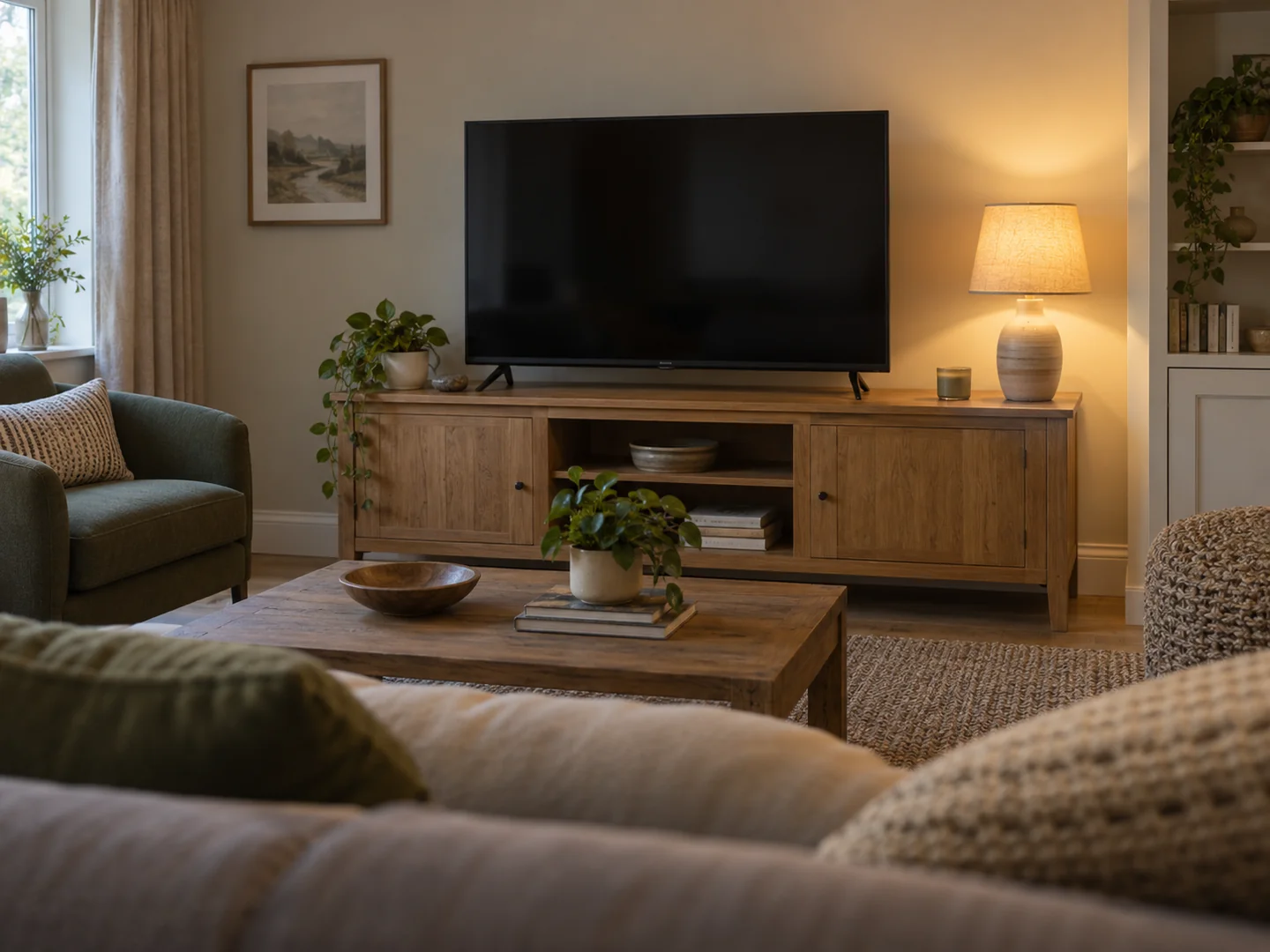
Switch the television off and sit where you normally watch it. The dark surface makes reflected lamps and windows easier to identify. Notice whether the reflection is a small bright point, a large glowing shade or an illuminated patch of wall. Each may need a slightly different adjustment.
Take a photograph from that seated position if it helps you remember the problem, but use your own view to judge the final result. A camera's exposure can make a reflection look stronger or weaker than it appears in the room. Repeat the test from the other seats, especially an armchair placed to one side.
If a lamp is clearly visible in the screen, move it sideways or farther behind the seating position where its cable and base can remain safely placed. A few centimetres may move the reflection away from the central picture area. Do not immediately change the television angle; its location may already work well for the people using it.
Keep light without the bright spot
A deeper shade or a lamp with a screened source can be helpful, but it must still provide the light needed in the room. Reducing the bulb output until the reflection disappears can make it difficult to find the remote or move about. Compare the light's direction and position before deciding it is simply too bright.
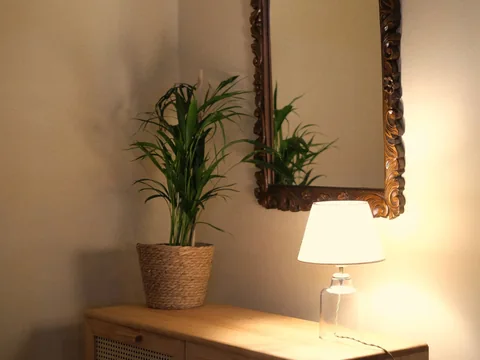
Look for light reflecting from other glossy surfaces. A mirror may send the lamp's image towards the screen indirectly. A shiny cabinet beside the television can produce a separate bright patch. Temporarily switch one lamp off at a time to identify the source rather than rearranging several things together.
Do not put a lamp on or immediately against the television to conceal it from view. Keep the equipment's ventilation and access requirements clear. Any purpose-made lighting intended for a television should be compatible with that setup and used according to its own instructions.
Test the arrangement you will actually use
Turn on an ordinary programme containing both dark and light scenes. A reflection can be almost invisible over a bright outdoor image and distracting in a dim interior scene. Judge it with the room's usual evening lighting rather than creating a one-off completely dark setting.
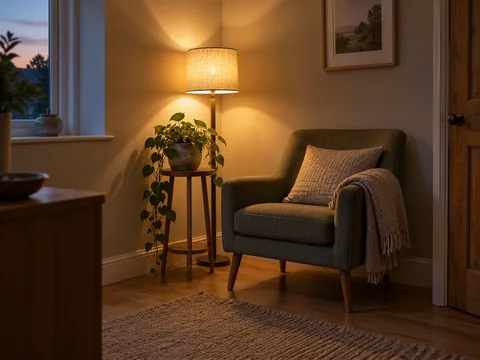
Also try reading beside somebody watching television. The reading light may need a more directed beam so the reader gets useful light without creating a large screen reflection. It is a shared-room problem rather than a contest between brightness settings.
When you find a workable position, leave the furniture there for several evenings before buying new fittings. The solution might be moving an existing table lamp to the other end of the sofa, with no change to the television at all.