Start with the person entering
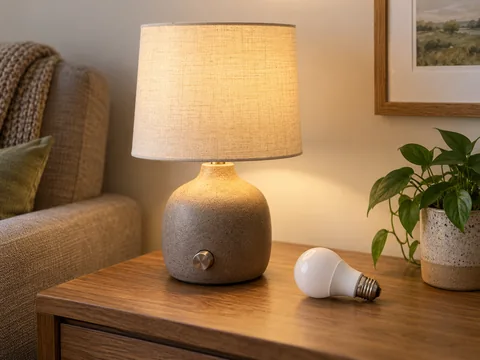
Imagine a guest walking into the room with no phone connected to your lighting system. Can they turn on a useful light? A smart bulb that depends entirely on an app can make an ordinary action unnecessarily obscure. Give the room an obvious physical control wherever the chosen system supports one.
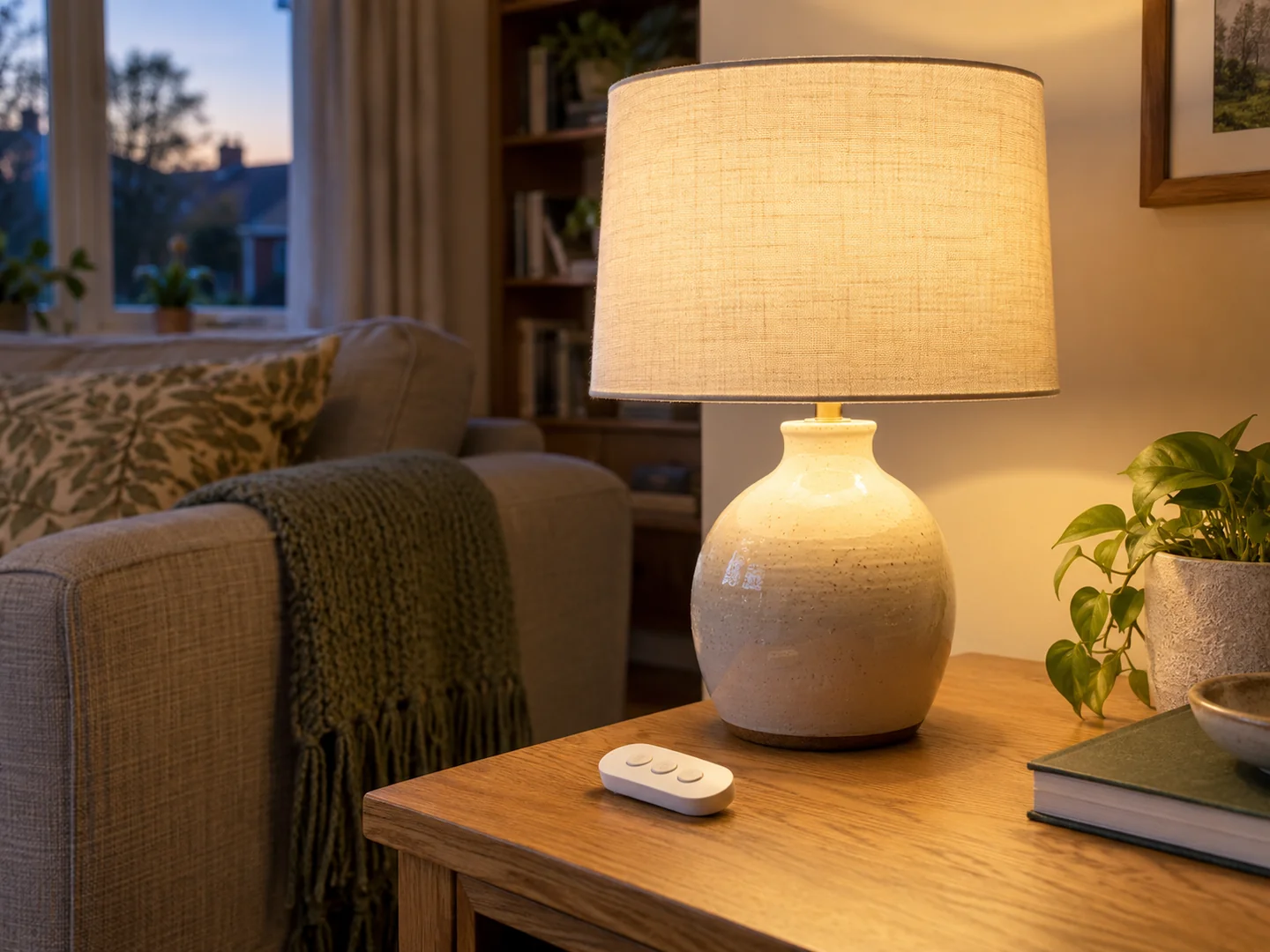
A compatible wireless remote is different from a conventional mains dimmer. For example, Philips Hue offers a battery-powered controller designed for its lighting system. Compatibility, hub requirements and supported functions depend on the particular product; a remote that looks similar is not necessarily interchangeable.
Place the control where people expect to find it, then keep it there. A portable remote left somewhere different every evening can be less convenient than the original lamp switch. If it uses an adhesive holder, check that the surface and any rental permissions allow it, or choose a stable tabletop home.
Agree on ordinary behaviour
Decide what happens when someone uses the lamp's original switch. Many connected bulbs need power available to respond to their controller, so household habits matter. Follow the bulb manufacturer's instructions and make the arrangement understandable without taping over controls or modifying wiring.
Keep the first set of options simple: an everyday setting, a lower evening setting and off may cover the room. Add elaborate scenes only when there is a reason to use them. A room full of carefully named routines can still be frustrating if nobody knows which button gives enough light to find a book.
Check what happens after a power interruption or loss of network access using the product's documented settings. Different systems behave differently. Choose a fallback that suits the room and keep instructions where another household member can find them.
Label rooms and lights plainly in the app if several people share control. Names based on their actual positions are easier to remember than private jokes or temporary furniture descriptions. Keep access arrangements up to date when someone leaves the household, using the system's documented account controls.
Finally, try the arrangement without your phone for an evening. Switch the room on, adjust it and leave it. If those actions remain easy, the connected features can become useful extras instead of a requirement for operating a table lamp.