The light is showing the surface differently
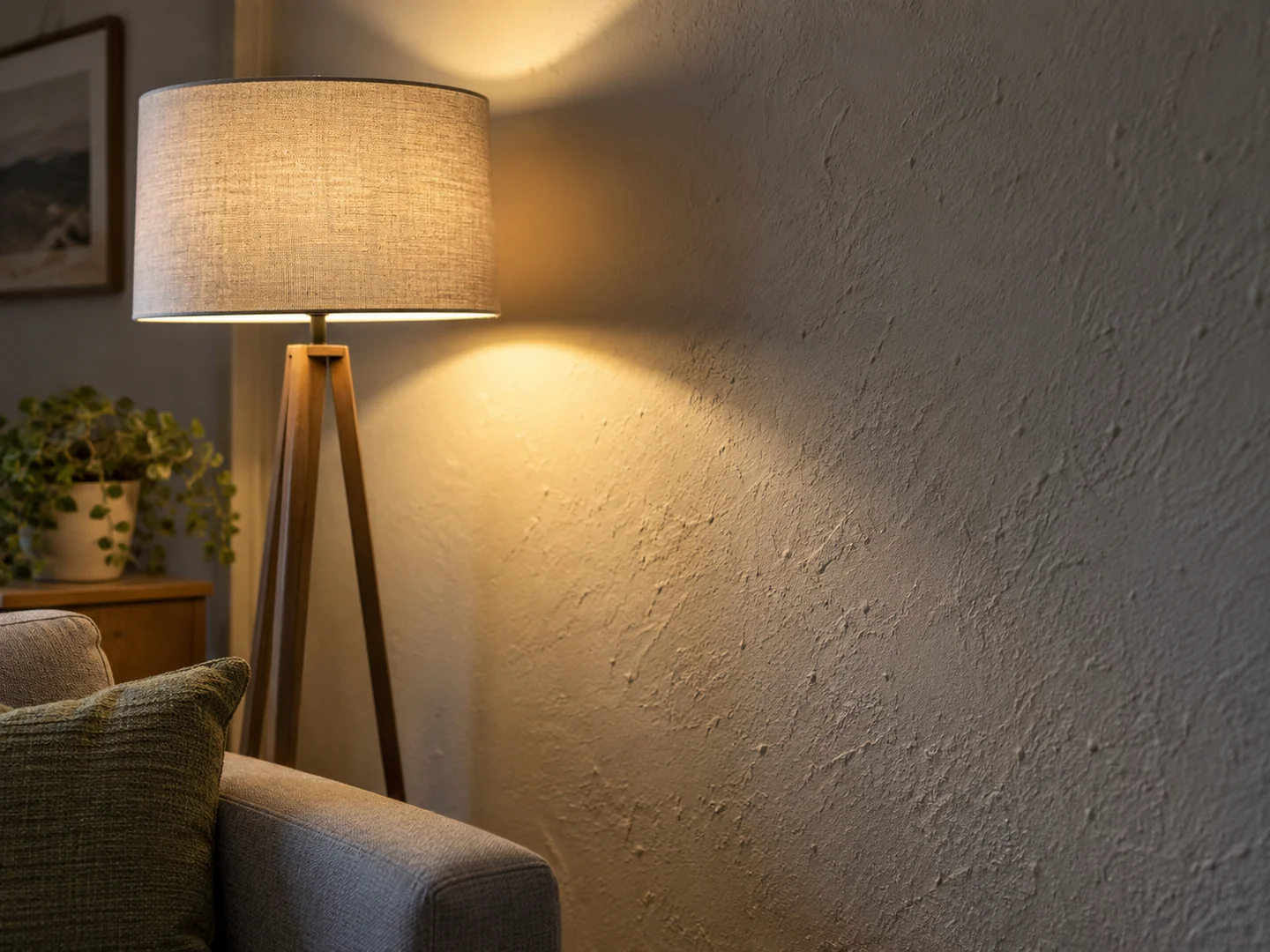
A wall that looks smooth in broad daylight can reveal small ridges and patches under a nearby lamp. Light arriving at a shallow angle creates shadows beside tiny changes in the surface. This can be attractive on textured plaster and less welcome on a wall you expected to look flat.
Before redecorating, move the lamp farther from the wall while keeping its base stable and its lead clear. Try turning an adjustable head slightly towards the room. Notice whether the visible texture changes. The surface has not altered; the way light meets it has.
An uplighter close to a wall can create a particularly clear band of grazing light. If the texture is the feature you want to show, that may be useful. If it exposes every old repair, a softer, broader source or another lamp position may be a better match for the finish.
Decide what deserves attention
Look at the wall from the usual seats rather than inspecting it with your face close to the surface. A mark visible only under a deliberate inspection light may not matter in ordinary use. On the other hand, a strong shadow beside the television can remain distracting throughout the evening.
Try the room's normal combination of lights. A single close lamp in an otherwise dark room makes surface differences conspicuous. A second source elsewhere may soften the overall contrast, although it will not remove the texture itself. Add light only if it also has a useful role in the room.
Do not conceal signs of damp, damage or a developing defect simply by changing the lighting. Those need appropriate attention independently of the decorative effect. For an ordinary uneven finish, however, you can choose how much of that texture to emphasise.
Texture can also change across one wall. A repaired patch may catch the light differently from the surrounding finish, so test the lamp over the area that bothers you rather than only over a smooth section. If the source must remain close to that wall for a useful task, you may prefer to accept some visible texture instead of moving the task into a less convenient position. The decorative choice should still leave the room usable.
When planning new paint or plaster, test a representative sample under the intended evening lighting before committing. The same material can feel quiet in one position and strongly textured in another. Lighting and finish are decisions best considered together.