Read the product, not the category
Picture strips, poster strips and adhesive hooks are not interchangeable. They carry different loads and attach to objects in different ways. Choose the product intended for the item, then read its current instructions before opening the pack. A photograph of a large frame in an advert does not establish the limit for the small pack in your hand.
Weigh the complete frame, including glazing and backing. Measure it where the instructions specify size limits. Do not add extra strips and assume the allowed weight increases indefinitely; follow the manufacturer's stated arrangement. The frame's back also needs the appropriate contact surface.
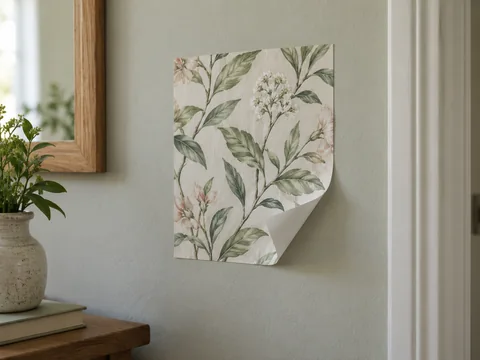
Check the wall finish and its condition. Some products exclude wallpaper, weak paint or textured surfaces. Command's guidance, for example, sets surface restrictions and requires paint to have cured. Curing is not the same as merely feeling dry. Use the applicable product and paint instructions rather than a general internet waiting time.
Look behind the frame
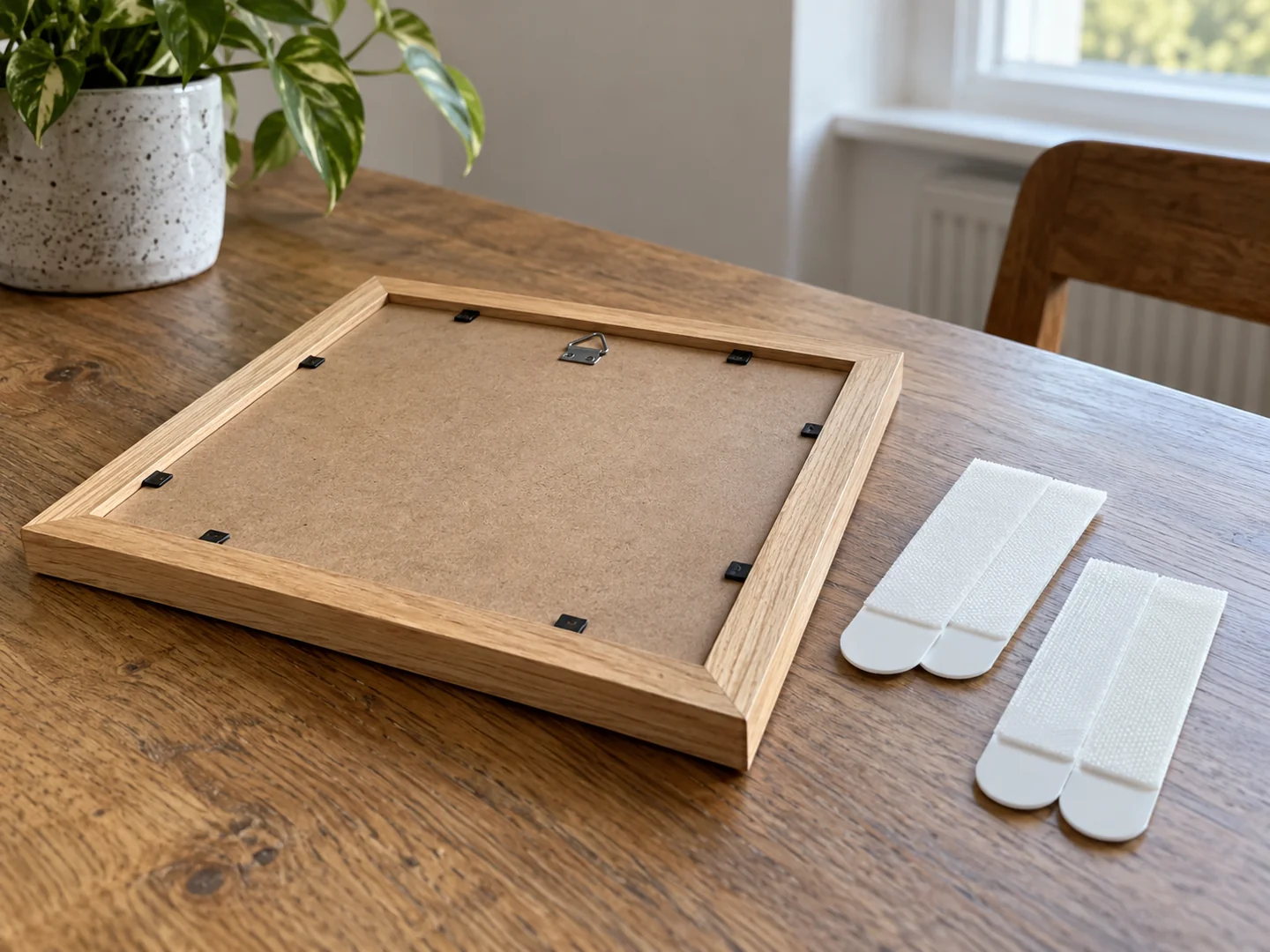
A frame can have a broad outer moulding but only a narrow, uneven rear edge. Check the available contact area against the strip instructions. A projecting stand, hanging wire or raised backing can keep the frame from sitting as required. Do not remove structural parts of a frame or build up improvised layers to make a product fit.
Consider the glazing when choosing the display. Lightweight acrylic and glass have different weights and handling needs, but changing one component does not automatically make the whole frame appropriate. Weigh and assess the finished object, including any mount, backing and fittings. If that combination falls outside the product's conditions, change the hanging method or choose a different frame.
Decide where failure would matter
Follow the product's location warnings, including any restrictions on hanging above beds or using it for valuable objects. A permitted load does not make every position sensible. Keep fragile, irreplaceable or heavy items out of an arrangement that the product does not explicitly support.
In a rented home, establish whether the proposed use is permitted. Removable adhesive can still affect a particular finish, especially if the surface is weak or the removal method is wrong. Avoid promising a landlord that a generic product can never leave a mark.
Plan the position before applying anything. Hold a paper outline at the proposed height, view it from the doorway and check that a door or chair will not strike the frame. This reduces the temptation to reposition adhesive products repeatedly after installation.
Keep the removal instructions
Application and removal are separate procedures. Read both before fitting the frame and make sure the release tabs will remain accessible in the way the manufacturer requires. Keep the pack or save the exact instructions with the frame details.
Observe the specified pressing and waiting stages rather than hanging the object as soon as the adhesive touches the wall. For stretch-release products, pulling in the wrong direction can change the result. If a tab becomes inaccessible or breaks, consult the manufacturer's guidance instead of levering the frame aggressively away from the wall.
A small test can reveal an unsuitable surface, but it cannot guarantee every later removal will be perfect. If the product and wall are a poor match, choose another permitted display method. A framed print on a secure low surface can be a better solution than forcing an adhesive hanging system onto a finish it was never designed for.