Define the work before the desk
A laptop used for an occasional email needs a different setup from a full day of screen work and paperwork. Set out the equipment you actually use, including a separate keyboard or monitor where appropriate. Measure that arrangement rather than buying the smallest desk that fits an empty corner.
Include the things that appear during work: a notebook, charging lead, reference book or headset. A desktop that holds only the computer can push everything else into your lap or onto the bed. That may be tolerable for a short task and frustrating as a daily arrangement.
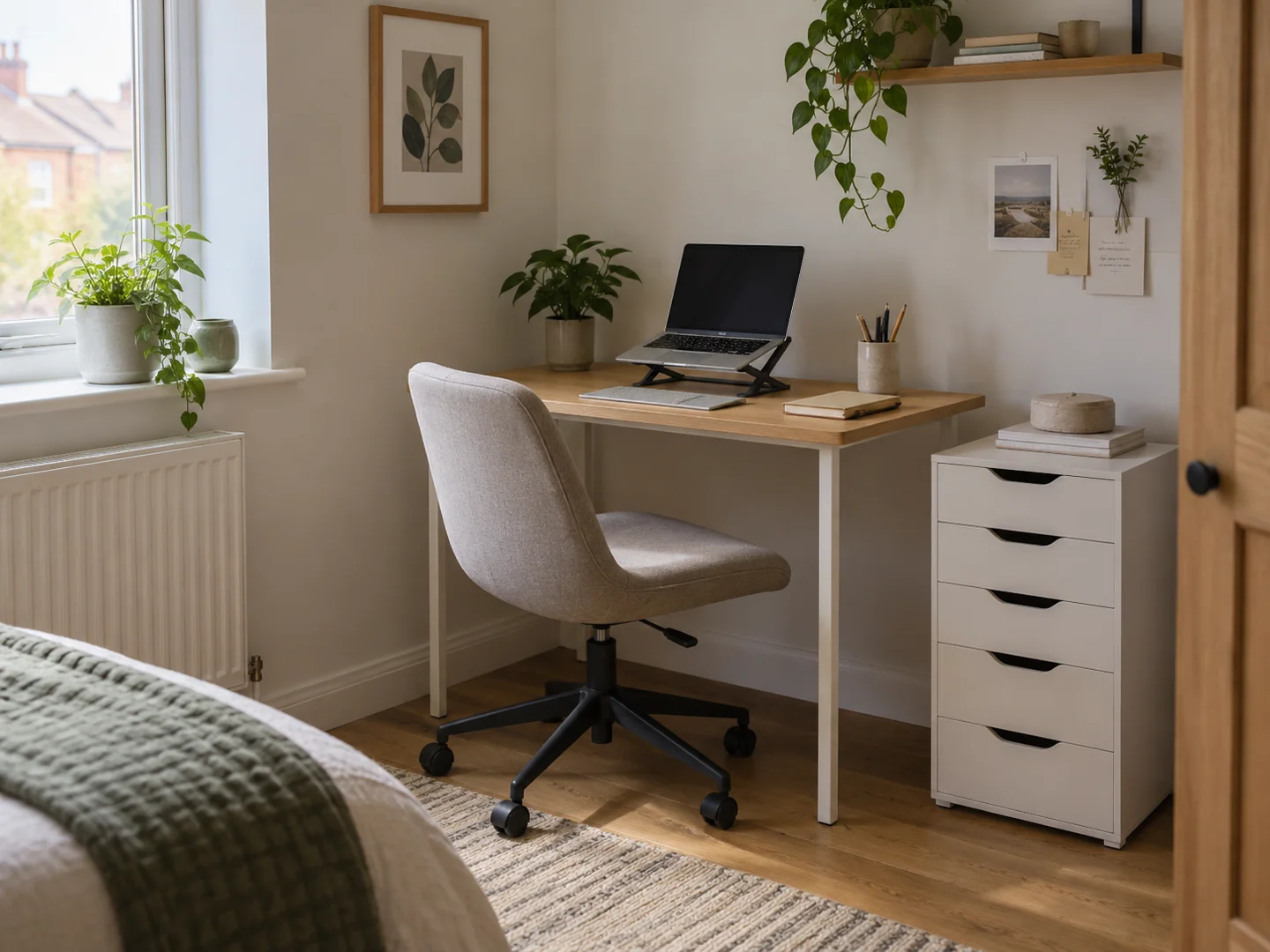
Think about the transition between work and the rest of the room. If the desk sits in a bedroom, decide what needs to be put away at the end of the day. A shallow drawer or a suitable portable box may be more useful than a large decorative shelf above the screen.
Measure the person and the furniture together
Try the chair at the proposed table height and check that you can sit comfortably with enough legroom. An attractive narrow console is not automatically a suitable desk. Crossbars, aprons and drawers can occupy the space your legs need even when the overall height seems plausible.
Check where the screen will sit without forcing you to lean forward or twist towards it. If a laptop stand is used for longer work, consider the associated keyboard and pointing-device arrangement rather than treating the stand as a complete solution. For sustained screen work, seek appropriate workstation guidance for your circumstances.
Leave room to move the chair away from the desk. Measure the space with the chair occupied and pushed back, not merely tucked neatly under the top. A clear route through the room should remain available while someone is working there.
Let the existing room influence the position
Find a location with a sensible route to power and manageable daylight on the screen. A window directly reflected in a display may be awkward even when the desk looks lovely facing it. Try the equipment temporarily, with leads safely placed, before committing to the furniture position.
Add a suitable task light if the work surface needs one. It should illuminate the task without creating a reflection or taking the keyboard's place. A clamp lamp only helps if the desk edge and material are suitable for the clamp; check this before combining separate purchases.
Preserve access to radiators, cupboards and windows. A portable workspace should not block the useful features of the room simply because it can theoretically be moved later. If you must dismantle it every time a wardrobe opens, its everyday footprint is wrong.
Choose pieces with an understandable second life
A straightforward desk with detachable legs may suit several future rooms. A compact drawer unit can later serve another storage role. Check actual assembly instructions and dimensions rather than assuming every flat-packed item can be repeatedly dismantled without difficulty.
Avoid buying a room-specific set when separate pieces solve the same problem. A desk built exactly around one chimney breast may leave little flexibility next time. That can still be worthwhile for a long stay, but make the limitation a conscious part of the purchase.
Weight and size matter when moving. Ask how many pieces the item separates into, which tools are needed and whether the hardware can be replaced. A folding desk also needs a stable, appropriate working position and a safe place to store it when folded. Its hinge does not automatically make it the most suitable choice.
Keep storage close to the work
Put daily items where you can reach them without stretching across the screen. Reserve distant storage for things used less often. A portable box is useful only if its contents stay organised and it has a permanent place to sit while you work.
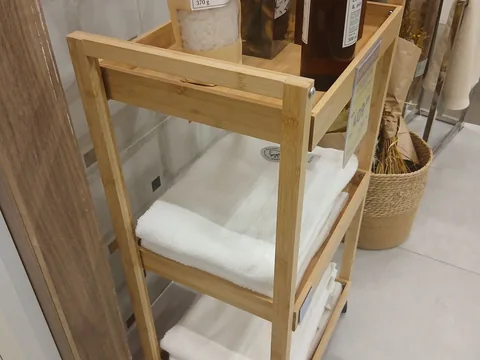
Avoid overloading a small trolley or adding a tall unit simply to gain another surface. Follow furniture load limits and any restraint requirements. If a storage item needs a wall fixing that cannot be arranged, choose a different item rather than leaving it insecure because the office is temporary.
Use the worktop for work. A plant or framed print can belong there if space allows, but it should not force the notebook into an awkward position. Decoration can sit elsewhere in the room and still contribute to the atmosphere around the desk.
Rehearse the end of the day
Unplug any equipment that travels with you, put away the papers and leave the chair in its resting position. Notice what has no home. Those loose objects reveal whether the plan needs a small organisational change or whether the desk is simply too small for the work.
Keep the instructions and labelled hardware bags for future moves. Photograph the cable connections before dismantling the setup. The workspace is ready to travel when its useful parts can be safely separated and rebuilt, not merely because every object is technically freestanding.