Sort by where things are used
Separate the items used at the basin, in the shower and only occasionally. A single overcrowded shelf often appears necessary because all three groups are mixed together. Keep daily items close to the activity and store reserves in a suitable dry place elsewhere if the bathroom has little space.
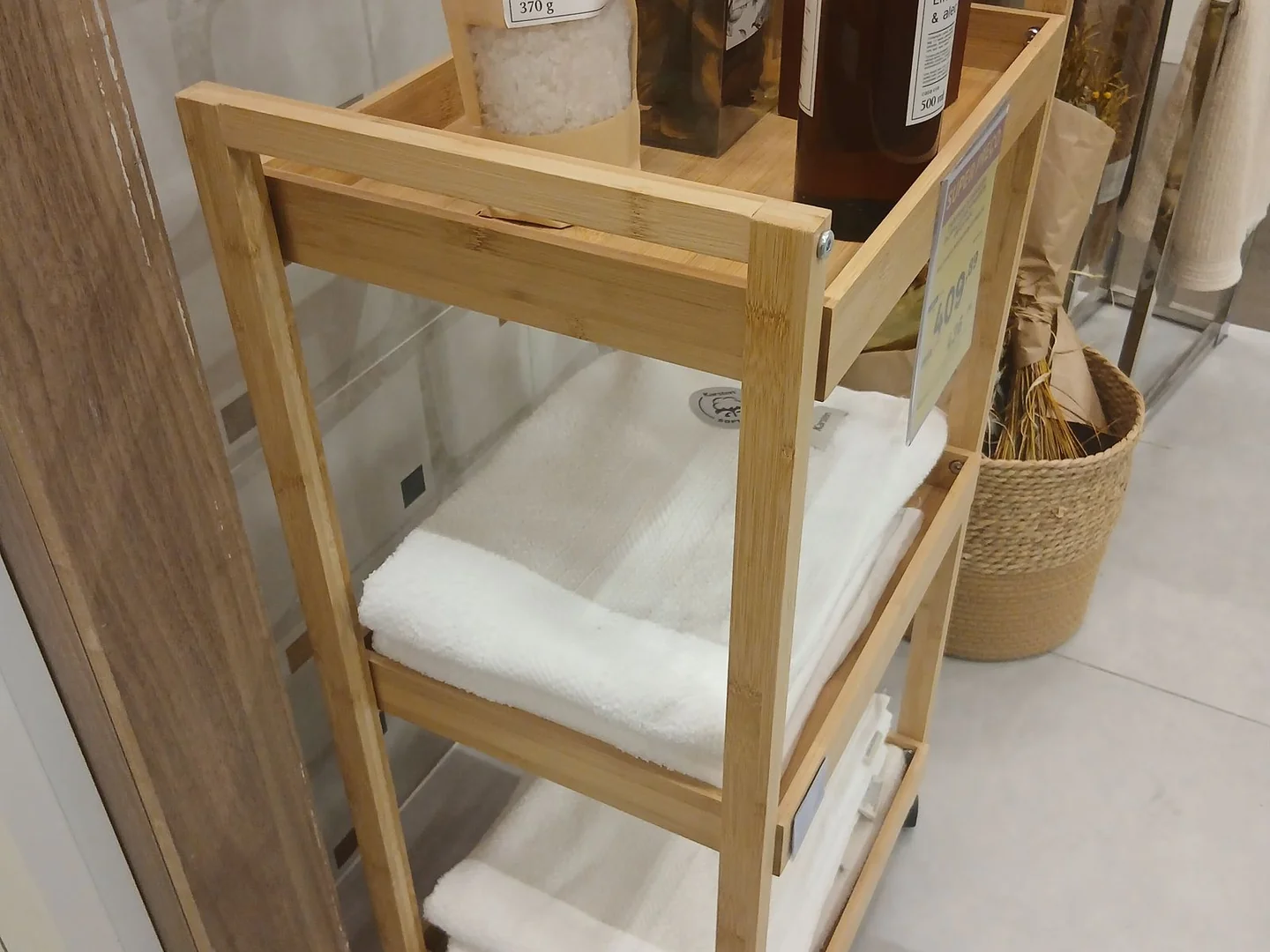
Measure the real gap beside the basin or toilet, including pipes, the door swing and access for cleaning. A trolley's advertised width may exclude handles or projecting trays. Check its full footprint and whether the drawers or baskets can be removed in that location.
Leave controls, valves, vents and required access panels reachable. Storage should not turn a routine inspection or small maintenance job into a room-clearance exercise. Do not cover an existing damp patch or leak with a basket; raise the cause separately.
Choose a product for the environment
Look for materials and finishes that the maker approves for bathroom use. Painted metal can still have vulnerable joints, and timber or board products have different moisture limits. A decorative unit photographed beside a bath is not enough evidence of suitability.
A low freestanding unit can be useful, but it must remain stable on the actual floor. Follow any required restraint or assembly instructions. If the unit needs wall fixing, the fact that you are renting does not make it safe to omit that step; obtain permission or select an appropriate alternative.
For suction or adhesive caddies, check the exact tile or glass surface, weight limits and installation conditions. These products are not universally suitable for textured tiles, grout lines or every shower enclosure. Avoid placing heavy or breakable objects where a failed fixing would create a hazard.
Keep wet and dry storage distinct
Folded spare towels need a location where they can remain dry. A trolley that fits beside the bath may receive regular splashes even when it is not directly under the shower. Observe the room after normal use before deciding where fabric belongs.
Similarly, a caddy designed to drain should not sit inside a decorative outer container that traps the water. Look at the whole arrangement, including the tray underneath and the surface it touches. A storage product may be suitable on its own yet become awkward when surrounded by additional layers chosen only to improve its appearance.
Make cleaning part of the arrangement
Leave enough room to move a permitted mobile trolley and clean underneath it. Store bottles upright with their labels visible, and keep unsuitable cleaning products separated according to their instructions. A decorative basket should not conceal a leaking container until the damage spreads.
Use only the number of containers that help you find things. Several tiny matching pots can consume more room than the original packaging while making it hard to identify contents. One tray for daily items and a separate place for spare supplies may be sufficient.
Keep ordinary plug-in lamps and extension leads out of this storage plan. Bathroom electrical arrangements have their own requirements and should not be improvised to improve a dark shelf. The storage decision can remain simple: stable, suitable for moisture, accessible and easy to clean, with enough empty space left for the room to function.