Put sockets on the furniture plan
Sketch the available sockets alongside doors, radiators and large furniture. Mark which sockets are accessible and which would disappear behind a wardrobe or bed. A socket technically present in the room is not necessarily useful for a lamp you need to unplug or switch regularly.
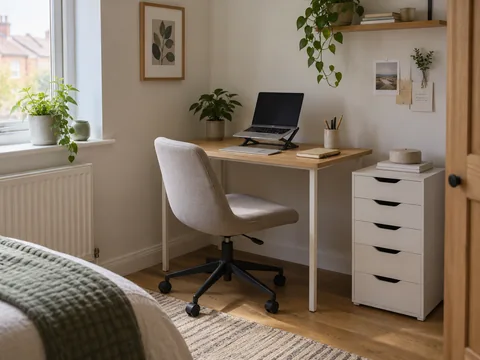
List the equipment at the proposed desk: computer, display, task lamp and any other actual devices. Include their power supplies, which may occupy more space than an ordinary plug. Do not design around an empty desk and discover later that several bulky adaptors cannot fit the chosen arrangement.
Measure the route the cable would follow, not a straight line through furniture. It may need to travel behind a table and around a corner before reaching the socket. A lead that appears long enough on the floor plan can become tight once it follows a safe, accessible path.
Prefer a route along the furniture
A lead behind a desk or along a protected rear edge is usually easier to manage than one crossing the room. Keep it away from chair wheels, drawer runners, bed mechanisms and sharp edges. The route should remain safe when the furniture is used, not only while everything is still.
Do not conceal cables under a rug to make the room look tidy. You lose sight of their condition and put them in a place where they can be pressed or damaged. Avoid doorways and places where feet, bags or cleaning equipment repeatedly catch them.
Allow the movement the product requires without leaving a loose loop in a walkway. An adjustable desk or articulated lamp can need additional cable travel. Follow the equipment manufacturer's guidance and test the permitted movement before attaching any cable-management accessories.
Treat an extension as equipment with limits
An extension lead does not provide unlimited power because it has several sockets. Check its rating and the combined load of the connected equipment. Electrical Safety First advises against plugging one extension into another; move the equipment or use a suitable arrangement rather than building a chain across the room.
Keep plugs and connections accessible for inspection and follow the extension's instructions for location and use. A cable box chosen for appearance must not create an unsuitable enclosure around equipment that needs ventilation. Do not bury adaptors beneath papers or fabric to make the desk photograph well.
Where the room cannot serve its normal equipment without an awkward dependency on extensions, discuss the options with the landlord and a registered electrician. Adding or altering fixed sockets is not a decorating task. A furniture rearrangement may be enough, but a genuine electrical limitation should not be disguised with more accessories.
Choose cable management after the route
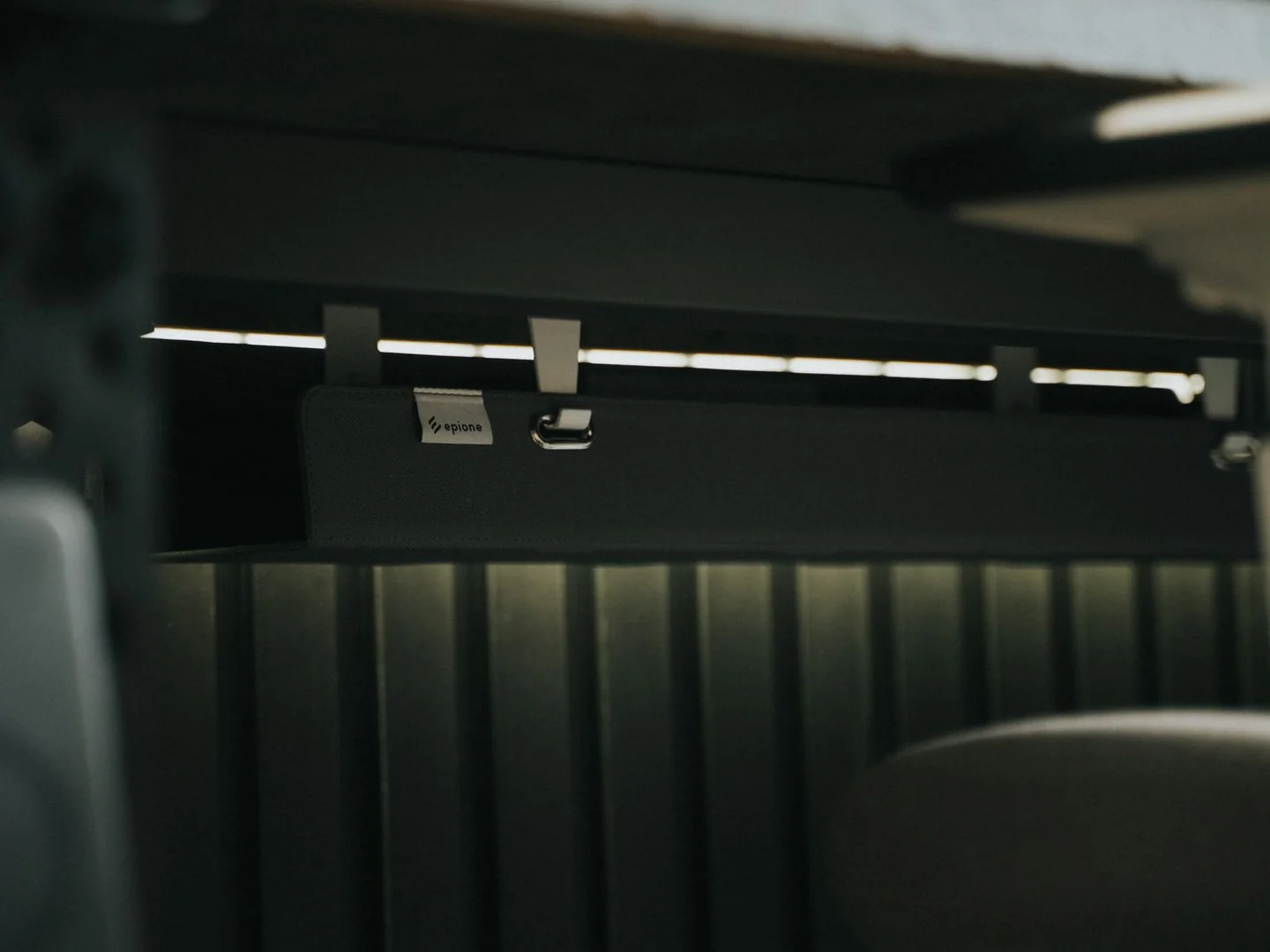
Clips, sleeves and trays can organise a route that already makes sense. They cannot make an unsafe route acceptable. Check that any adhesive or screw-mounted accessories are suitable for the surface and permitted in the property. A desk-owned tray may be preferable to attaching products to a rented wall.
Avoid tightening ties so hard that they distort a lead or strain a connector. Keep identification useful: a small label near a plug can save unplugging the wrong device later. Labels should not cover safety markings, vents or parts the maker says to leave clear.
Separate the arrangement into things that stay put and things you routinely remove. A laptop charger that travels with you should not require dismantling a tightly bundled group every morning. A little deliberate slack and accessible organisation can be neater in practice than an immaculate but inflexible bundle.
Test the room in motion
Roll the desk chair back, open the drawers, adjust the lamp and move the vacuum cleaner around the furniture. Observe whether any cable becomes tight, trapped or exposed to a wheel. Ask someone who did not arrange the room to use it; they may naturally move a chair in a way you have overlooked.
Then check how you would unplug the equipment. If a plug is hidden behind a loaded bookcase, the arrangement needs reconsideration. Accessibility is part of the design, not a detail to address only when something goes wrong.
Keep the plan modest. You may discover that moving the desk to the adjacent wall avoids the entire cable problem. That can be a more satisfying result than buying several products to preserve a furniture position that never suited the room's available power.