Identify the appliance before styling around it
A central-heating radiator and an electric heater do not share one universal set of clearances. Find the manufacturer's guidance for the appliance in the room, or ask the landlord for it. Do not borrow a distance from an unrelated photograph or assume that a decorative cover is suitable for every type.
Keep controls, valves and any required access visible and reachable. A room arrangement should not require shifting a heavy sofa whenever the heating needs adjustment or attention. If the appliance or pipework shows a problem, report that separately instead of screening it with furniture.
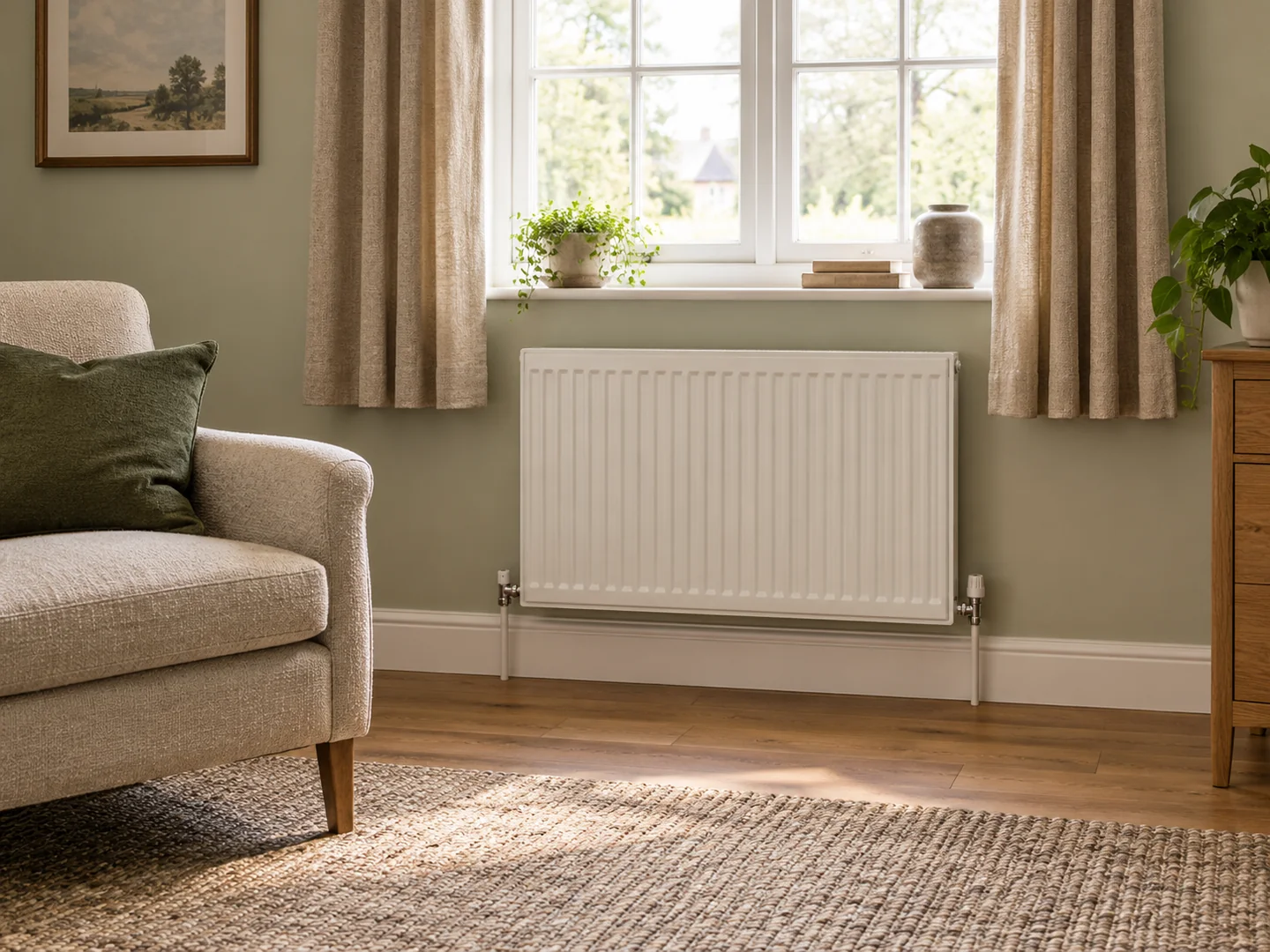
Measure the radiator's full projection, including valves and pipes where relevant. A chair can appear clear of the main panel while its leg sits awkwardly against a valve. Include the furniture's normal movement and reclining range in the plan.
Let the furniture sit to one side
Where possible, try moving the armchair or sofa away from the area directly in front of the radiator and assess the remaining layout. You may gain a useful corner without treating the whole wall as unusable. Keep the required clearances and avoid creating a narrow passage that catches feet on furniture legs.
A small side table nearby can still be useful if its position and materials are appropriate and it does not obstruct the appliance. Do not load the radiator itself with decorative items or treat an ordinary panel as a display shelf. A product designed for another purpose should be used only within its instructions.
If the radiator is beneath a window, consider the curtain arrangement with the heating in mind. Fabric should not drape over or contact an appliance contrary to its safety instructions. Shorter curtains, a different permitted window treatment or another position may be more suitable than a long hem that falls directly into the heated area.
Work with its appearance
A radiator does not have to become the room's focal point. Keep nearby objects orderly and let another feature, such as the seating group or a large textile, carry the colour. Attempting to conceal it completely can introduce more visual bulk than leaving a plain panel visible.
Do not repaint a supplied radiator, add a cover or change fittings without the relevant permission and product guidance. Heat-resistant claims and installation suitability belong to exact materials and appliances. A quick decorative alteration can become a maintenance issue if it is not appropriate.
Make the layout work when the heating is needed, not only in a summer photograph. The most useful arrangement leaves the appliance able to do its job and gives you an ordinary route to its controls. Everything else in the room can then be placed with a clear understanding of the space genuinely available.