Decide where colour will occupy space
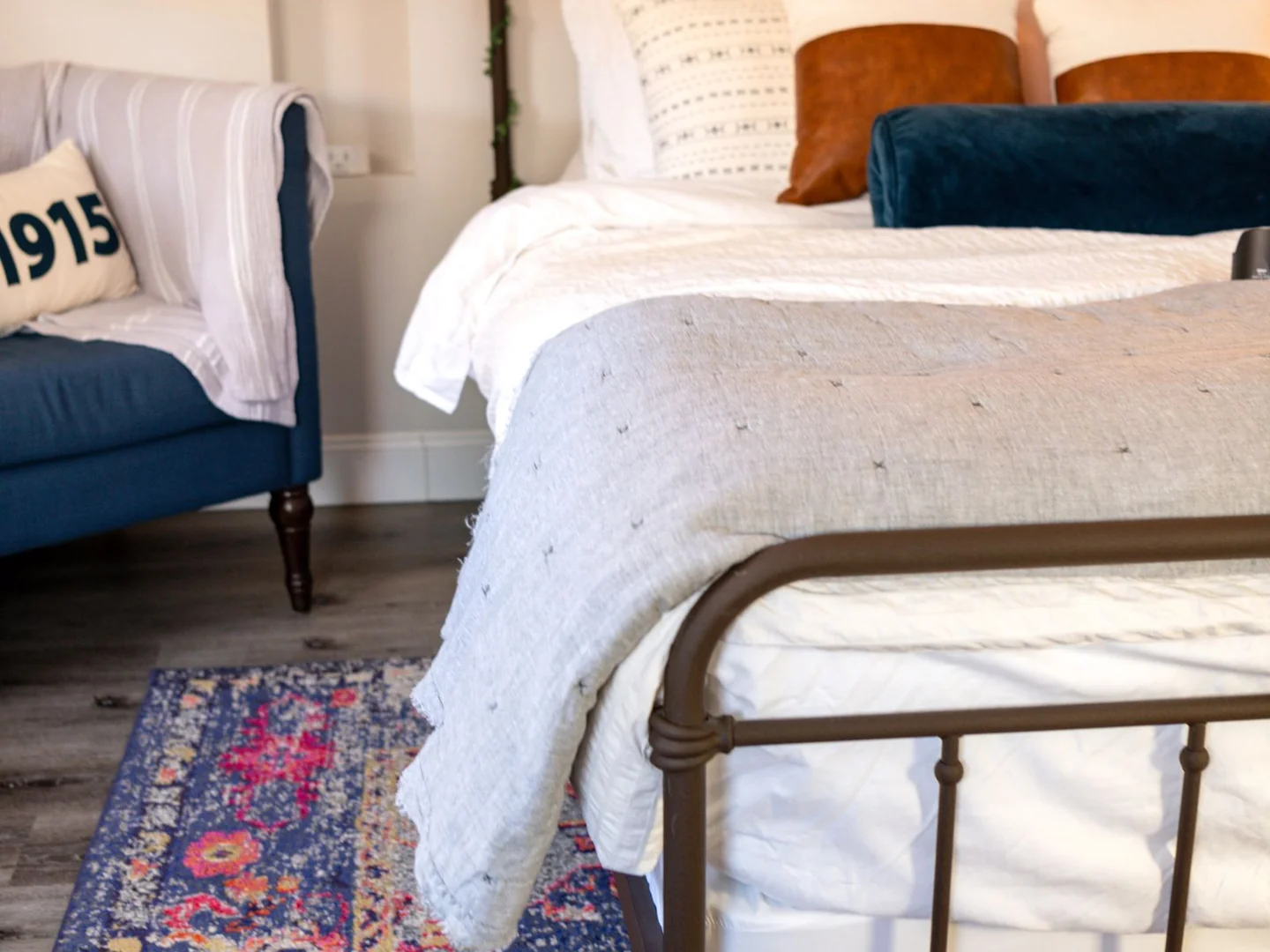
In a bedroom, the bed is a large horizontal area that can carry much of the room's colour. In a sitting room, curtains or a rug may have more visual influence. Choose one substantial surface first so the scheme has a clear starting point instead of depending on many tiny cushions.
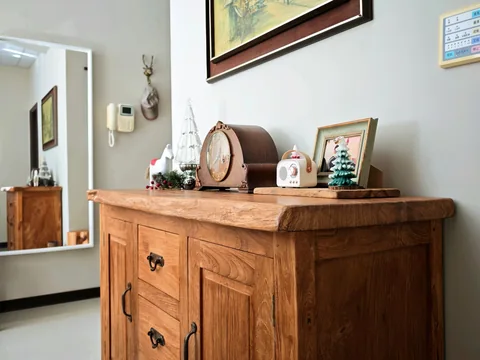
Look at the fixed colours you cannot change: flooring, supplied furniture and wall paint. A white wall is not always a neutral blank; its undertone can become noticeable beside warm or cool fabrics. Bring physical samples together in the room and look at them in daylight and under the evening lamps.
You do not need to hide the original scheme. A coloured bedspread can sit comfortably with plain walls, and a patterned cushion can refer to an existing timber or carpet tone. Repeating a small part of what is already there can make the new fabric feel connected without matching it exactly.
Build with different amounts
Give one colour a larger role and use another more sparingly if that suits the room. A broad blue bedspread with a smaller rust cushion creates a different balance from equal areas of both colours. There is no fixed percentage to obey; move the fabrics around and judge their presence from the doorway.
Pattern already contains several colours, so it can do some of the connecting work for you. Before buying plain fabrics to match it, decide which of its colours you actually want to bring forward. Choosing every colour in the pattern often produces more competing accents than the room needs.
Vary texture with a purpose. A smooth cover may be easy to maintain, a woven throw can add a visible grain, and a lined curtain has a different weight from a sheer. Do not add a scratchy or delicate fabric merely because the room photograph needs another texture.
Keep use and care in the choice
Read the care labels before committing to large pieces. Consider your washing-machine capacity, drying space and whether specialist cleaning is realistic. A bedspread used every night has a different care requirement from a small decorative cushion cover that is rarely handled.
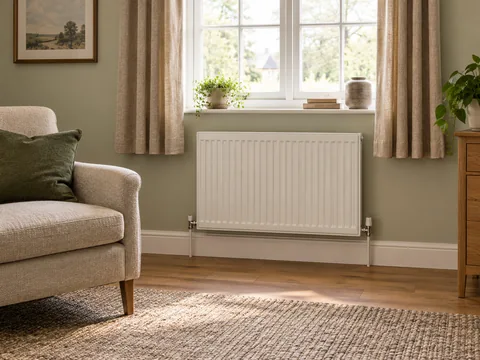
For supplied furniture, confirm that any covers or protectors are suitable and do not interfere with its operation. Keep fabrics clear of heaters and other equipment according to their requirements. Colour is not a reason to drape material over something that should remain uncovered.
Live with the first major textile before buying the rest. The room may need less than you expected once that large area changes. A single deliberate fabric choice can make the space feel personal while leaving enough plain surface for the colour to be enjoyed.