Keep the original with its identity
If you have permission to replace a handle, curtain accessory or other removable fitting, put the original parts in a bag as soon as they come off. Label the room, item and exact position. Left bedroom cupboard is more useful than old handle when several months have passed.
Keep the associated screws and washers with the part, provided they can be stored safely without scratching it. Do not mix similar-looking hardware from different items. A screw that almost fits can damage a thread or a surface, so appearance alone is a poor way to reunite the pieces later.
Take a photograph before removal and another showing the parts laid out. Save these with any agreed instructions for reinstatement. Do not remove fixed electrical parts or specialist fittings as a casual storage task; those need the appropriate authorised handling.
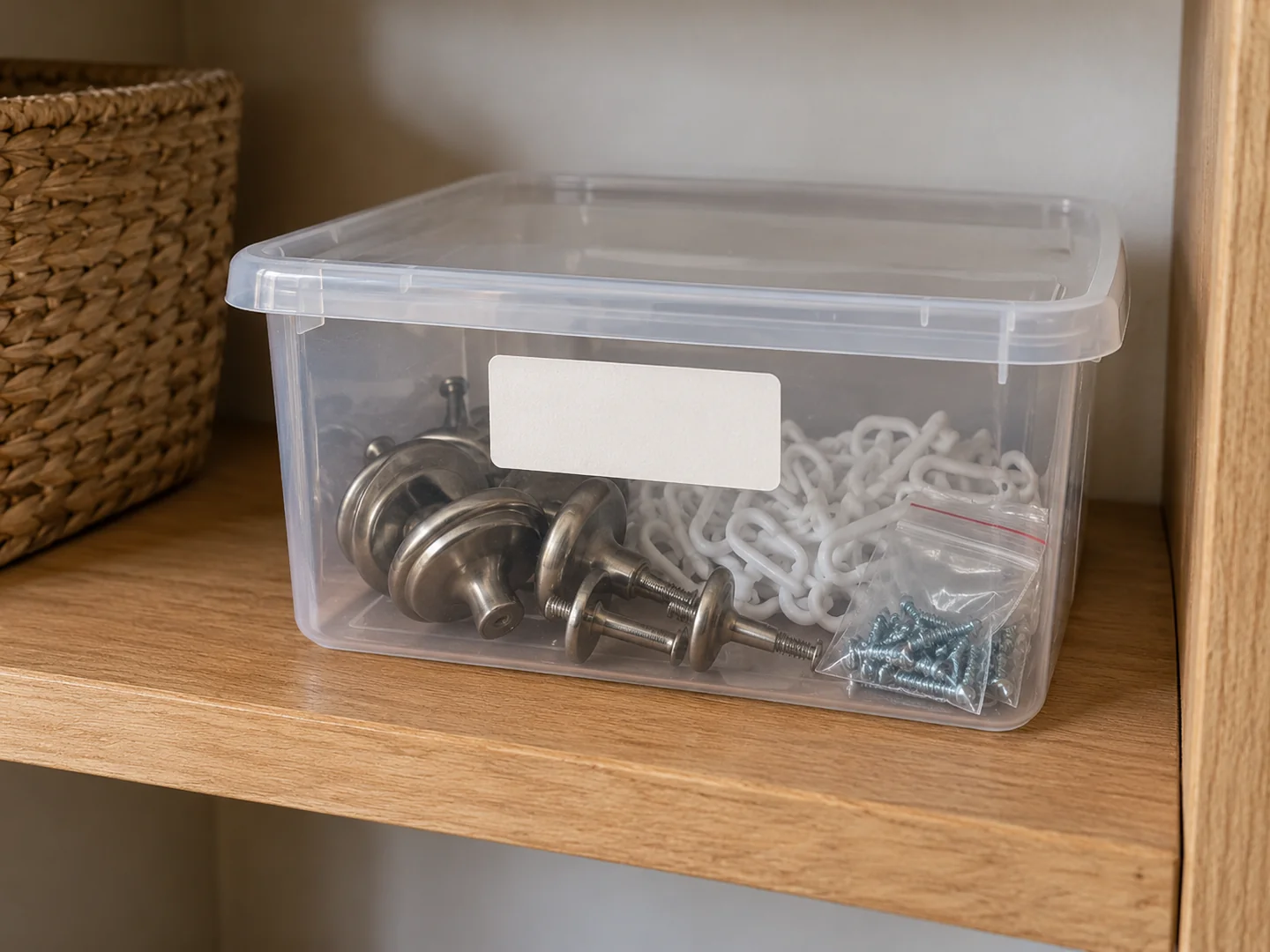
Choose a box that suits the contents
Use a dry, accessible place where the box will not be crushed beneath heavy objects. Wrap delicate finishes separately and keep sharp ends contained. Large items such as lampshades need their own protective storage rather than being forced into the small-parts box.
Add a note about anything that was already damaged or incomplete, and raise that through the relevant channel. The box is a record of what you retained, not a place to hide a broken fitting until moving day. Keep receipts and instructions for your replacement items separately but easy to find.
When you add another set of parts, update the label immediately. A small inventory on the lid can list the contents without requiring every bag to be opened. Avoid storing unrelated household bits in the same box simply because there is spare room.
If there are several similar rooms, add a simple sketch or photograph to the bag rather than relying on a nickname that another person may not understand. Make the record useful to whoever will help with the move. A shared, clear label is better than a perfect system remembered by only one person.
Before moving, compare the box with the written agreement about what needs to be reinstated. Allow time to ask about missing or damaged parts rather than improvising at the last moment. The useful habit is simple: remove only what is authorised, preserve what belongs to the property, and keep enough context that the parts still make sense when you need them again.