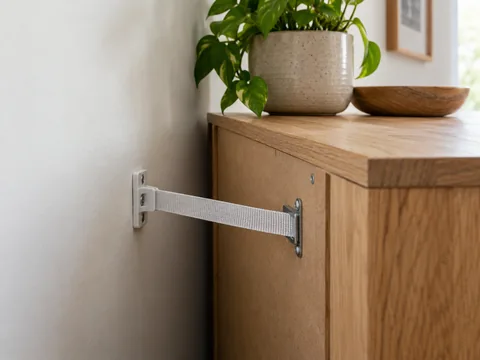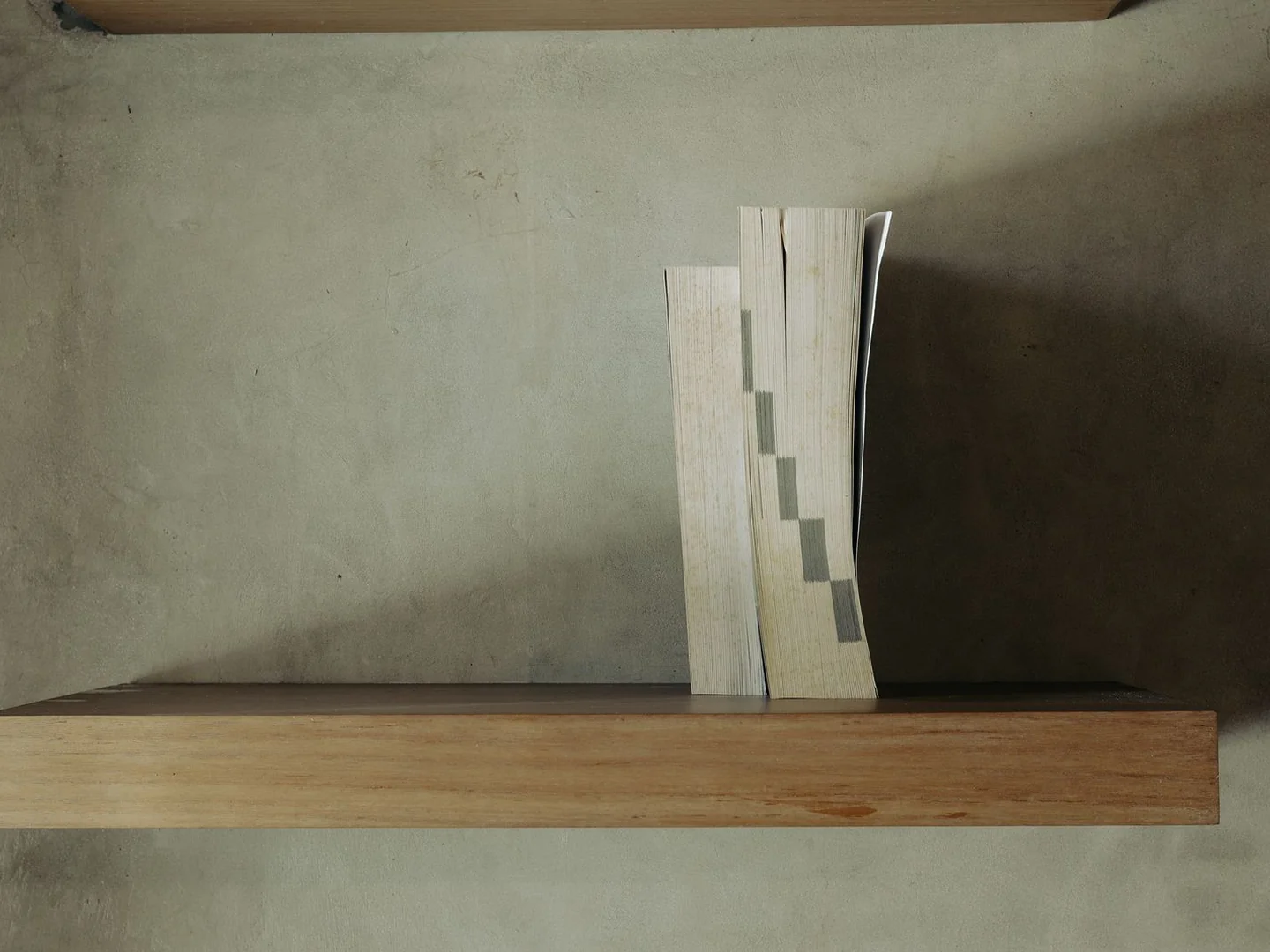
Start with the contents and the wall
A shelf holding a few light objects has a different job from one filled with books. Estimate the intended load and check the product's instructions, including any conditions relating to wall construction and fixings. A maximum load is not a promise that applies to every wall or installation.
Identify the wall properly before drilling. Suitable fixing methods depend on its construction, and concealed services must be considered. If you are uncertain, use a competent installer. A hollow-looking wall and a solid-looking wall are not reliable enough categories for choosing hardware by eye.
Check depth and position
A deep shelf projects into the room even when its supports are hidden. Avoid placing it where someone might strike their head or shoulder, especially beside a bed or narrow route. Mark its outer edge as well as its wall line before fixing it.
The objects on top need usable height. A shelf fitted close beneath another shelf or a ceiling may accept a book but make it awkward to remove. Leave enough room for hands and for lifting the items you expect to use. Display space and working storage have different access demands.
Look at the shelf from the normal seated position. An underside that seems invisible when standing may be prominent from a sofa or bed. Its thickness and the placement of a nearby lamp can change how heavy it appears on the wall.
Try a paper outline at the intended height and view it from the doorway, the sofa and directly beneath it. A long shelf may look balanced on the wall while placing its end in a narrow route. Several short shelves create more edges and more fixing positions, which may not help a small collection. Decide whether the wall genuinely needs multiple levels or whether one shelf with appropriate spacing would serve the objects more clearly. Its arrangement should still make sense before any decorative accessories are added.
Install for the actual product
Use the specified support system and follow the fitting sequence. Do not mix brackets, screws or shelf boards simply because they appear compatible. Manufacturer instructions, such as IKEA's LACK guidance, distinguish between wall types and permitted loads; check the instructions for your exact shelf rather than transferring another product's figures.
After installation, keep the load within the stated conditions and distribute it as directed. Adding a large plant or a full row of books later can substantially change what the shelf carries. Revisit the specification when the contents change.
If the desired shelf cannot be safely supported in that location, choose a freestanding piece or another wall. The clean appearance of concealed supports is a visual preference, not a reason to accept uncertain fixing. A shelf earns its place when both its position and its installation suit the objects it is meant to hold.