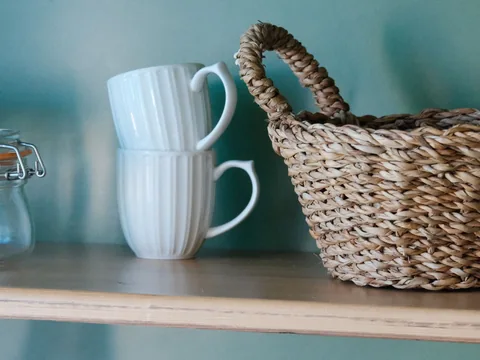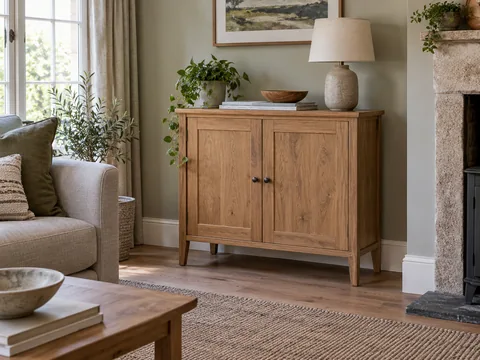
Remove enough to see the problem
Take the contents off one section and group them on a stable nearby surface. Separate things you use, things you want to display and things that have arrived without a clear reason. Return unrelated items to more suitable homes before judging the shelf's capacity.
Look at the available height and depth. A few tall objects can force a large gap above every shelf if the spacing is fixed. Adjustable shelves may solve that mismatch, provided they are moved and loaded according to the furniture's instructions. Do not add supports or drill new positions without checking that the system permits it.
Make retrieval easier
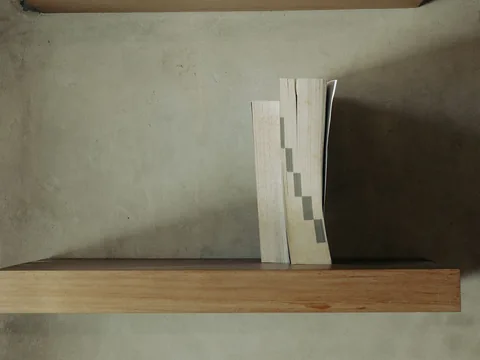
Keep frequently used books and objects where they can be removed without shifting a display in front. A horizontal stack can support a few items visually, but the book at the bottom becomes inconvenient to use. Place books that are regularly read upright and leave enough room to grip a spine.
Group small objects so they do not occupy every interval between larger ones. A suitable shallow tray can gather loose pieces, although it should not become another hidden pile. The grouping should make them easier to move for cleaning and easier to identify.
Leave some space visible if the contents allow it. A gap is useful when it gives a hand room to lift something or prevents a shelf from feeling densely packed. It does not need to be maintained as a decorative rule if the shelf is a working library.
Check the shelf from the place where it is normally seen. A large object near the front edge may hide several smaller ones behind it. Moving it to another level can make the whole collection easier to understand without removing anything or adding more display space.
Decide what the shelf cannot do
If the collection still exceeds its usable capacity, choose between reducing the contents and adding appropriate storage. Do not exceed load limits or conceal a second unstable layer behind the first. A new shelf is justified when it serves an identified group that has no workable home. Editing first helps you buy the size and type actually needed, rather than repeating an arrangement that was difficult to use.