Read the instructions before choosing the wall
Look for the installation and safety instructions for the exact piece of furniture. Some items require wall attachment even when they are described as freestanding. The requirement is part of how the product is intended to be used, not an optional styling choice based on whether it seems heavy enough.
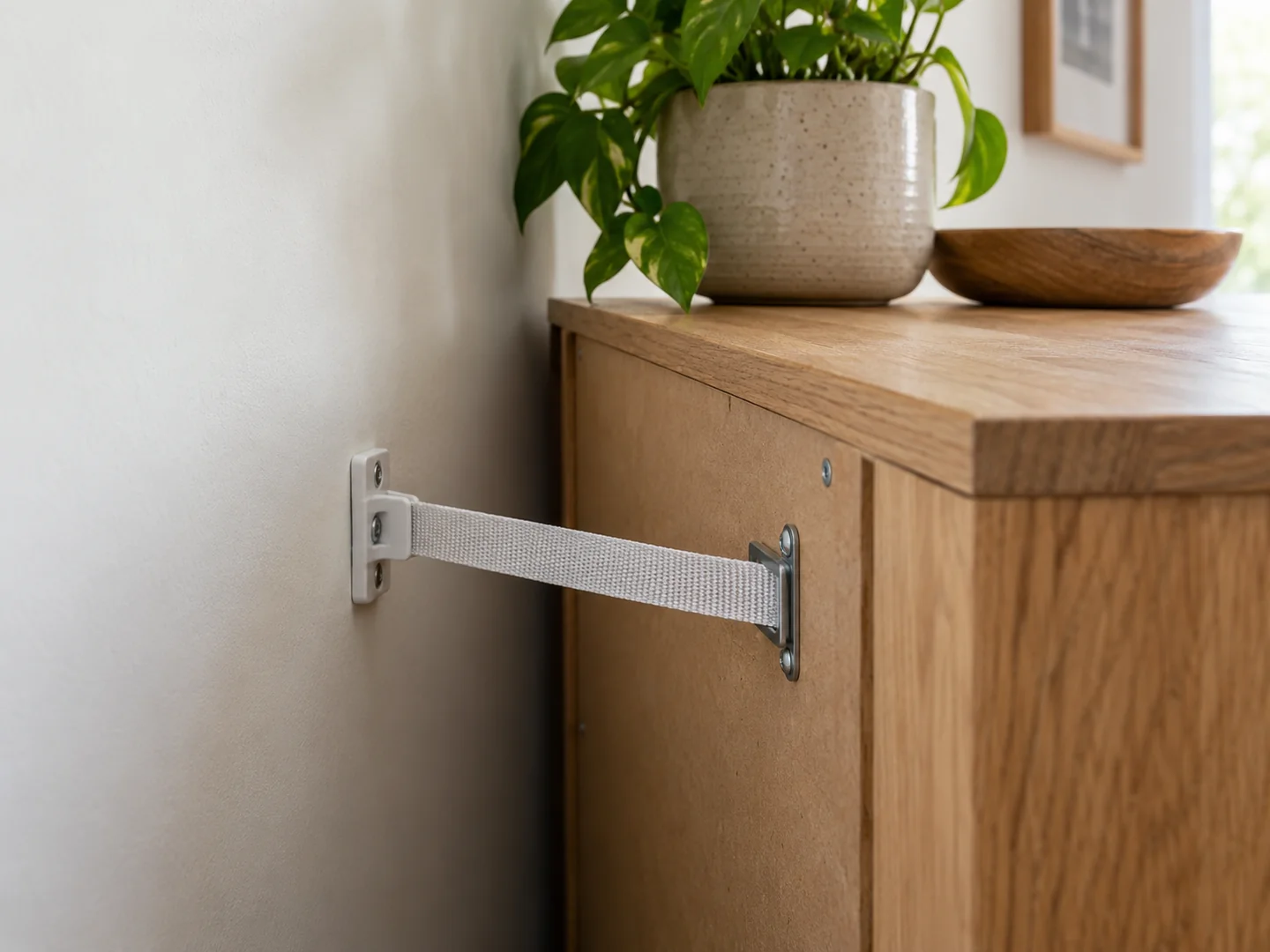
IKEA's Secure it guidance identifies wall attachment with appropriate hardware as an important measure against furniture tip-over. Follow your own product's restraint instructions and ask the manufacturer for missing parts. Do not assume a bracket left over from another cabinet is a suitable substitute.
Make the location workable
Skirting, pipes or a radiator may hold a cabinet away from the wall. Check how the specified restraint accommodates the actual installation. Avoid improvising a long unsupported fixing or cutting part of the furniture simply to close the gap. Ask the supplier or a competent installer how the piece should be positioned.
The wall construction matters. Appropriate hardware depends on what the fixing enters, and concealed cables or pipes must be considered. An installer may need to assess the wall rather than choose plugs from the appearance of its surface. Have that conversation before the furniture is loaded with books or clothes.
If permission is needed to fix to the wall, resolve it before buying furniture that requires anchoring. Rental status does not make an unsafe installation acceptable. A different approved location or another suitable product may be needed if the required installation cannot be arranged.
Keep the restraint accessible in your plan
Store the assembly instructions and identify where the attachment is located. Moving the furniture for decorating or to another room means the installation needs to be assessed again. Reconnecting it should be part of the move, before the piece returns to normal use.
Do not treat a low-looking cabinet or a heavy collection inside it as proof that no restraint is needed. Follow the product requirement and avoid creating climbing opportunities with drawers or surrounding furniture. A television should only stand on furniture designed and rated for that purpose.
The design decision is straightforward: choose a position in which the furniture can be installed exactly as intended and still used comfortably. That may affect which wall, cabinet depth or product you choose. Considering it early prevents a room plan from depending on a piece that cannot be properly secured where it was supposed to go.