Move the things used near the table
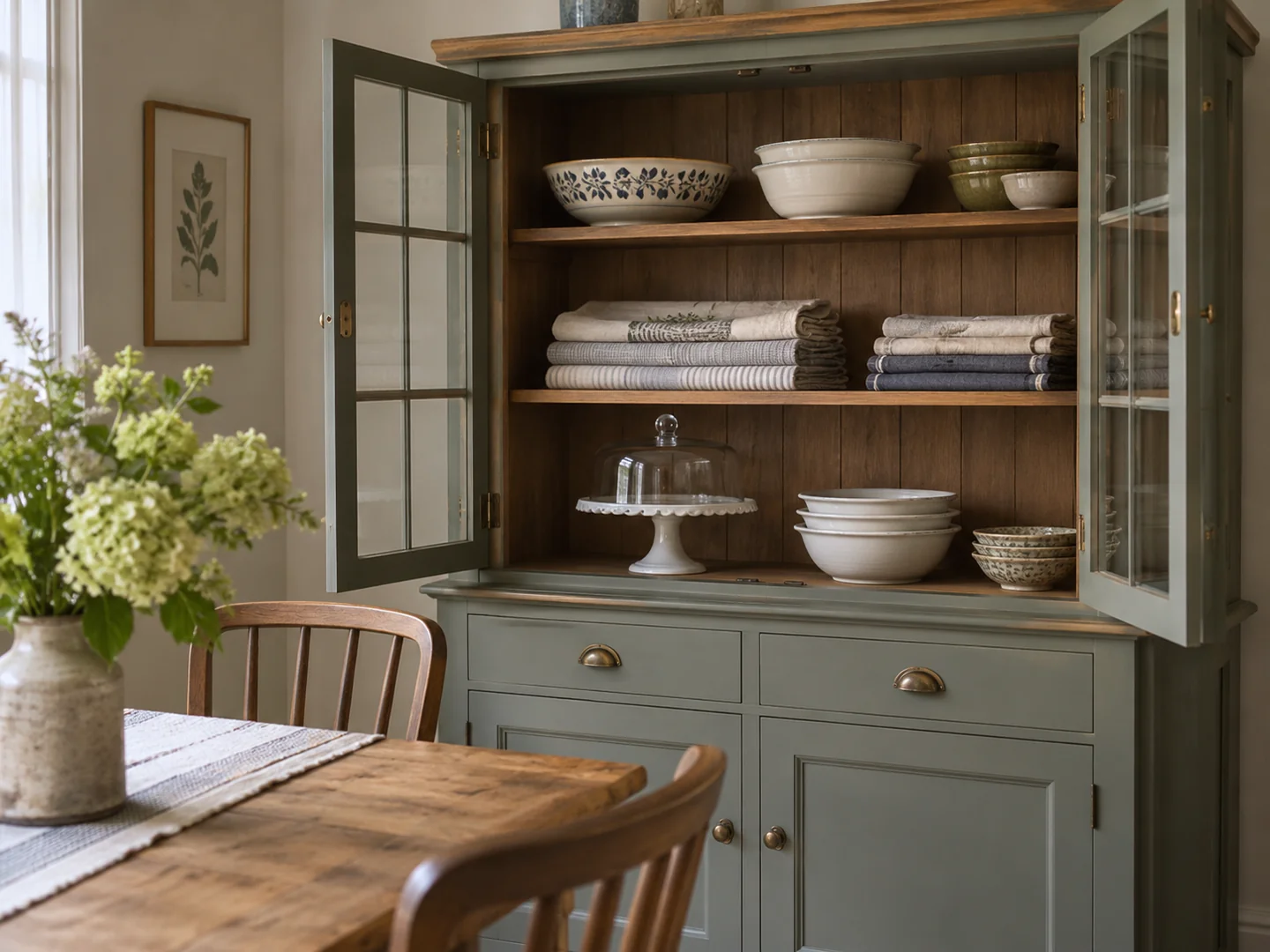
Serving bowls, platters, tablecloths and occasional glassware are natural candidates because they are often needed in the dining area. Everyday pans or frequently used ingredients may be less convenient there. Move a category because the location suits its use, not simply because the kitchen is full.
Measure awkward pieces first. A cake stand may need a tall compartment, while a platter may be too wide for the clear opening between hinges. Adjustable shelves help only if the cabinet's internal width and depth are sufficient. Check usable dimensions and shelf load limits for stacks of crockery.
Distinguish serving storage from food storage. A decorative sideboard may suit crockery but have unsuitable conditions or access for ingredients. If food is part of the proposed contents, follow its packaging requirements and consider the cleanliness and conditions of the location. Do not treat a sunny dining-room wall or a cupboard beside a heater as automatically equivalent to the kitchen cupboard it replaces. Keeping the overflow focused on tableware and linen may solve the space problem without introducing a second food-storage area to manage.
Keep the return journey simple
Think about how clean items come back from the kitchen. If putting away dishes requires carrying them through a crowded sitting area and opening several doors, the arrangement may become inconvenient. A cupboard close to the dining table and on an easy route from the kitchen can make more sense than a larger unit at the far end of the home.
Store related pieces together so setting the table does not require searching several compartments. This might mean napkins and placemats share a drawer while serving bowls occupy a nearby shelf. The categories should follow the task, not a desire to arrange everything by material or colour.
Avoid overstacking fragile items just to use the full cupboard height. Follow their care requirements and choose a shelf arrangement that allows them to be lifted without dragging one piece across another. Leave enough room above a stack for a secure grip.
Preserve the dining room's other functions
A sideboard may also hold paperwork or games. Give those groups separate compartments instead of allowing them to mingle with tableware. Mixed use is perfectly workable when the boundaries are clear and the contents can be reached independently.
Keep the top available if it serves as a temporary surface during meals. Filling it permanently with display objects can remove the very landing space that makes the cupboard useful. A few objects may remain, but leave a realistic place for a serving dish or stack of plates.
After moving the first group, use the arrangement before adding more overflow. Notice whether the kitchen feels easier and whether the dining cupboard is being used naturally. If an item repeatedly returns to the kitchen counter, its new home may be too far from its task. Let that evidence guide the next move rather than relocating everything at once.